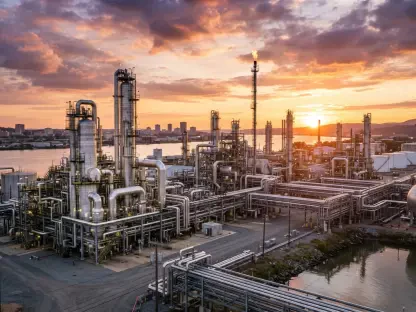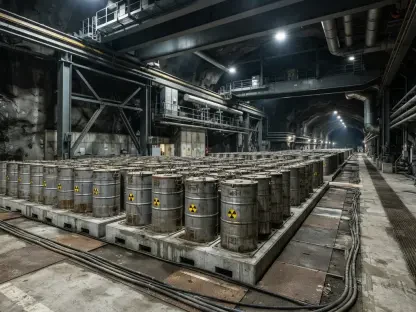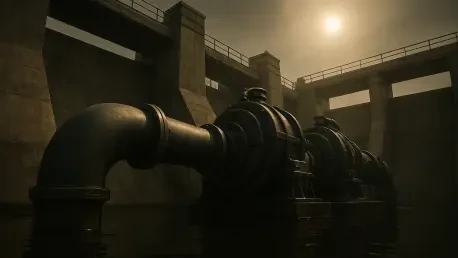

The rhythmic hum of air conditioning units across five continents provides a deceptive sense of security while the global energy grid groans under the weight of a record-breaking summer. As temperatures in the current year of 2026 reach heights that were once considered statistical outliers, a startling vulnerability has appeared in the very infrastructure designed to provide reliable, carbon-free electricity. This is the nut graph of a modern energy crisis: nuclear power plants, the heavyweights of the energy transition, are finding their operations increasingly constrained by the same rising mercury they were built to combat. The dependency of these massive thermal engines on stable environmental conditions has turned the promise of 24/7 reliability into a complex engineering puzzle.
While solar and wind power fluctuate with the weather, nuclear energy has long been the bedrock of the grid due to its steady output. However, the extreme heat of 2026 has exposed a fundamental physical bottleneck. Nuclear reactors require massive amounts of water to condense steam and keep the core stable. When the surrounding environment becomes too hot or too dry, the physics of cooling begins to conflict with the laws of the land. This situation is not merely a localized inconvenience but a systemic challenge that requires a total re-evaluation of how thermal energy is managed in a “superlinear” warming trend.
The Paradox: A Cooling Crisis in a Warming World
The central irony of the current energy landscape is that the hotter the planet gets, the harder it is for the cleanest massive energy source to keep people cool. As households and businesses crank up their cooling systems to survive the afternoon heat spikes, the electrical demand places an immense load on the grid. Yet, at these exact moments of peak demand, some nuclear reactors are forced to scale back their production or shut down entirely. This counterintuitive emergency occurs because the temperature of the cooling water available in rivers and lakes has exceeded the design specifications of the plants, creating a precarious situation where the supply of energy drops just as the demand reaches its absolute zenith.
The crisis unfolding in 2026 is a physical manifestation of a “cooling bottleneck.” Most of the world’s current nuclear fleet was designed in the mid-to-late 20th century, a period when hydrological models assumed a climate that no longer exists. Engineers of that era built plants to withstand “once-in-a-century” heat waves that are now occurring every few years. This mismatch between historical engineering and modern meteorological reality means that the massive cooling systems intended to keep reactors stable are being pushed to their breaking point. The stability of the grid is no longer threatened by a lack of uranium fuel, but rather by the thermal limits of the natural environment itself.
Understanding the Vulnerability: Thermal Energy Infrastructure
Nuclear power is celebrated for its high capacity factor, yet its reliance on a steady, cool water source represents a significant environmental tether. This dependency is rooted in the second law of thermodynamics, which requires that heat be moved from a high-temperature source to a lower-temperature sink to generate work. In most reactors, this sink is a nearby body of water. As global temperatures rise, the “thermal gradient” between the reactor and its cooling source narrows, making the cooling process less efficient. This efficiency loss is compounded by the fact that the volume of water available for cooling is often diminished during the prolonged droughts that accompany extreme heat.
In the 2026 operational environment, the historical hydrological assumptions that once guided the construction of the energy backbone are being rendered obsolete. The “design basis” for many facilities simply did not account for rivers becoming so warm that they could no longer effectively absorb waste heat. This is a pivotal moment for energy security because it highlights that climate adaptation is not just about building sea walls; it is about fundamentally re-engineering the relationship between power generation and the local ecosystem. The vulnerability of thermal infrastructure is a clear signal that the reliability of the grid is only as strong as its weakest environmental link.
Deconstructing the Physical and Regulatory Constraints on Nuclear Operations
The constraints on nuclear power during a heat wave are often more regulatory than they are mechanical, particularly in Western Europe. In countries like France, strict environmental laws prevent nuclear reactors from discharging water back into rivers if the water temperature exceeds a certain threshold. This “thermal pollution” regulation is designed to protect sensitive river ecosystems, preventing the heat from killing local fish populations and disrupting aquatic biodiversity. Consequently, when the river itself is already warm from a summer heat wave, reactors are legally required to power down to avoid raising the water temperature further. This creates a direct conflict between the immediate need for electricity and the long-term necessity of ecological preservation.
Beyond the regulatory hurdles, physical water scarcity has become a tangible threat in regions like the Balkans. Along the Danube River, water levels have dropped so significantly in 2026 that the intake pumps for several nuclear stations were left literally high and dry. These pumps, which were calibrated for the river levels of the 1980s, cannot reach the deeper, receding waters of a drought-stricken 21st-century riverbed. While critics see this water dependency as a fatal flaw of nuclear technology, engineers argue that these are manageable, site-specific challenges. The vulnerability is not universal; for instance, coastal plants in Asia remain largely immune to these issues because they utilize the vast thermal sink of the ocean, which is far less affected by atmospheric heat waves than shallow inland rivers.
The reliability debate continues to divide experts who view the role of nuclear energy through different lenses. On one side, those skeptical of thermal power argue that a reliance on massive water flows makes nuclear an irrational investment in a warming world. They suggest that the “water-intensity” of the technology makes it a liability during the very climate events it is meant to solve. However, proponents of the technology point out that the outages are often brief and represent only a small fraction of the total annual energy production. They emphasize that while European river-based plants struggle, facilities in North America equipped with cooling towers continue to operate at full capacity, demonstrating that the problem is one of configuration rather than fundamental physics.
Expert Perspectives on Climate-Hardened Engineering
Jacopo Buongiorno, a prominent industry expert, argues that the current issues in Europe should be viewed as “bespoke engineering problems” rather than a systemic failure of nuclear technology. He suggests that the infrastructure can be adapted if the proper investments are made to decouple the plants from local river conditions. In contrast, researchers like Mark Z. Jacobson maintain that the water-intensive nature of thermal power is a significant disadvantage compared to wind and solar, which require virtually no water to operate. This friction between experts underscores the necessity of moving toward a more resilient engineering philosophy that treats environmental extremes as the baseline rather than the exception.
The Palo Verde nuclear plant in the Arizona desert serves as a primary example of how nuclear power can thrive in extreme heat. Despite being located in a region with no natural water source and soaring summer temperatures, Palo Verde remains one of the most productive and reliable plants in the United States. It achieves this by using treated sewage from the city of Phoenix for its cooling needs, completely decoupling its operations from the local freshwater supply. This “brilliant engineering” proves that nuclear power can be resilient even in arid environments, provided that the cooling system is designed with a closed-loop or recycled-water framework from the outset.
Strategies for Future-Proofing the Nuclear Fleet
Future-proofing the existing global nuclear fleet involves a transition from “once-through” cooling to more advanced, resilient systems. One of the most immediate technical requirements is the modernization of intake infrastructure. For plants situated on receding rivers, this means physically lowering intake pumps and extending pipes to reach deeper, drought-resistant levels of the water column. While this is an expensive and labor-intensive process, it is a necessary step to ensure that the plants do not go offline when the water level drops. This technical adjustment allows the facility to continue drawing the necessary cooling water even during the most severe prolonged droughts.
A more comprehensive, though significantly more expensive, solution involves transitioning aging plants to closed-loop systems by installing hyperboloid cooling towers. These towers allow a plant to recirculate the same water multiple times, drastically reducing the total amount of water needed from the environment. Retrofitting an existing plant with such a tower can cost upwards of $135 million, but it virtually eliminates the risk of thermal discharge violations. By releasing heat into the atmosphere as water vapor rather than dumping hot water back into a river, the plant can maintain full power without harming local ecosystems. This transition represents a shift toward a more sustainable industrial model that balances energy needs with environmental stewardship.
Navigating the tensions between policy and engineering remains the final hurdle in securing the energy future. Policymakers must balance the immediate requirement for grid stability during heat-induced demand spikes with the long-term necessity of protecting aquatic life. Implementing frameworks to utilize recycled municipal water, following the successful Arizona model, offers a path forward that benefits both the city and the energy provider. By treating wastewater as a resource rather than a waste product, the energy sector can find a reliable cooling source that is unaffected by local climate fluctuations. This multifaceted approach—modernizing hardware, upgrading cooling technology, and rethinking water policy—is the roadmap for ensuring nuclear power remains a viable solution in a warming world.
The challenges faced by the nuclear sector throughout the summer of 2026 highlighted a critical intersection between legacy infrastructure and a changing environment. Decision-makers recognized that the reliance on historical hydrological data led to a period of vulnerability that threatened both the economy and public safety. Engineers and regional operators took decisive action by initiating the transition toward closed-loop cooling systems and wastewater recycling. These steps allowed the industry to decouple energy production from the immediate volatility of river temperatures and water levels. The integration of more resilient designs ensured that the energy grid remained stable, providing a necessary foundation for the continued expansion of carbon-free power. Ultimately, the industry moved toward a new standard of preparedness that prioritized long-term reliability over the limitations of 20th-century engineering models.