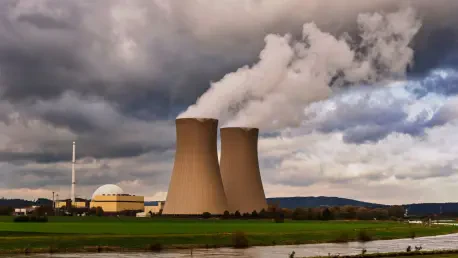

The federal government should act as a catalyst for energy growth by streamlining regulatory frameworks rather than acting as the primary operator of power projects. In the current industrial landscape of 2026, electricity policy serves as the bedrock of a nation’s economic strategy rather than a mere subset of environmental planning. This fundamental shift in perspective is driven by the rapid expansion of artificial intelligence, massive data centers, and advanced manufacturing sectors that demand an unprecedented volume of continuous power. The availability of affordable and constant electricity now determines whether a country survives industrially or falls behind its global competitors. Without a steady flow of baseload electricity—power that remains available regardless of weather conditions—modern technological advancement and the standard of living for millions inevitably stall. The persistent push for weather-dependent energy sources, such as wind and solar, often stems from political idealism rather than the hard engineering reality required to sustain a 24/7 high-tech economy. While these technologies have received significant subsidies, they fail to meet the rigorous demands of hospitals, mines, and semiconductor factories. True national prosperity requires a laser-sharp focus on high-density energy sources that can provide stability without the risk of intermittent failure or grid instability.
Lessons from Industrial Decay and Grid Failure
The case of South Africa provides a sobering warning about the consequences of mismanaging electricity infrastructure and allowing political goals to override technical excellence. Once a global leader in power engineering, the state-owned utility Eskom saw its operational capability eroded by decades of political interference and the postponement of critical maintenance. The crowning achievement of the region, the Koeberg Nuclear Power Station, remains a vital source of low-emission power, but the broader grid has largely collapsed under the weight of systemic mismanagement and corruption. This decay was not an overnight occurrence but rather a slow degradation of standards that favored short-term political gains over long-term industrial health. When engineering decisions are replaced by ideological mandates, the entire economic foundation of a nation begins to crumble. The lesson for other nations is clear: the maintenance of a robust power grid requires a commitment to meritocracy and professional management that remains insulated from the fluctuating whims of election cycles. Without this insulation, even the most advanced energy assets can become liabilities that drag down the entire national economy and discourage future development.
This systemic failure in the southern hemisphere resulted in catastrophic load shedding, a policy of rolling blackouts that lasted up to twelve hours a day for many citizens and businesses. The economic toll was staggering, costing the nation millions of dollars daily and forcing the permanent closure of countless small businesses and large-scale factories. Despite significant investments in wind and solar projects through various green economy initiatives, these intermittent sources could not stabilize a grid that lacked sufficient baseload capacity. The transition to renewables, while well-intentioned, often exacerbated the instability because the grid lacked the necessary storage and synchronization provided by traditional plants. This proved that renewable energy cannot compensate for a lack of reliable, constant power in an industrial society. The resulting instability led to a massive exodus of capital as investors sought more predictable environments for their operations. It highlighted the reality that energy security is not just about the nameplate capacity of power plants but about the reliability and dispatchability of the energy they produce. A country that cannot keep its lights on cannot maintain its status as a modern industrial power or protect its population from economic decline.
Strengthening National Security Through Nuclear Innovation
To avoid a similar path of industrial decay, the United States must reclaim its position of leadership in nuclear technology through rapid innovation and deployment. While dozens of nuclear reactors are currently under construction across the globe, particularly in competing nations, the U.S. risks falling into a position of technological dependency if it does not embrace next-generation solutions immediately. Small Modular Reactors, or SMRs, offer a scalable and flexible alternative to traditional large-scale nuclear plants that often suffer from massive cost overruns and decades-long construction timelines. These smaller units can be manufactured in factories and transported to sites, allowing for a more efficient deployment across diverse geographic regions and specialized industrial zones. By integrating SMRs into the existing grid and using them to power energy-intensive sectors like desalination or high-end manufacturing, the nation can create a more resilient and decentralized energy architecture. This shift toward modularity represents a fundamental change in how nuclear power is conceived, moving away from monolithic projects toward nimble, high-output installations that can meet the specific needs of modern industry while reducing the overall financial risk for investors.
A forward-thinking nuclear strategy must also involve a comprehensive rethink of the entire lifecycle of atomic fuel to maximize efficiency and minimize perceived risks. Rather than treating spent nuclear fuel as a waste liability that requires thousands of years of monitoring, it should be recognized as a strategic asset containing immense untapped energy potential. By investing in modern recycling and reprocessing technologies, the nation can extract additional energy value from used fuel rods and significantly reduce the volume of the ultimate waste product. This approach creates a circular energy economy that minimizes environmental footprints while maximizing domestic energy output and ensuring technological self-reliance. Furthermore, advancements in fast-breeder reactors and other advanced fuel cycles could potentially provide thousands of years of energy using materials that are currently sitting in storage. Developing these technologies locally ensures that the United States remains at the forefront of the global nuclear supply chain, preventing a situation where foreign adversaries control the technology required to process and manage these critical materials. Embracing this circularity transforms a long-standing political problem into a sustainable economic advantage.
Protecting Sovereignty and Economic Stability
National sovereignty is inextricably linked to the control of primary factors of production, with energy and mineral processing sitting at the top of that hierarchy. Outsourcing these critical needs to foreign entities creates a dangerous dependency on rivals, leaving a nation vulnerable to geopolitical shifts and supply chain disruptions. When a country loses its internal capability to produce and manage its own energy, it effectively cedes control over its economic destiny and the long-term security of its industrial base. This vulnerability is especially acute in an age where energy is used as a tool of statecraft and economic warfare. Securing the energy supply through a robust domestic nuclear program ensures that the domestic economy is insulated from price spikes in global commodity markets. It also provides the necessary leverage to maintain an independent foreign policy, as the nation is not beholden to energy exporters for its survival. Sovereignty in 2026 is defined not just by borders and military strength but by the reliability of the electrons flowing into the factories that build the future. By maintaining high-output baseload power locally, a nation ensures that its high-tech infrastructure remains shielded from external pressures and market volatility.
Furthermore, the hyper-inflation of energy costs acts as a direct, regressive tax on every citizen and business, stifling innovation and reducing the quality of life. In regions where the grid has been compromised by poor policy and an over-reliance on expensive, intermittent sources, electricity prices have soared by hundreds of percent over the past few years. This trend drives away domestic investment and forces companies to relocate to jurisdictions with more stable and affordable power. Ensuring an abundance of low-cost, reliable power is the only sustainable way to protect the purchasing power of the public and maintain a competitive edge on the global stage. High energy prices increase the cost of everything from food production to high-end manufacturing, creating a ripple effect that slows down the entire economy. By prioritizing high-density energy sources like nuclear, policymakers can break the cycle of energy scarcity and create a foundation for broad-based economic growth. The goal should be energy abundance, where the cost of power is low enough to encourage the development of new industries that were previously considered economically unfeasible due to high operational expenses.
A Framework for Energy Abundance
The role of the federal government in this transition should be to act as a catalyst for energy innovation through the removal of unnecessary barriers rather than through direct operation. This involves streamlining regulatory frameworks at agencies like the Nuclear Regulatory Commission to ensure that private-sector projects can move from the design phase to commercialization without decades of bureaucratic delay. Current regulatory structures often treat nuclear power with a level of scrutiny that is disproportionate to its actual risk compared to other industrial activities. Reforming these processes to be more predictable and outcome-oriented would unlock billions of dollars in private capital for the construction of new reactors. Public funds should be strategically focused on high-risk, high-reward research and development that the private industry can eventually scale to meet market demands. This includes funding for materials science, advanced cooling systems, and next-generation fuel types that can improve the safety and efficiency of future reactors. By acting as a partner rather than a hurdle, the government can foster a competitive market where the best technologies can thrive based on their technical merits.
Support for energy projects followed a performance-based model that moved away from subsidies for fashionable technologies that failed to deliver consistent results. Instead, incentives were tied to measurable outcomes, such as the actual quantity of electricity generated, verified cost reductions, and the creation of long-term industrial jobs. By committing to the proven, high-output potential of nuclear technology, policymakers fostered an environment of energy abundance that fueled massive industrial expansion. This shift toward reliable engineering and market-driven innovation secured the nation’s energy future and strengthened its economic sovereignty. Strategic investments in the domestic fuel cycle and modular reactor designs eliminated dependencies on foreign supply chains. The result of these actions was a revitalized manufacturing sector and a more resilient national power grid that supported the demands of a high-tech society. Ultimately, the transition to a nuclear-centered energy policy provided the stability needed for long-term planning and investment, ensuring that the economy remained competitive in an increasingly complex global landscape. These steps established a clear pathway for sustained growth and the preservation of national autonomy through technological excellence.