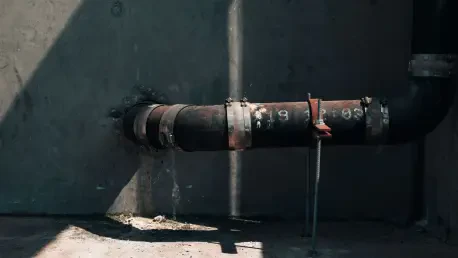

While the Seaview Association points to high annual financial contributions to the fire department, operational experts maintain that the physical infrastructure remains the primary barrier to safety. This divergence in perspective highlights a growing crisis within the Fire Island community, where the charm of seasonal residency masks a deeply compromised emergency response system. Recent evaluations by fire officials have characterized the local water supply as fundamentally deficient, noting that the current reliance on a single, aging well violates basic safety standards for residential protection. Unlike neighboring districts that have successfully transitioned to integrated regional networks, Seaview remains tethered to a private, isolated system that is struggling to meet the demands of modern firefighting. The situation has reached a critical juncture, where the discrepancy between administrative assurances and tactical reality creates a precarious environment for both residents and first responders tasked with protecting property and lives.
Technical Hazards and Operational Strain
Critical Supply Shortages: The Two-Well Requirement
The core of the technical failure lies in the community’s current operational configuration, which utilizes only a single well instead of the dual-well system required for adequate safety redundancy. Fire officials have explicitly stated that the capacity of this remaining well is so limited that the entire available water supply would likely be exhausted within just ten minutes of high-pressure pumping during a significant structural emergency. This creates a terrifying scenario for incident commanders who must calculate their tactical approaches knowing that their primary resource is finite and rapidly depleting. Modern firefighting tactics for the dense wooden structures common in the area require a sustained flow of at least 1,500 gallons per minute, a benchmark that the current aging infrastructure simply cannot achieve under pressure. Without the necessary backup well to maintain volume and pressure, the system remains a liability rather than a tool for fire suppression efforts today.
Manual Drafting: Bay Suction and Logistical Limits
Because the hydrant system is essentially unreliable, firefighters have been forced to develop complex and time-consuming workarounds that jeopardize the speed of their response. Currently, the more robust water supply from neighboring Ocean Beach only extends its effective reach approximately four blocks into Seaview territory, leaving the majority of the community in a hydraulic shadow. To compensate, crews are required to employ a labor-intensive relay method that involves drafting water directly from the bay using heavy suction hoses and specialized pumping equipment. This process is inherently slow and fraught with potential points of failure, such as physical obstructions along the docks or mechanical limitations of the suction pumps themselves. Such manual methods are a poor substitute for a modern pressurized hydrant system, as they introduce significant delays during the most critical first minutes of a fire when rapid intervention is absolutely essential.
Administrative Conflict and Future Outlook
Records and Perceptions: Contradictory Safety Accounts
A significant rift has emerged between the Seaview Association leadership and the fire department regarding the historical performance of the water system during past emergencies. Community leaders have frequently pointed to the successful suppression of fires in 2022 and earlier in 2026 as definitive proof that the aging infrastructure remains functional and capable of handling crises. From an administrative perspective, the fact that these buildings were saved suggests that the system worked as intended, justifying a slower pace of infrastructure replacement. However, fire department records and operational logs provide a much darker and more accurate narrative of those specific events. According to the firefighters who were on the ground, those successful outcomes were not the result of a functional Seaview water system, but rather a direct consequence of emergency crews bypassing the local grid entirely to find more reliable sources nearby.
Strategic Resolutions: Investment and Emergency Planning
While the long-term construction project moved forward, fire officials prioritized immediate tactical adjustments to manage the existing risks. They implemented rigorous training drills that specifically simulated hydrant failures, ensuring that every volunteer was proficient in drafting water from the bay under extreme pressure. Furthermore, a renewed emphasis was placed on regional cooperation, establishing clearer protocols for mutual aid that did not rely on the broken interconnect valves. Community leaders and safety experts recognized that the path forward required more than just new pipes; it demanded a culture of transparency where infrastructure limitations were addressed rather than dismissed. The successful completion of the new well system served as the ultimate goal, but the interim period was defined by a cautious and proactive stance toward emergency preparedness. By acknowledging the severity of the infrastructure deficit, the community finally took the steps needed.