
To minimize the environmental footprint on the seabed and coastline, Terna is utilizing advanced horizontal drilling techniques for the 1.3-billion-euro Adriatic Link between Abruzzo and Marche. This massive undertaking represents a fundamental shift in how Italy approaches its national transmission grid, moving away from traditional overhead lines in sensitive areas toward sophisticated underwater infrastructure. The transition to a decarbonized economy requires more than just installing solar panels or wind turbines; it demands a resilient network capable of transporting clean energy from high-production regions to industrial hubs. By leveraging deep-sea cabling technology, the operator aims to increase exchange capacity by roughly 1,000 megawatts, effectively doubling the current throughput between the central-southern and central-northern zones. This strategic investment ensures that surplus renewable energy generated in the southern regions does not go to waste, thereby optimizing the national energy mix while lowering costs for consumers.
Engineering Resilience: Technical Innovations in Subsea Infrastructure
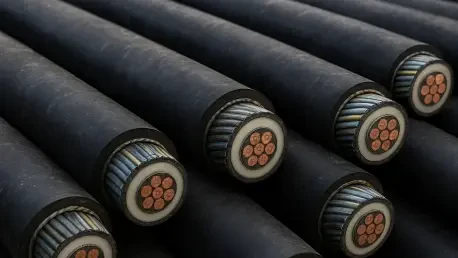
The technical core of the Adriatic Link lies in its High Voltage Direct Current (HVDC) technology, which significantly reduces electricity dissipation during long-distance transport. Direct current systems are particularly suited for submarine applications because they avoid the capacitive losses inherent in alternating current cables over several hundred kilometers. These subsea cables utilize cross-linked polyethylene insulation, a material chosen for its high thermal performance and environmental safety. Unlike older cable designs that required complex cooling systems, these modern components are designed to withstand the immense pressure of the Adriatic seabed while maintaining high electrical efficiency. Engineers have meticulously mapped the underwater topography to avoid sensitive marine habitats, ensuring that the installation process remains as non-invasive as possible. This project sets a new standard for maritime engineering, proving that large-scale industrial assets can coexist with fragile ecosystems in the region.
Beyond the cables themselves, the success of this modernization effort depends on the construction of advanced converter stations that bridge the gap between direct and alternating current. These stations are being built with architectural designs that blend into the local landscapes, utilizing sound-dampening materials and low-profile structures. The integration process involves sophisticated control systems that allow grid operators to respond in real-time to fluctuations in energy supply and demand. As the share of intermittent renewable energy grows, these converters provide the necessary flexibility to stabilize the frequency of the entire Italian power system. Furthermore, the use of horizontal directional drilling at the landfall points allows the cables to pass deep beneath the beach and shoreline. This method avoids any visible impact on the coastal environment, demonstrating a commitment to social responsibility while simultaneously fortifying the nation’s energy security for the coming years.
Grid Stability: Strengthening the National Energy Transmission Network
Modernizing the Italian grid is an essential response to the changing geography of energy production, where the focus has moved from northern coal plants to southern solar and wind farms. The Adriatic Link serves as a vital artery in this new configuration, alleviating bottlenecks that have historically constrained the flow of green power across the Apennine Mountains. By creating a high-capacity bypass along the coast, the project enhances the overall reliability of the transmission network, making it more resilient to extreme weather events and unexpected maintenance needs. This structural improvement is critical during peak summer months when demand for cooling drives consumption to record levels across the peninsula. Regional economies in the Marche and Abruzzo regions also benefit from the direct investment, which includes the upgrading of local distribution networks and the creation of highly specialized technical jobs. This ensures that the benefits of the transition are distributed equitably.
The implementation of the Adriatic Link and associated submarine projects demonstrated that large-scale infrastructure could be successfully integrated with environmental conservation goals. Stakeholders prioritized the use of innovative drilling and modular construction, which successfully mitigated the risks associated with coastal development and marine ecosystem disruption. Moving forward, the focus shifted toward the deployment of autonomous underwater vehicles for the continuous monitoring of subsea assets, ensuring long-term structural integrity. These technological advancements provided a clear roadmap for future initiatives, emphasizing the need for real-time digital monitoring and cross-border cooperation. Decision-makers learned that investing in high-voltage subsea technology was the most effective way to manage the variability of solar and wind power. Consequently, the emphasis moved to developing decentralized storage solutions and hydrogen-ready infrastructure to complement the existing cable network.