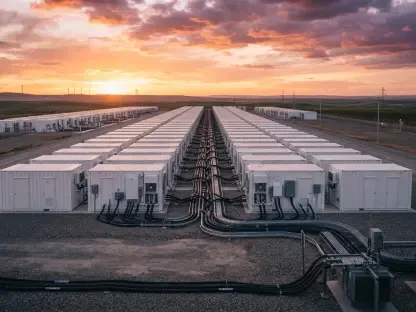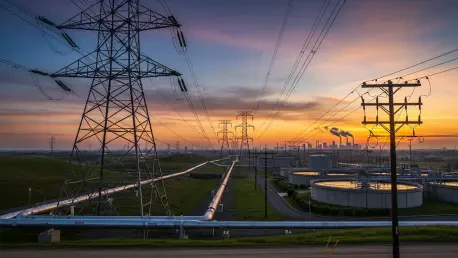

The American electrical grid is currently standing at a critical crossroads where the urgent necessity for modernization meets a growing crisis of consumer affordability. Recent financial disclosures from investor-owned utilities indicate a massive 21% surge in projected capital expenditures, with total planned spending now reaching a staggering $1.4 trillion through 2030. This aggressive financial trajectory marks a definitive end to the era of stagnant energy demand that characterized the previous decade, as utilities race to accommodate the rapid expansion of digital infrastructure and extreme weather resilience. However, this capital influx is not occurring in a vacuum; it arrives at a time when American households are already grappling with significant inflationary pressures, creating a volatile tension between the technical requirements of a 21st-century power grid and the economic reality of the people who must pay for it.
While the engineering and infrastructure needs are undeniable, the mechanism for funding these upgrades—primarily through rate increases passed on to consumers—is coming under intense scrutiny. In the past year alone, gas and electric utilities requested $31 billion in rate hikes, a figure that more than doubles the $15 billion sought in 2024. This suggests that the financial wave of the proposed $1.4 trillion investment has not yet fully crashed upon the public, signaling that the most significant price adjustments are likely still on the horizon. As these five-year plans transition from corporate spreadsheets to physical construction, the industry faces a fundamental challenge: maintaining public support for a transition that promises a more reliable future but threatens immediate financial stability for millions of residents across the nation.
Regional Spending Dynamics and Corporate Leaders
Geographic Hotspots and the Southern Gold Rush
The distribution of this massive $1.4 trillion investment is far from uniform, revealing a distinct geographic preference for the American South that analysts are calling a modern infrastructure gold rush. According to recent data, the Southeast has emerged as the primary epicenter of utility spending, with proposed investments totaling $572 billion. This figure is more than double the projected spending of any other individual region in the United States, including the Midwest at $272 billion and the West at $225 billion. The sheer scale of development in the South is driven by a combination of rapid population migration, favorable regulatory environments, and a concentrated effort to attract energy-intensive industries. This regional imbalance highlights how the future of the American grid is being shaped by local economic booms, potentially leaving other regions to struggle with aging systems that receive comparatively less financial attention.
Building on this regional disparity, the concentration of capital in the South suggests a strategic pivot by major utility providers to capitalize on the “Sun Belt” expansion. This influx of nearly six hundred billion dollars is intended to facilitate a complete overhaul of transmission networks and generation capacity to meet the needs of a burgeoning population. While the Northeast remains significant with $195 billion in planned spending, the focus remains southward where land is available and industrial demand is peaking. This trend creates a unique set of challenges for local regulators who must ensure that the rapid pace of construction does not lead to “gold-plating” or unnecessary expenditures that could unnecessarily inflate rates. As the South becomes the laboratory for the next generation of American power infrastructure, the results of this spending spree will likely set the precedent for how utility companies balance expansion with consumer protection in the coming years.
Top Players Driving Infrastructure Modernization
Among the corporate giants leading this massive financial undertaking, Duke Energy has positioned itself at the forefront with a monumental $103 billion five-year spending plan. This plan, which is the largest of its kind in the country, covers a vast service territory spanning the Carolinas, Florida, and parts of the Midwest. The company maintains that such a high level of expenditure is vital for transitioning to cleaner energy sources while simultaneously hardening the grid against the increasing frequency of severe weather events. By focusing on reliability and resiliency, Duke Energy and its peers argue that these upfront costs are essential investments that will prevent the far more expensive consequences of widespread grid failures. The scale of this individual corporate budget reflects a broader industry trend where the top ten utilities with the highest capital spends almost exclusively have a footprint in the Southern United States.
This corporate strategy of aggressive investment is further mirrored by other major players such as NextEra Energy and Southern Company, which are also committing tens of billions to infrastructure. These organizations are navigating a complex landscape where they must satisfy investor expectations for growth while fulfilling their mandate to provide reliable public service. The move toward digitizing the grid and integrating renewable sources requires a level of capital that dwarf historic spending patterns. Consequently, these companies are becoming massive engines of economic activity, employing thousands of contractors and driving demand for raw materials like steel and copper. However, the concentration of so much capital within a few major entities raises questions about market influence and the ability of smaller municipal utilities to keep pace with the technological standards being set by the investor-owned giants of the South.
Factors Driving Demand and the Affordability Debate
Catalysts for Increased Energy Consumption
The sudden reversal of the long-term trend of flat energy demand is being fueled by a convergence of technological and economic forces that are taxing the existing grid to its limits. One of the most significant drivers is the exponential growth of digital infrastructure, particularly data centers required to support cloud computing and the recent explosion in generative artificial intelligence. These facilities operate around the clock and consume vast amounts of electricity, often requiring dedicated substations and high-voltage transmission lines to function. Furthermore, the rise of high-intensity cryptocurrency mining and the electrification of the transportation sector have added layers of complexity to load forecasting. Projections now suggest that summer peak demand across the bulk power system will grow by 24% over the next decade, a level of growth that necessitates immediate and substantial capacity additions to avoid future brownouts or systemic instability.
In addition to industrial demand, utilities are facing the costly reality of “grid hardening” to protect against environmental risks, such as the catastrophic wildfires that have plagued the Western United States. This involves undergrounding power lines and installing advanced sensors to detect equipment failures before they spark disasters, which are incredibly capital-intensive projects. Meanwhile, the lingering effects of global inflation have significantly driven up the baseline costs for these initiatives, with the price of specialized labor and essential components like transformers reaching record highs. When these rising operational costs are combined with the need for massive new generation assets, the financial pressure on utilities becomes immense. This multi-front demand surge means that utilities are no longer just maintaining a system; they are essentially rebuilding it from the ground up to handle a much higher and more volatile load than the original infrastructure was ever designed to support.
Balancing System Reliability with Ratepayer Impact
The intensifying debate over these trillion-dollar investments centers on whether the long-term benefits of a modernized grid actually justify the immediate financial pain inflicted on residential consumers. Utility representatives, often speaking through the Edison Electric Institute, argue that proactive spending is a form of insurance against future catastrophes. Their perspective holds that by building robust infrastructure now, they can integrate large-scale industrial users—like data centers—who will eventually help pay for the system’s fixed costs. In theory, this would spread the financial burden across a larger base of kilowatt-hours, eventually leading to lower unit prices for everyone. They emphasize that because these assets have lifespans of thirty to fifty years, the costs can be amortized over decades, keeping the annual impact on a typical household bill relatively stable while providing a vastly superior service.
In sharp contrast, consumer advocacy groups such as PowerLines and the Southern Alliance for Clean Energy warn that the current trajectory is unsustainable and potentially exploitative. These advocates point out that residential electricity prices have already surged by 33% between 2019 and 2025, even before the bulk of the new $1.4 trillion spend has been reflected in monthly bills. There is a deep-seated concern that everyday families are effectively subsidizing the infrastructure needed by tech giants and industrial players who may not pay their fair share of the grid’s expansion. Polls indicate that a vast majority of Americans are fearful of rising utility costs, which often outpace wage growth and eat into essential household budgets. This friction highlights a fundamental disagreement over the “fairness” of the current regulatory model, as critics argue that utilities are incentivized to overspend on capital projects because they earn a guaranteed rate of return on those investments, regardless of the actual necessity.
Strategic Outlook for Energy Regulation
The unprecedented scale of planned utility spending through 2030 underscores the need for a fundamental shift in how energy policy and consumer protection are managed at both state and federal levels. To ensure that the $1.4 trillion investment results in a more resilient grid without bankrupting the average household, regulators must move toward more transparent and rigorous “integrated resource planning” processes. These processes should prioritize demand-side management and energy efficiency programs as viable alternatives to costly new generation plants whenever possible. Furthermore, state utility commissions should implement “decoupling” mechanisms that break the link between a utility’s profits and the amount of electricity it sells, encouraging companies to focus on system optimization rather than just building more physical assets to increase their rate base.
As the industry moves forward, it is essential for policymakers to explore new cost-sharing models that accurately reflect the usage patterns of modern grid participants. This includes developing specialized rate structures for data centers and other high-intensity users to ensure they contribute a proportionate share to the infrastructure upgrades their presence requires. Consumers should remain vigilant and participate in public utility commission hearings, as these local bodies have the final say on rate increases. Ultimately, the successful evolution of the American power grid will depend on a balanced approach that embraces technological advancement while strictly enforcing affordability standards. By fostering a competitive environment for grid services and demanding greater accountability from investor-owned utilities, the nation can transition to a modernized energy future that remains accessible to all citizens regardless of their economic status.