
The relentless expansion of hyperscale cloud facilities and high-density artificial intelligence training clusters has fundamentally disrupted the equilibrium of the American power grid, triggering an urgent debate over who should finance the massive transmission upgrades required. As these facilities consume electricity at levels previously reserved for entire cities, the strain on existing infrastructure, particularly within the PJM Interconnection, has reached a critical threshold. This analysis explores the friction between the digital economy’s hunger for power and the regulatory necessity to protect public utility rates. The objective is to evaluate whether the current “socialized” cost model remains viable or if a “user-pays” framework is the only equitable path forward in an increasingly power-hungry technological landscape.
The Historical Shift: Moving from Shared Infrastructure to Private Burden
Historically, the evolution of the electrical grid was characterized by steady, predictable growth tied to population expansion and general industrial activity. Under this traditional model, the costs for major transmission projects were distributed across the entire ratepayer base. This socialization of expenses was justified by the principle that a more robust and interconnected grid provided collective benefits, enhancing reliability and reducing long-term energy prices for everyone. However, the sudden arrival of hyperscale data centers has shattered this predictability, introducing massive, localized demand spikes that necessitate rapid and expensive network enhancements that do not always offer clear benefits to the average resident.
This transition is significant because the scale of modern data center projects has turned them from standard industrial customers into singular drivers of regional infrastructure policy. When a single developer requests a connection that requires hundreds of millions of dollars in dedicated substation and line upgrades, the argument for shared cost-recovery begins to fail. Understanding this move from general grid evolution toward project-specific necessity is essential for grasping why legacy regulatory structures are now viewed as outdated. The current market environment demands a re-evaluation of how infrastructure is valued and who carries the financial risk of high-density energy development.
Regulatory Tensions and the Legal Dispute Over Infrastructure Equity
Examining the Regional Grid Authority: PJM and Federal Oversight
Earlier this year, the Federal Energy Regulatory Commission initiated a significant “show cause” order directed at the PJM Interconnection and other major grid operators. This action served as a formal recognition that existing interconnection protocols might be leading to unjust and unreasonable rate structures. The commission highlighted a growing concern that the current rules lack the precision necessary to prevent the costs of large-scale, private network upgrades from being folded into the general transmission rates paid by millions of people. This order initiated a period of intense scrutiny, forcing grid operators to justify why their current methods do not unfairly favor massive developers at the expense of the public.
The Economic Risk: Mitigating the Impact on Small Ratepayers
State-level advocates have become the most vocal critics of the status quo, arguing that the practice of “cost shifting” represents a major threat to economic equity. In regions spanning Maryland, Ohio, and Pennsylvania, representatives for consumers have characterized current cost-allocation methods as arbitrary. They maintain that allowing data centers to interconnect without paying the full cost of the required upgrades effectively forces residential families and small businesses to subsidize the capital expenditures of multi-billion dollar technology firms. To combat this, there is a mounting push for a policy mandate requiring large-load customers to internalize 100% of the network upgrade costs triggered by their projects, ensuring a direct link between cause and payment.
Jurisdictional Barriers: The Complexity of Interstate Power Markets
The multi-state nature of the PJM Interconnection adds a layer of regulatory complexity that often leaves individual states with limited authority. Because transmission zones cross state lines, a local commission might find itself unable to prevent its residents from paying for a massive upgrade necessitated by a project located hundreds of miles away in a different jurisdiction. This creates a regulatory gap where the regional nature of the wholesale market overrides local consumer protection efforts. Experts suggest that without a unified federal standard that strictly defines cost responsibility for large loads, state regulators will remain trapped in a cycle of incomplete protection, unable to shield their constituents from the financial fallout of regional expansion projects.
The Future Landscape: Advanced Modeling and Autonomous Power Solutions
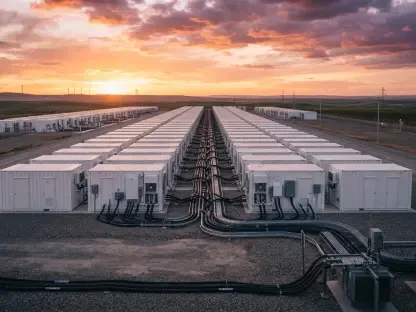
The ongoing tension between grid equity and technological expansion is expected to drive significant innovations in how energy infrastructure is planned and financed. One emerging trend is the use of high-resolution power flow modeling to identify precisely which entities benefit from specific transmission upgrades, allowing for more granular and defensible cost allocation. Furthermore, the market is seeing a rise in “behind-the-meter” generation strategies, where data center operators build their own dedicated power plants or implement large-scale battery storage to minimize their impact on the public grid. While this reduces the need for immediate transmission reinforcements, it also raises new questions about how these facilities contribute to the overall maintenance of the regional energy system.
Strategic Recommendations: Achieving Equity in Energy Modernization
Navigating this evolving regulatory environment requires a shift toward transparency and developer accountability. Policymakers and grid operators should prioritize the implementation of full cost-recovery agreements that place the financial burden of network upgrades squarely on the entities that drive the need for them. Additionally, regional planning processes must become more transparent, providing clear data that distinguishes between general reliability projects and those necessitated by specific large-scale industrial connections. By fostering a “user-pays” environment, the energy sector can continue to support the growth of the digital economy without compromising the financial security of the general public, creating a more sustainable model for infrastructure investment.
Reflecting on Equitable Growth: Final Insights and Policy Directions
The resolution of the PJM cost dispute demonstrated that a more granular approach to infrastructure funding was necessary for long-term stability. Stakeholders utilized the findings from recent legal challenges to advocate for localized cost recovery, ensuring that the financial burden of technological growth did not fall upon residential users. These efforts established new standards for transparency by decoupling regional grid benefits from private industrial requirements. The shift toward 100% developer accountability successfully addressed the risks of cost shifting and provided a clearer framework for future interconnections. This transition facilitated a more resilient market where the infrastructure needed for the next generation of computing was built upon a foundation of financial fairness and public responsibility.