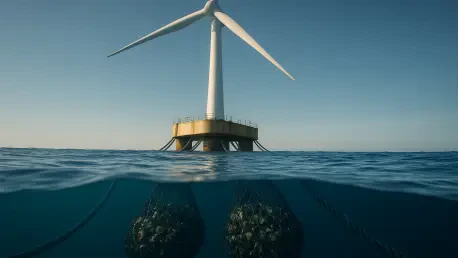

By installing lantern nets and collector ropes directly onto turbine columns, engineers are transforming industrial energy structures into complex artificial reefs. This dual-purpose strategy marks a pivotal shift in how ocean territory is managed, moving away from isolated industrial zones toward integrated marine ecosystems. As the demand for decarbonized energy reaches an all-time high, the AQUASATH project off the Spanish coast has demonstrated that the submerged portions of massive 2-megawatt floating turbines can serve as ideal hosts for commercial shellfish. This breakthrough addresses the growing need for food security and clean power without requiring additional seafloor footprints. By utilizing the massive concrete or steel foundations of these floating units, developers have found a way to turn passive infrastructure into active biological hubs. The integration of aquaculture into wind farm operations provides a blueprint for a regenerative blue economy where industrial activity supports, rather than displaces, marine life. This approach effectively optimizes the vast oceanic expanses currently being designated for energy.
Engineering Synergy: Bridging Energy and Biology
The AQUASATH project, led by the Spanish developer Saitec, has implemented what is known as a Nature-Inclusive Design at the BiMEP test site. This innovative approach involves modifying the DemoSATH floating platform to act as a multi-trophic aquaculture hub. Instead of leaving the submerged columns as bare industrial surfaces, the team intentionally introduced native species to see if they could thrive in the high-energy environment of the open ocean. Professional divers and marine biologists worked in tandem to install a variety of specialized equipment, including suspended lantern nets and heavy-duty collector ropes. These components were designed to withstand the constant motion of the waves and the structural vibrations of the turbine while providing a stable home for shellfish. This experiment represents a significant departure from standard maritime engineering, which typically seeks to prevent biofouling—the growth of organisms on hulls—rather than encouraging it as a productive resource. The result is a hybrid structure that generates electricity above the surface and food below.
Within these underwater nurseries, the project successfully cultivated a diverse biological community featuring Mediterranean mussels, European flat oysters, and even sea lettuce. The choice of these species was deliberate, focusing on organisms that filter nutrients from the water and require no supplemental feeding, thereby maintaining a low environmental impact. The collector ropes and mussel lines were strategically placed to benefit from the nutrient-rich currents that characterize deep-water sites. As these organisms grew, they effectively transformed the steel and concrete foundation into a vertical reef system, attracting smaller fish and crustaceans that sought shelter among the nets. This transition from a sterile industrial tool to a living habitat demonstrates the potential for offshore energy to actively contribute to biodiversity. By providing a hard substrate in otherwise sandy or barren deep-water zones, the floating turbines act as stepping stones for marine species, allowing them to colonize areas that were previously unreachable due to a lack of structure.
Operational Success: Stability and Performance Metrics
One of the most critical aspects of the AQUASATH pilot was determining whether the presence of biological habitats would interfere with the primary function of the wind turbine. Preliminary results have confirmed that aquaculture and energy production are not only compatible but can be mutually beneficial in volatile open-sea environments. The massive floating foundation provided a secure and stable anchor for the underwater habitats, sheltering the delicate nets from the harshest currents. Crucially, the added weight and drag of the shellfish colonies did not compromise the mechanical integrity of the turbine or its ability to generate electricity efficiently. Sensors monitored the structural load and vibrational frequency of the platform throughout the trial, finding that the impact of the “living” components was well within safe operational limits. This milestone is essential for the industry, as it proves that energy developers can incorporate food production without risking their high-value assets or decreasing their annual energy production through mechanical strain.
Beyond mechanical stability, the project also addressed the biological challenges of farming in the deep ocean. Transporting and maintaining delicate shellfish larvae in offshore environments is notoriously difficult, yet the stable platform of the floating turbine provided a unique advantage. The deep-water location offered a cleaner, more consistent environment for the shellfish compared to nearshore farms, which are often subject to terrestrial runoff and fluctuating salinity levels. The growth rates observed at the test site were impressive, suggesting that the nutrient-rich waters found at these depths could support high-quality food production on a commercial scale. Furthermore, the automated monitoring systems used for the turbine were adapted to keep a watchful eye on the health of the shellfish, providing real-time data on water quality and biological growth. This synergy allows for a level of precision in aquaculture that is rarely seen in traditional coastal operations, ensuring that the food produced is both safe for consumption and sustainably raised.
Strategic Gains: Integrating the Blue Economy
The move toward shared ocean infrastructure offers a range of strategic advantages that extend far beyond simple resource efficiency. By integrating energy and food production, the energy sector can significantly lower its operational and maintenance costs through shared logistics and monitoring resources. For instance, vessels used for turbine inspections can simultaneously be utilized to monitor and harvest the shellfish, reducing the number of trips required and lowering the overall carbon footprint of both industries. This collaborative approach also boosts the economic viability of offshore projects by creating a secondary revenue stream from the sale of premium, offshore-grown seafood. Moreover, the integration of aquaculture helps to secure broader public and regulatory support for offshore wind expansion. When a wind farm is presented as a multi-functional site that provides both clean energy and local food, it becomes much more attractive to stakeholders who might otherwise be wary of industrializing the open ocean for energy.
In the final analysis, the successful integration of shellfish farming into floating wind structures established a new standard for sustainable ocean development. Regulators and industry leaders moved to adopt multi-use zoning as a requirement for future offshore leases, ensuring that every kilowatt of energy produced was accompanied by a measurable benefit to the marine environment. Investors directed capital toward companies that pioneered nature-inclusive designs, recognizing that the long-term value of these assets depended on their ecological resilience. For coastal communities, the transition provided a steady supply of high-quality seafood and a diverse range of jobs in both the technology and maritime sectors. Moving forward, developers prioritized the deployment of sensors to track biodiversity gains and carbon sequestration within these artificial reefs. By treating the ocean as a holistic system rather than a collection of separate industries, the global community ensured that the transition to renewable energy also served as a catalyst for restoration.