
Christopher Hailstone brings decades of frontline experience to the complex intersection of utility-scale storage and the burgeoning demands of the tech sector. As a seasoned expert in electricity delivery and grid reliability, he has spent his career navigating the intricate regulatory frameworks that govern how we power modern society. His insights are particularly vital today as Michigan embarks on a massive transformation of its energy landscape, balancing the aggressive expansion of data centers with the absolute necessity of maintaining affordable, reliable service for every homeowner on the grid.
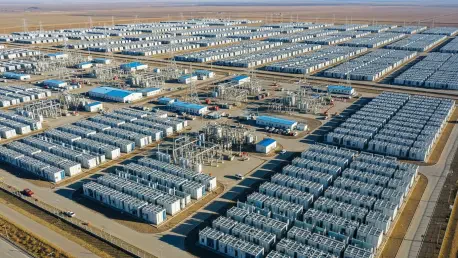
Michigan is currently setting a national precedent by integrating over 1,300MW of storage capacity to stabilize its shifting energy mix. In this discussion, we explore the strategic decisions behind massive projects like the 450MW Big Mitten Energy Centre, the nuances of utility-owned versus private-partnered storage models, and the rigorous financial safeguards designed to protect ordinary ratepayers from the costs of industrial expansion.
Michigan is implementing 1,332MW of storage through projects like the 450MW Big Mitten Energy Centre. How do you decide between 20-year tolling agreements and utility-owned self-build contracts, and what specific steps ensure these facilities meet long-term electric capacity requirements?
The decision between a tolling agreement and a self-build contract often comes down to who is best positioned to manage the long-term operational risk and capital investment. For a project like the 450MW Big Mitten Energy Centre, a 20-year tolling agreement allows the utility to lock in capacity without the immediate burden of ownership, whereas the self-build models at Monroe 1 and Fermi give the utility direct control over the assets. To ensure these facilities meet our long-term needs, we rely on rigorous settlement agreements like the one outlined in DTE Electric’s Integrated Resource Plan, which identified a minimum requirement of 850MW of storage. We verify these projects through strict Commission oversight, ensuring that every megawatt contributes to a diversified grid that can handle peak loads. It’s a balancing act that requires us to look two decades into the future to ensure the lights stay on while the transition from fossil fuels continues.
A 1,383MW data center project requires 332MW of dedicated storage where the tech company covers development costs while the utility operates the grid. What are the operational complexities of this ownership structure, and how do you calculate the market revenues that the private partner should earn?
This is a unique hybrid model where Oracle, through Green Chile Ventures, essentially finances the 332MW of storage while the utility retains the “keys” to the facility. The operational complexity lies in the dual-purpose nature of the battery; it must support the data center’s massive 1,383MW demand while also providing broader grid services when called upon by the utility. Calculating market revenues involves tracking how the battery performs in the wholesale market, with the private partner earning the upside from those market interactions over a 15-year cost-recovery period. We must maintain a very clear “firewall” in the accounting to ensure that while the utility operates the site to maintain grid stability, the financial benefits of market participation flow back to the developer who funded the capital expenditure. It’s a high-stakes partnership that requires precise real-time data and transparent reporting to ensure both the tech firm and the utility are getting exactly what they contracted for.
New regulatory approvals include 19-year contracts and 80% minimum billing demands to prevent residential customers from subsidizing industrial costs. What financial risks do these mandatory safeguards create for data center developers, and how do they compare to standard industrial electricity rate structures?
These safeguards are some of the most stringent in the country, specifically designed to shift the financial risk away from the grandmother in Detroit and onto the billion-dollar tech developer. A 19-year contract is significantly longer than typical industrial agreements, and the 80% minimum billing demand means if the data center only uses half of its projected power, it still pays for 80%, creating a high “take-or-pay” hurdle for the developer. Furthermore, if a facility shuts down early, the termination payment can equal up to 10 years of that minimum billing demand, which is a massive liability to carry on a balance sheet. Compared to standard industrial rates, which are often more flexible, these terms essentially force the developer to act as a guarantor for the grid infrastructure they require. It’s a “pay-to-play” environment where the developer assumes the risk of their own technological obsolescence or market shifts.
Modern energy hubs are integrating massive solar arrays with both lithium-ion BESS and 50MW long-duration energy storage systems. What performance metrics differentiate these technologies for 24/7 reliability, and how should a utility manage the procurement of battery modules versus master service agreements for EPC?
When we look at 24/7 reliability, we evaluate lithium-ion BESS for its rapid response and “cycling” capability, while 50MW long-duration systems, like iron-air batteries, are judged on their ability to discharge power over multiple days rather than just hours. The primary metric for long-duration storage is the “duration-to-cost” ratio, ensuring we can cover the gaps when the 1,600MW of solar isn’t producing. To manage this, a utility must separate the procurement of the physical battery modules from the Master Service Agreements (MSAs) for Engineering, Procurement, and Construction (EPC). This allows the utility to vet the chemistry and safety of the battery cells independently while holding the EPC contractor accountable for the complex integration of these two very different storage technologies. It’s about creating a layered defense where short-term bursts and long-term endurance work in tandem to create a truly resilient energy hub.
Recent federal discussions suggest a potential moratorium on data center expansion due to grid strain. How can energy providers balance rapid tech growth with a ratepayer protection pledge, and what specific infrastructure upgrades are most critical to prevent localized price spikes for ordinary consumers?
Balancing this growth requires a “protection-first” mindset where the utility agrees to be responsible for any costs it cannot recover from the industrial user, as seen in recent Michigan orders. The most critical infrastructure upgrades aren’t just the batteries themselves, but the high-voltage transmission lines and substation equipment that can handle the sheer “weight” of a 1,383MW load without overheating the local distribution network. We use tools like the Ratepayer Protection Pledge to ensure tech giants cover 100% of the delivery infrastructure costs, preventing those multi-million dollar bills from being tacked onto residential rates. By forcing the data centers to develop their own generation and storage—essentially building their own “mini-grids”—we can alleviate the strain on the existing system. The goal is to make these tech hubs “grid-neutral” or even “grid-positive” so that their presence doesn’t cause a localized price spike for the surrounding community.
What is your forecast for battery energy storage systems in the industrial sector?
I predict that within the next decade, we will see battery storage become a mandatory “attachment” for any industrial project exceeding 500MW, moving away from optional participation to a regulatory requirement. We are already seeing this shift with the 1,332MW of BESS approved in Michigan, which actually exceeds the capacity of the state’s newest 1,150MW natural gas plant. This tells me that storage is no longer just a “green” accessory; it is the new backbone of industrial reliability that will eventually replace gas-fired peaker plants entirely. As long-duration technologies like 50MW iron-air systems mature, industrial sectors will be able to operate entirely independently of the traditional grid during peak pricing hours, fundamentally changing how we value and trade electricity. The future of the industrial sector is not just about consuming power, but about being a flexible, storage-heavy partner that stabilizes the entire energy ecosystem.