
The ambitious blueprint for Massachusetts to achieve a carbon-neutral future currently rests on a precarious foundation of massive infrastructure projects that are struggling to meet the escalating demands of a warming climate. As record-breaking summer temperatures sweep across New England, the regional power grid is facing a trial by fire that has exposed the inherent risks of a centralized green energy strategy. Two primary pillars of this transition, the New England Clean Energy Connect transmission line and the Vineyard Wind offshore facility, were envisioned as the reliable backbone of a modern electrical system. However, these multi-billion-dollar investments are currently operating well below their intended capacities, leaving state officials to reconcile their long-term climate mandates with the immediate, messy realities of technical malfunctions. This disconnect between legislative ambition and operational performance suggests that the path toward decarbonization may be more fragile than policymakers initially anticipated.
Navigating Technical Barriers: The New England Clean Energy Connect
The New England Clean Energy Connect serves as a prime example of the logistical and technical complexities that define modern energy imports. Spanning 145 miles of rugged terrain, this transmission line was designed to transport massive quantities of zero-emission hydropower from Canadian dams directly into the Massachusetts electrical grid. When the project reached completion in early January, state officials celebrated it as a monumental victory, anticipating it would supply nearly one-fifth of the region’s total electricity needs. However, the initial months of operation have been marred by significant inconsistencies and unpredicted outages. Most notably, a recent two-week period saw the line provide no power at all, as engineers struggled with sophisticated technical malfunctions that required extensive fine-tuning. These disruptions highlight the fragility of long-distance transmission, where a single mechanical failure can effectively sever a major artery of the state’s energy supply, forcing a sudden and costly pivot to backup sources.
Environmental factors in the source region have further complicated the reliability of imported hydropower, illustrating the interconnectedness of climate risks. While Massachusetts depends on Québec for clean energy, a record-breaking drought in the Canadian province has severely depleted the water reservoirs necessary for consistent power generation. This scarcity has forced Canadian officials to scale back their own hydropower initiatives and implement stricter water usage regulations, creating an unforeseen supply constraint. The strategic plan for this partnership relied on a seasonal demand mismatch, where Québec’s energy needs peak in the winter and New England’s peak in the summer. This was intended to create a symbiotic relationship, allowing excess power to flow south when needed most. However, the current drought conditions have disrupted this expected synergy, proving that even renewable sources like hydropower are not immune to the intensifying environmental volatility that they are paradoxically designed to mitigate over the long term.
Offshore Wind Delays: Industrial Litigation and Grid Realities
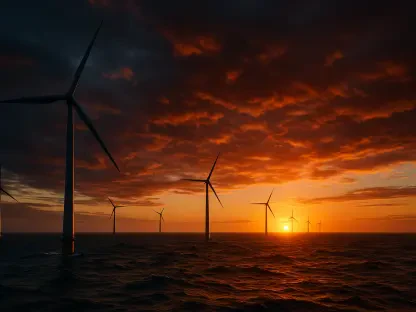
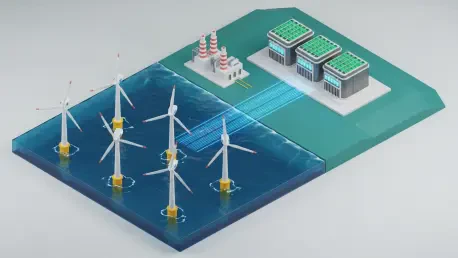
While hydropower struggles with transmission and water supply, the Vineyard Wind project off the coast of Martha’s Vineyard is navigating its own set of complex obstacles. Although widely celebrated as a pioneer in the American offshore wind sector, the facility is currently operating at less than half of its total projected capacity. These troubles are not primarily environmental but are instead rooted in industrial and legal disputes that have hindered the full-scale deployment of the project’s clean energy output. The project is currently mired in intensive litigation with its primary turbine supplier, leading to delays in the installation and activation of critical infrastructure. These legal hurdles represent a significant bottleneck, preventing the state from realizing the full benefits of one of its most expensive and publicized energy investments. The situation underscores the reality that moving to renewable energy is not just a scientific challenge, but a logistical and industrial one that is vulnerable to corporate and legal disputes.
The immediate consequence of these concurrent renewable energy setbacks is a renewed and heavy dependence on traditional natural gas generation to maintain stability. To ensure that the regional power grid remains reliable during intense heatwaves, ISO New England has had to ramp up gas-fired production to meet the sudden surge in electricity demand from air conditioning. Recently, natural gas has accounted for roughly 60 percent of the region’s total power generation, a figure that stands in stark contrast to the state’s aggressive decarbonization goals. This heavy reliance on fossil fuels not only drives up greenhouse gas emissions but also exposes the entire New England region to the price volatility of the global gas market. The persistence of gas in the energy mix serves as a sobering reminder that the transition to clean energy is currently lacking the necessary redundancy. Without the consistent performance of the promised offshore wind and hydropower assets, the state remains tethered to the very carbon-intensive resources it is trying to phase out.
Strategic Vulnerabilities: Accountability in Large-Scale Infrastructure
One of the most striking aspects of the current situation is the shift in state rhetoric regarding the accountability of developers and their contractual obligations. In the early stages of these projects, the administration frequently promised that any failure to deliver power as scheduled would result in steep financial penalties for the contractors involved. However, the recent response to long-term outages and delivery failures has been notably more guarded and less transparent. State representatives have acknowledged the ongoing technical issues but have consistently declined to comment on whether any penalties are actually being enforced against the energy providers. This lack of clear communication has left the public and industry observers in the dark about how effectively the state is leveraging its legal agreements to protect consumer interests. The ambiguity surrounding these contracts raises concerns about the actual leverage the state maintains over its private partners. If the promised accountability measures are not being utilized, it may signal a deeper fragility in oversight.
Critics of the current energy policy argue that these ongoing challenges necessitate a sober assessment of the “big project” strategy that has dominated the region for a decade. For years, Massachusetts has placed massive bets on state-mandated, long-term contracts for gargantuan infrastructure projects like NECEC and Vineyard Wind. The prevailing theory was that these large-scale assets provided the most efficient path toward meeting ambitious climate mandates. However, recent setbacks suggest that this strategy creates dangerous single points of failure where a technical glitch or a legal delay can sideline the state’s entire climate objective. Placing so much reliance on a few concentrated assets makes the electrical grid inherently more vulnerable to disruptions compared to a more decentralized approach. Skeptics suggest that the current struggles should serve as a catalyst for a more balanced policy that prioritizes a wider variety of smaller, more localized energy resources. This would ensure that the state’s progress toward carbon neutrality is not held hostage by the fate of a few massive projects.
Building Resilience: Diversification and Future Resource Management
Transforming these frail connections into robust and reliable pillars of the regional power grid will require a shift toward more diverse and localized energy solutions. While massive projects remain essential for meeting the sheer volume of demand, they must be supplemented by distributed energy resources like local solar arrays, battery storage systems, and enhanced energy efficiency programs. By integrating a wider array of smaller-scale technologies, the state can create a more resilient grid that is less susceptible to the failure of any single transmission line or offshore wind farm. This approach would also allow for a more gradual and manageable transition, reducing the pressure on any individual project to perform perfectly from the outset. Furthermore, investing in localized storage can help bridge the gap between intermittent renewable generation and the peak demand periods that currently force the grid back toward natural gas. Strengthening the energy transition depends on acknowledging that a centralized model is increasingly out of step with the technical and environmental realities of the current era.
The state’s approach to the energy transition demonstrated both the scale of contemporary climate challenges and the necessity of adaptive management throughout the process. Energy officials prioritized the stabilization of these major projects while simultaneously implementing more resilient, localized grid enhancements to mitigate technical risks. The transition period proved that reliance on single, massive infrastructure assets required much more robust contingency planning and a broader diversity of energy sources. By reflecting on these operational hurdles, the administration established a mandate for increased investment in neighborhood-scale battery storage and decentralized microgrids. This strategic shift focused on building a redundant and flexible system capable of weathering both technical failures and environmental shifts without reverting to fossil fuels. These past actions provided a scalable model for other regions attempting to balance ambitious climate goals with the physical realities of modern power grid management.