
Examining the Friction Between Federal Oversight and Renewable Ambitions
The Department of the Interior stands as the primary custodian of federal lands and waters, making its administrative decisions a critical factor in determining the feasibility of large-scale energy projects. Currently, the agency is at the center of a growing national debate regarding the pace and transparency of the American energy transition. Recent allegations of obstructionism have surfaced, suggesting that bureaucratic maneuvers are being utilized to intentionally stall renewable energy development. By tracing the timeline of legislative mandates and administrative responses, a clearer picture emerges of the tension between executive actions and congressional oversight. This analysis is vital today as the United States attempts to balance the immediate needs of traditional energy sectors with the long-term goals of climate resilience and domestic energy security.
A Chronological Record of Administrative Delays and Legislative Pushback
2024: The Legislative Framework for Energy Transparency
During the negotiations for the FY2026 Interior-Environment Appropriations Act, a bipartisan agreement established a new standard for transparency within federal land management. Concerned by mounting reports of “stonewalling” on renewable projects, Senate Democrats insisted on a formal reporting mechanism. Republican lawmakers agreed to the measure with the stipulation that the oversight would cover all energy sectors, including fossil fuels, to ensure a balanced view. This period marked the beginning of a formal effort to track the Bureau of Land Management and the Bureau of Ocean Energy Management’s progress in project permitting, setting a precedent for increased accountability.
Early 2025: The Implementation of High-Level Review Mandates
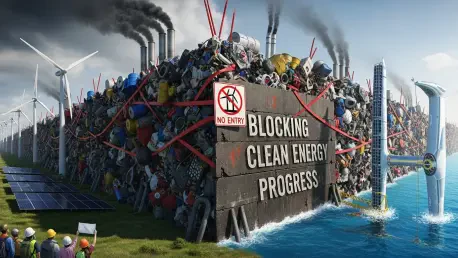
Following a transition in leadership, Interior Secretary Doug Burgum introduced a significant policy shift requiring higher-level agency reviews for all wind and solar projects. While the administration framed this as a measure to ensure rigorous standards, critics argued the move created an intentional bottleneck. By centralizing the approval process, the administration effectively slowed the permitting of onshore and offshore projects alike. This period saw the first tangible signs of what industry insiders described as a “near-complete moratorium” on new renewable energy initiatives on federal lands, signaling a departure from previous permitting efficiencies.
March 2025: The Missed Reporting Deadline and Escalating Tensions
The tension reached a breaking point on March 24, 2025, when the Department of the Interior failed to submit its first mandated bimonthly progress report. This missed deadline was interpreted by many in Congress as a direct defiance of the FY2026 Appropriations Act. Senate Democrats, led by figures such as Jeff Merkley and Chris Van Hollen, formally accused the department of deliberate opacity and a lack of cooperation. This failure to provide data on project status and workforce allocation fueled allegations that the administration was prioritizing administrative slowing over its legal obligations to report to the subcommittee.
Mid-2025: Industry Impact and the Demand for Accountability
As the delays persisted, data from industry surveys revealed the widespread nature of the disruption. A report by the organization Crux indicated that nearly every clean energy firm in the U.S. felt the impact of federal administrative hurdles. In response, the Senate subcommittee ramped up its scrutiny, demanding a comprehensive list of projects currently stalled under the Secretary’s review mandate. This phase of the timeline highlights the shift from internal policy disputes to a public confrontation over the future of the American energy landscape and the integrity of the regulatory process.
Assessing the Impact of Administrative Bottlenecks and Policy Shifts
The most significant turning point in this timeline was the transition from localized offshore wind opposition to a broader, systemic slowdown affecting onshore solar and wind developments. This pattern suggests a strategic use of administrative “red tape” to pivot away from renewable energy priorities in favor of other sectors. The overarching theme was one of executive resistance to legislative mandates, where the refusal to provide transparent data served as a primary tool for maintaining control over energy trajectories. A notable gap remained in the department’s disclosure regarding workforce distribution, leaving it unclear whether delays were due to genuine staffing shortages or a calculated reallocation of resources away from green energy reviews.
Navigating the Nuances of Federal Energy Regulation and Oversight
Beyond the headlines, the conflict revealed deep-seated regional differences in how federal land management impacted local economies. While some regions relied heavily on the revenue from fossil fuel permitting, others viewed the slowdown of renewable projects as a loss of competitive standing in the global green economy. Experts suggested that these administrative hurdles created a backlog that would take years to clear, regardless of future policy shifts. Common misconceptions often framed this as a simple choice between different energy types, but the data suggested the issue was more about the integrity of the permitting process itself. As the legislative branch sought further clarity, stakeholders looked toward judicial reviews and future funding cycles to restore balance to the federal energy permitting framework.