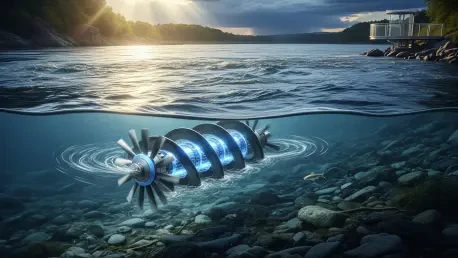

The powerful currents flowing through the St. Lawrence River near Montreal’s Old Port represent a massive, untapped reservoir of kinetic energy that could redefine how urban centers generate electricity. Unlike the massive hydroelectric dams that dominate the Quebec landscape, which require the flooding of vast territories to create reservoirs, a new proposal by ARECOR Energy seeks to harness the natural horizontal movement of the water. By installing nine underwater turbines directly into the riverbed, the company aims to prove that renewable power can be generated silently and invisibly beneath the surface. This initiative represents a pivot toward decentralized energy production, focusing on localized impact rather than massive grid-scale disruption. The project is scheduled to begin its initial pilot phase in 2027, followed by a broader deployment across the river in 2028. This $84 million investment serves as a critical test for the future of urban river-based power systems, offering a glimpse into how major cities can integrate green technology without compromising their historic or natural aesthetic.
Technical Innovations and Historical Context
Engineering Reliability: The Role of Magnetic Bearings
One of the most significant technical advancements in this proposal is the implementation of magnetic bearings within the turbine housings. These bearings utilize powerful magnetic fields to suspend the internal rotating components, ensuring that there is no physical contact between the spinning shaft and the stationary parts of the machine. By eliminating traditional mechanical friction, the system significantly reduces the internal wear and tear that typically plagues underwater machinery. This innovation is crucial for maintaining efficiency in the dense, high-pressure environment of the river floor. Without the need for constant lubrication or the frequent replacement of worn-out parts, the turbines can operate with far higher reliability than previous generations of hydrokinetic technology.
The reduction in friction provided by magnetic bearings directly translates into a much lower maintenance requirement for the entire system. ARECOR Energy claims that these machines are designed to operate for up to forty years without the need for major underwater repairs, which is a significant improvement over traditional mechanical systems. In the past, the high cost of sending specialized dive teams and heavy equipment to service underwater turbines often made such projects financially impossible. By extending the service intervals, the company hopes to lower the total cost of ownership and improve the overall return on investment for the city. This level of durability is essential for equipment that must withstand the constant, unrelenting force of the St. Lawrence River’s current over many decades.
Iterative Design: Learning From Past Failures
The current proposal is built on the hard-learned lessons of its predecessors, acknowledging that previous attempts to harness the St. Lawrence faced insurmountable hurdles. Over a decade ago, a company named RER Hydro attempted a similar project in the same region, but the venture ultimately ended in bankruptcy due to technical failures and cost overruns. ARECOR Energy has spent the last few years analyzing the data from those earlier prototypes to identify specific points of failure, particularly regarding the structural integrity of the turbine blades and the sealing systems. The new turbines have been redesigned to be far more robust, featuring reinforced housing and advanced composite materials that can better resist the corrosive effects of the river environment.
In addition to improved durability, the new generation of hydrokinetic turbines offers a five-fold increase in power output compared to the original models tested years ago. This dramatic improvement in efficiency is achieved through optimized blade geometry and more sophisticated power electronics that can capture energy across a wider range of current speeds. The ability to generate more electricity from the same volume of water makes the project far more attractive to utility providers like Hydro-Québec. This evolution in power density means that fewer units are required to meet energy targets, reducing the physical footprint of the installation on the riverbed. By maximizing the energy extracted from every cubic meter of water, the project demonstrates how iterative engineering can transform a niche experiment into a powerful tool.
Economic Viability and Grid Integration
Financial Hurdles: Navigating the Energy Market
Despite the technical progress made by the developers, the project faces significant economic challenges within the context of Quebec’s energy landscape. The province already benefits from some of the lowest electricity rates in North America, primarily due to its extensive network of large-scale hydroelectric dams. Competing with these established, low-cost energy sources requires the new hydrokinetic project to prove its long-term cost-effectiveness. Hydro-Québec has entered into a limited power purchase agreement, but this contract is heavily contingent on the project meeting strict performance benchmarks and regulatory milestones. If the turbines fail to deliver the promised amount of electricity at a competitive price, the project may struggle to secure the necessary private investment for full-scale deployment.
The financial sustainability of the project is also tied to its ability to scale efficiently in a very competitive market. While the initial investment of $84 million is substantial, the long-term goal is to drive down costs through mass production of the turbine units. Analysts remain cautious, noting that while the technology is impressive, the high upfront costs must be balanced against the relatively small amount of power being added to the grid. To overcome these hurdles, the developers are focusing on the unique benefits of hydrokinetic energy, such as its predictability compared to solar or wind power. By positioning the technology as a reliable base-load supplement, the company hopes to justify the higher initial capital expenditure and secure a permanent place in the provincial energy mix.
Demonstration Hubs: Scalability and Export Potential
While the nine turbines proposed for the Old Port will only provide power for approximately 2,250 homes, the developers view this installation as a vital demonstration hub. The primary goal is not to replace existing infrastructure but to show that the technology can reliably integrate into an urban power grid without causing disruption. If successful, Montreal could become a global showcase for hydrokinetic energy, allowing the company to export its technology to other international markets where traditional dams are not feasible. Many coastal and river-bound cities around the world are looking for ways to transition away from fossil fuels, and a proven system in the St. Lawrence would serve as a powerful endorsement of the technology’s commercial viability.
The strategic positioning of the project suggests that its value lies more in its potential for global scalability than in its immediate contribution to the local grid. Proving the technology in a high-profile location like Montreal is a key part of the long-term international business plan. Success here would provide the necessary data to convince foreign investors and governments that underwater turbines are a safe and effective solution for urban energy needs. This forward-looking approach emphasizes the role of Montreal as a leader in technological innovation, rather than just a consumer of energy. By fostering a local industry around hydrokinetic technology, the city could see long-term economic benefits that far exceed the value of the electricity generated by the nine pilot turbines.
Environmental Impacts and Regulatory Approvals
Protecting Ecosystems: Aquatic Life and Habitat Safety
The environmental impact of placing large mechanical structures in a major river is a primary concern for regulators and local conservation groups. Protecting the diverse fish populations and the overall health of the aquatic ecosystem is mandatory for securing the necessary operating permits. ARECOR Energy has conducted initial studies suggesting that the slow-moving turbine blades do not pose a significant threat to passing fish, but these findings must be validated through more rigorous, long-term monitoring. Federal agencies, including the Canadian Coast Guard and Fisheries and Oceans Canada, are closely reviewing the proposal to ensure it does not interfere with navigation or critical habitats. The project must demonstrate that it can coexist with the natural world without causing long-term damage.
Securing these permits requires a high level of transparency and a commitment to ongoing environmental research. The developers have agreed to install underwater cameras and sensors to monitor the interaction between the turbines and the local wildlife in real-time. This data will be shared with government scientists to ensure that the project adheres to all environmental regulations. If any negative impacts are detected, the company must be prepared to adjust the operation of the turbines or implement additional mitigation measures. This precautionary approach is essential for gaining the trust of the public and ensuring that the push for green energy does not come at the expense of the river’s biodiversity. The project’s success depends on its ability to balance energy production with ecological stewardship.
Local Politics: Navigating Skepticism and Approval
In addition to ecological concerns, the project faces political hurdles from municipal leaders who remain skeptical of its necessity and overall impact. Some local officials have questioned whether the benefits of the project outweigh the potential risks and the high initial investment required. Navigating the complex web of local and federal politics requires a high level of transparency and ongoing communication with the community. The success of the initiative over the next three years depends on the company’s ability to build trust and demonstrate that these invisible turbines provide a tangible benefit to the city. If the developers can successfully address the concerns of both environmentalists and politicians, the project could become a permanent fixture in Montreal’s renewable energy strategy.
The political landscape is further complicated by the need to coordinate with multiple levels of government, each with its own set of priorities and regulations. Municipal leaders are particularly concerned about the impact on the historic Old Port area and the potential for the turbines to interfere with recreational activities. To address these concerns, ARECOR Energy has proposed a series of public consultations and information sessions to keep the community informed about the project’s progress. By engaging with residents and addressing their concerns directly, the company hopes to build a broad base of support for the initiative. This delicate balance of interests highlights the challenges of implementing new technology in a public space, where social acceptance is just as important as technical feasibility for the project’s long-term success.
The evaluation of the hydrokinetic energy proposal concluded with a clear set of recommendations that emphasized the need for technical transparency and ongoing environmental oversight. Stakeholders determined that the initial pilot phase in 2027 would serve as the ultimate proving ground for the system’s durability and ecological safety. By establishing these rigorous milestones, the city ensured that any future expansion would be based on empirical data rather than speculative projections. The process highlighted the importance of integrating innovative technology with strict regulatory frameworks to protect both public and natural interests. Decisions were made to prioritize long-term sustainability over immediate gains, setting a precedent for how future energy projects should be assessed. This structured approach provided a comprehensive roadmap for utilizing urban waterways as a source of clean power while minimizing the risks to the local environment. The findings established a solid foundation for the subsequent rollout of the larger array in 2028.