
Christopher Hailstone is a seasoned expert in energy management and renewable infrastructure with a focus on grid reliability and the evolving landscape of residential electrification. As the transition toward clean energy accelerates, he provides critical technical and regulatory guidance for homeowners and renters looking to navigate the emerging world of “plug-and-play” solar technology.
This conversation explores the mechanics of balcony solar systems, which typically output around 800 to 1,200 watts and connect directly to standard 120-volt outlets. We discuss the financial advantages of these systems, which often boast a lower cost-per-watt than traditional rooftop arrays, and the safety innovations designed to prevent electrical hazards. The discussion also touches on the legislative shifts across states like Utah and California that are breaking down barriers for apartment dwellers and the logistical realities of achieving energy independence during grid outages.
Most balcony systems output around 800 watts and plug into standard 120-volt outlets. How does the installation process differ for a renter versus a homeowner, and what specific steps should someone take to ensure their existing home wiring can safely handle the constant influx of power?
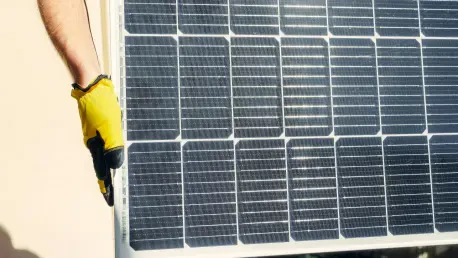
The beauty of these systems is that the physical installation is virtually identical for both renters and homeowners, often taking less than an hour for two people to complete. However, renters must be more diligent about reviewing lease agreements to ensure they aren’t violating rules against hanging equipment on railings or external walls. From a safety perspective, the system sends power into a 15 or 20-amp circuit, which means you must ensure that circuit isn’t already overloaded with high-draw appliances. A critical step is to confirm that the wiring can handle the continuous current without overheating, especially since most systems are capped at 1,200 watts—about a sixth of a typical rooftop array—to minimize the risk of tripping breakers. I always suggest users verify the integrity of their wall outlets, as older or loose connections can become hot spots when they are constantly energized by the inverter’s output.
With costs often falling below $2.00 per watt, these systems offer a faster payback period than traditional rooftop arrays. Beyond utility rates, what variables dictate whether a household sees a four-year return on investment, and how should users calculate their potential savings before purchasing?
Financial viability is driven by the “solar window” of your specific location, as a system in sunny Los Angeles will naturally outperform one in a cloudier climate. For example, some California households are seeing savings of nearly $500 per year on systems that cost between $1.47 and $1.87 per watt, significantly lower than the national rooftop average of $2.58. To calculate potential savings, users should look at their “baseload” consumption—the power used by a fridge or small appliances that are always on—to ensure the 800-watt output is being consumed rather than sent back to the grid for little to no credit. If you can align your highest energy use with peak sunlight hours, you can realistically hit that four-to-five-year payback mark, especially since many panels are warranted to last for 30 years.
Concerns regarding wire overheating and electrical shock have led to new safety certifications like UL 3700. What technical failures typically lead to these hazards in uncertified hardware, and how do the internal components of modern plug-in inverters mitigate the risk of electrocution during a sudden disconnect?
The primary hazard with uncertified hardware occurs if the inverter fails to detect a loss of grid power, potentially “back-feeding” the circuit and energizing the plug prongs after they’ve been pulled from the wall. This creates a severe risk of electrocution if someone touches those exposed conductive parts in the fraction of a second before the energy dissipates. Modern inverters certified under the new UL 3700 standard are designed with rapid-shutdown capabilities and internal circuit breakers to prevent this specific failure. Furthermore, these technical fixes ensure that if the system provides too much power and the home’s circuit breakers fail to trip, the device itself shuts down to prevent the wires inside the wall from overheating and becoming a fire risk.
Several states have recently passed legislation to simplify the adoption of plug-and-play solar. Given that HOAs or lease agreements often restrict external modifications, what strategies can residents use to navigate these hurdles, and how are state laws changing to protect a tenant’s right to generate power?
Residents should look into local “Right to Clean Energy” laws, as states like Utah and four others have already advanced measures to simplify these installations, with two dozen more considering similar bills. These laws are increasingly designed to prevent HOAs or landlords from flatly banning solar, as long as the installation meets safety standards like the National Electric Code. A good strategy for residents is to emphasize the non-permanent nature of the system—it’s an appliance you plug in, not a structural modification that requires a utility fee or professional interconnection. By positioning the system as a “portable power plant” that can be moved to a deck, patio, or fence, tenants can often find a middle ground that satisfies aesthetic rules while still generating clean power.
Standard plug-in systems automatically shut down during grid outages to protect utility workers. For those seeking energy independence during a blackout, what are the logistical trade-offs of adding a battery-inverter combo, and how does this integration affect the overall complexity and cost of the DIY setup?
If you want the lights to stay on when the grid goes down, you must transition from a simple grid-tied inverter to a battery-backed system, which adds significant cost and a bit more bulk. For instance, a basic inverter might retail for around $299, but adding a 1.92-kilowatt-hour battery-inverter combo can push that price up to $1,199. The logistical trade-off is that you are no longer just “plugging into the wall”; you are managing a storage device that must be physically situated and protected from the elements. While this setup provides peace of mind and allows you to use those stored electrons at night, it roughly quadruples the initial investment, making the payback period much longer compared to the standard plug-in model.
What is your forecast for the adoption of balcony solar in the United States over the next decade?
I expect a massive surge in adoption as the regulatory landscape stabilizes and the first UL-certified products hit the market in the coming months. If we look at Germany, they scaled from 40,000 systems in 2017 to a projected 4 million by 2025, and I believe the U.S. is poised for a similar trajectory once the “plug-and-play” simplicity is fully realized. Within the next decade, these systems will likely become a standard “starter kit” for the four out of ten American households that currently can’t access traditional rooftop solar due to financial or logistical barriers. As innovation drives costs down even further—potentially reaching the $0.66 per watt range we’ve already seen in some DIY cases—balcony solar will shift from a niche hobby to a mainstream appliance found in hardware stores across the country.