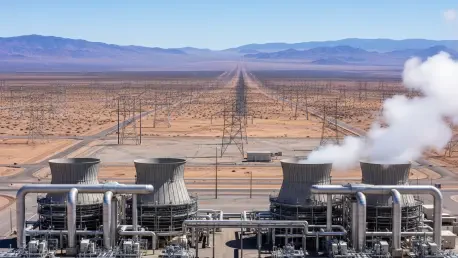

Christopher Hailstone joins us to share his deep expertise on the complex intersection of renewable energy development and the aging infrastructure of the American power grid. As the industry watches enhanced geothermal technology move from experimental stages to public markets, the friction between ambitious climate goals and physical transmission limits has become a defining challenge. In this conversation, we explore how major players like Fervo Energy are managing a massive 42 GW pipeline across the Western United States while navigating the logistical bottlenecks of rural Nevada, Utah, and Idaho. We also examine the shift toward localized power solutions and the intense investor scrutiny following recent technical hurdles at landmark project sites.
Geothermal projects are often located in remote areas with limited infrastructure. How are developers like Fervo Energy navigating the massive gap between their 42 GW pipeline and the current reality of transmission constraints in the American West?
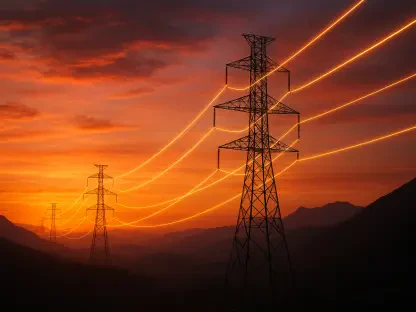
The sheer scale of a 42 GW pipeline spanning states like Nevada, Utah, and Idaho is breathtaking, but the physical reality of the Western grid is a formidable opponent. Most of these prime geothermal sites are tucked away in rural areas where the existing wires simply weren’t built to carry industrial-scale power to distant cities. We are seeing a strategic push where developers are essentially begging regulators, specifically the California Public Utilities Commission, to take “urgent action” on transmission financing. Without new infrastructure, these massive projects risk becoming “stranded assets” that can generate power but have nowhere to send it. It’s a high-stakes game of chicken with the utility providers, as the current reliance on third-party infrastructure creates a massive bottleneck for the entire industry.
With the Cape Station project in Utah nearing its Phase I launch, there is a significant discrepancy between contracted capacity and available transmission rights. What does this mean for the future of power purchase agreements with major utilities?
This is the central anxiety for investors right now, particularly regarding the gap between the 384 MW promised in contracts with Southern California Edison and the Clean Power Alliance versus the 290 MW of transmission rights currently held for Phase II. If that 94 MW shortfall isn’t resolved, we are looking at a scenario where revenues are slashed or contracts have to be completely rewritten, which is a nightmare for a newly public company. You can feel the tension in the market; analysts are tracking these numbers meticulously because they dictate whether a project is a financial success or a cautionary tale. While the first 100 MW of Cape Station is set to go live late this year, the long-term viability of the full 500-MW site depends entirely on securing those elusive interconnection rights. It forces a hard conversation about whether our current PPA models are too optimistic given the glacial pace of grid expansion.
There has been a lot of talk about “behind-the-meter” solutions as a way to bypass traditional grid bottlenecks. How viable is this strategy for a company trying to scale clean firm resources?
Management is becoming increasingly bullish on the behind-the-meter approach because it effectively cuts out the middleman and the associated transmission headaches. By connecting generation directly to a large-scale commercial customer—think data centers or industrial facilities—you bypass the congested public grid entirely. This shift in strategy is a direct response to the “transmission constraints” that threaten to slow down the roll-out of their ten major projects across the West. It’s a pivot that feels both pragmatic and necessary, as the “commercial interest” in these direct-to-customer setups is skyrocketing. While it might limit the total number of people who get clean energy, it provides a guaranteed revenue stream that doesn’t depend on the slow-moving bureaucracy of regional grid operators.
Recent incidents, like the well blowout in May, have put investors on edge despite the project remaining on schedule. How does the “first-of-a-kind” nature of enhanced geothermal impact the pressure on these developers to execute perfectly?
When you are dealing with first-of-a-kind technology, the margin for error is razor-thin, and the May 25 blowout at Cape Station is a perfect example of how sensitive the market has become. Even though there were no injuries and the timeline stayed intact, the flurry of “client inbounds” and investor “nerves” shows that people are waiting for any sign of a setback. Investors need to build conviction that this technology can be scaled safely and predictably before they commit the billions of dollars required for a 42 GW roll-out. The next few months are absolutely critical because the commercial operations date for Phase I will serve as a proof of concept for the entire sector. If they can stick to the late-year deadline and deliver that initial 100 MW without further drama, it will go a long way toward calming those sensory fears of a “geothermal gold rush” gone wrong.
What is your forecast for the geothermal energy market in the American West?
I expect to see a period of intense consolidation and a shift toward “micro-grid” thinking where geothermal power is sold directly to high-demand industrial hubs rather than the general public. While the 42 GW pipeline is an incredible North Star, the reality of the next five years will be defined by smaller, 100 MW to 300 MW wins that can successfully navigate the 290 MW transmission caps we see in places like Utah. We will likely see a significant regulatory breakthrough in California regarding transmission ownership, but it won’t happen fast enough to save every project. Ultimately, the winners in this space will be the ones who master the “behind-the-meter” game, turning geothermal into the preferred, reliable backbone for the West’s burgeoning tech and data infrastructure.