
The volatility of international energy markets frequently exposes agricultural producers to sudden price spikes that threaten the narrow profit margins inherent in modern industrial farming operations. When diesel costs climb due to geopolitical instability or refinery bottlenecks, the ripple effects extend far beyond the tractor’s fuel tank, impacting food prices and regional economic stability. On-farm biodiesel production offers a promising alternative to this centralized dependency by allowing farmers to convert their own oilseed crops or collected waste fats into usable energy. This shift toward decentralized fuel generation not only secures the individual farmer’s ability to operate during a crisis but also creates a more resilient regional energy infrastructure. By moving the point of production closer to the point of consumption, the agricultural sector can significantly reduce the logistical burden and carbon footprint associated with transporting refined petroleum materials across borders.
Method
Unit
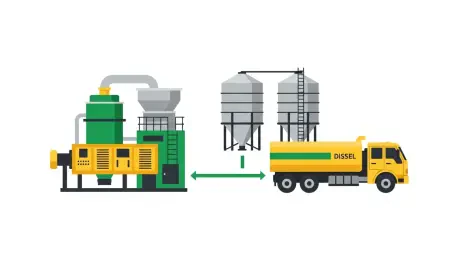
Modern advancements in modular chemical processing have simplified the transesterification process to the point where high-quality fuel can be manufactured within a standard farm shop environment. These automated systems utilize a catalyst, typically sodium or potassium hydroxide, mixed with methanol to trigger a reaction with triglycerides found in vegetable oils or animal fats. The resulting methyl esters, commonly known as biodiesel, must then undergo a purification process to remove excess glycerin, soap, and residual alcohol. Unlike the rudimentary setups of previous decades, today’s sophisticated units incorporate real-time sensor monitoring and multi-stage filtration to ensure the final product meets stringent ASTM D6751 standards. This level of precision is critical for maintaining the health of modern common-rail diesel engines, which are sensitive to impurities. By integrating these closed-loop systems, farmers can produce a cleaner-burning fuel that provides superior lubrication.
Crop
The success of a localized biodiesel initiative hinges on the availability and diversity of feedstocks, ranging from traditional crops like soybeans and canola to non-food sources like cover crops. Utilizing winter camelina or pennycress as cover crops allows producers to generate fuel precursors without displacing primary food production, effectively maximizing the utility of their land throughout the year. Beyond oilseeds, the integration of waste fats from local food processing facilities or used cooking oil from nearby restaurants creates a circular waste-to-energy pathway that benefits the entire community. Processing these materials locally reduces the energy required for extraction and pre-treatment, further enhancing the environmental profile of the fuel. As the efficiency of cold-press oil extraction improves, the leftover seed cake remains a high-value, protein-rich byproduct that can be fed to livestock or sold as organic fertilizer, reinforcing the regional supply chain and farmers.
Value
Risk
Establishing an on-farm fuel facility serves as a powerful hedge against the inherent unpredictability of the global petroleum market, which is often influenced by factors outside a farmer’s control. By locking in fuel costs based on the internal cost of production rather than external market rates, agricultural businesses can achieve a level of budgetary certainty that is otherwise impossible. This financial stability allows for more accurate long-term planning and investment in other critical areas of the operation, such as precision agriculture technology or improved irrigation systems. While the initial capital expenditure for processing equipment and storage can be significant, the long-term savings often result in a rapid return on investment. Furthermore, the ability to sell surplus biodiesel to local municipal fleets or neighboring farms creates a secondary revenue stream that diversifies the farm’s income portfolio and provides local communities with a reliable energy source during shortages.
Goal
Transitioning toward a decentralized energy model required a shift in both regional policy and individual mindset to overcome the initial hurdles of infrastructure costs and regulatory compliance. Stakeholders identified that successful implementation depended on forming localized cooperatives that shared the burden of testing and distribution while maintaining strict quality control. These groups effectively lobbied for streamlined permitting processes and tax credits that incentivized the adoption of small-scale refining technology. To ensure future growth, producers integrated automated data logging to prove fuel quality to original equipment manufacturers, thereby protecting engine warranties. Agricultural experts recommended that new adopters began by blending on-farm biodiesel with petroleum diesel before moving to higher concentrations as their systems optimized. This measured approach allowed for a steady increase in regional fuel security and provided a blueprint for other rural sectors to follow.