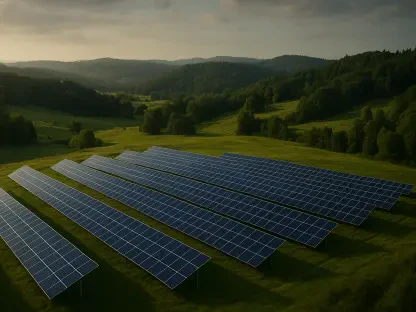

The transition toward municipal energy independence is no longer a theoretical debate but a lived reality as Ann Arbor, Michigan, deploys a pioneering “supplemental” utility model that could reshape the American power sector. By launching the Ann Arbor Sustainable Energy Utility (A2SEU), the city has bypassed the traditional, often litigious path of seizing assets from investor-owned utilities. Instead, it is building a parallel system of decentralized clean energy. This analysis explores how this hybrid approach addresses the critical intersection of climate action, grid reliability, and social equity, providing a sophisticated template for cities that seek to reclaim control over their energy futures without the immediate need for a multi-billion-dollar buyout.
A New Paradigm for Municipal Energy Independence
The emergence of the A2SEU represents a departure from the binary choice between private monopolies and full public takeovers. Historically, cities aiming for public power faced decades of legal battles and massive debt to acquire existing “poles and wires” from incumbents. Ann Arbor’s strategy is different; it functions as a voluntary service that provides solar power and battery storage directly to residents while they remain connected to the traditional grid. This coexistence allows the city to scale its green infrastructure rapidly, focusing on immediate carbon reduction and local resilience rather than administrative warfare.
By positioning itself as a supplemental provider, the city mitigates the massive capital risks associated with traditional utility management. The focus shifts from maintaining expansive, aging distribution networks to managing localized, high-tech energy generation. This shift is particularly relevant in regions where extreme weather frequently compromises centralized infrastructure. As municipalities watch this rollout, the A2SEU serves as a proof of concept that local governments can effectively manage complex energy portfolios through a modular, iterative growth strategy.
From Traditional Grids to the Bryant Neighborhood Pilot
To understand why this model is gaining traction, one must look at the historical instability of centralized distribution in Michigan. For years, residents have faced a combination of high utility rates and frequent service interruptions caused by aging infrastructure and severe storms. These systemic failures created the political will necessary to explore alternatives. While investor-owned utilities have focused on large-scale infrastructure investments, Ann Arbor recognized that the quickest path to reliability was to bring the power source as close to the consumer as possible.
The city chose the Bryant neighborhood as the starting point for this transformation, turning a historically underserved area into a high-tech energy hub. By installing residential solar and storage systems, the city began creating a localized ecosystem that operates independently of the broader distribution challenges. This move effectively decentralized the risk. Instead of a single point of failure in a distant substation, the energy supply is distributed across dozens of rooftops, ensuring that even if the primary grid falters, the local community maintains a baseline of power.
Bridging the Gap Between Public Interest and Private Infrastructure
Prioritizing Energy Justice and Local Resilience
A central tenet of the A2SEU is the mitigation of the “energy burden,” a phenomenon where low-income households spend a disproportionate percentage of their income on basic utilities. In the Bryant neighborhood, some families have historically spent nearly a third of their household budget on power. By prioritizing these residents for solar and battery installations, the city is using the energy transition as a tool for economic stabilization. The goal is to ensure that the shift to renewables is not a luxury reserved for the affluent but a foundational right that provides tangible financial relief to those most vulnerable to price volatility.
Technical Innovation: Virtual Power Plants and Microgrids
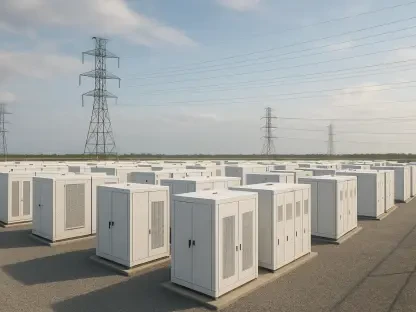
Technologically, the A2SEU is moving toward a sophisticated “virtual power plant” (VPP) architecture. By integrating battery hardware from FranklinWH with advanced management software from Texture, the utility can aggregate individual residential storage units into a single, cohesive energy resource. This allows the city to discharge stored power during peak evening hours, reducing the overall strain on the local grid and lowering costs. This network is projected to grow from 150 homes in the current year to 1,000 homes by 2027, eventually incorporating geothermal heating loops and localized microgrids that can operate in “island mode” during regional blackouts.
Navigating the Friction with Incumbent Providers
The development of a supplemental utility inevitably creates a complex relationship with the incumbent provider, DTE Energy. While the private utility has expressed support for the city’s environmental goals, it has also raised concerns regarding the financial feasibility of a broader public power transition. DTE argues that centralized modernization is more cost-effective than fragmented municipal efforts. However, proponents of the A2SEU counter that decentralized generation reduces the need for the very distribution investments DTE relies on for its profit margins. This tension highlights a national debate over whether the future of energy should be a centralized monopoly or a collaborative, multi-layered ecosystem.
The Future of Decentralized Energy Systems
Looking ahead, the supplemental model is poised to become a dominant trend for cities seeking to balance aggressive climate goals with fiscal responsibility. We can expect to see a regulatory shift that favors the integration of VPPs into regional wholesale markets, allowing municipal utilities to generate revenue by providing stability services to the larger grid. Experts predict that as the cost of lithium-iron-phosphate batteries continues to decline through 2027 and 2028, the economic argument for local storage will become undeniable. This will likely force traditional utilities to move away from resisting municipal projects and toward a “platform” model, where they manage the high-voltage transmission while cities handle localized generation and residential services.
Actionable Insights for Sustainable Urban Planning
For urban planners and policy makers, the Ann Arbor model offers several strategic takeaways. First, the project demonstrates that “energy justice” should be a lead objective rather than an afterthought, as it builds the broad-based community support necessary to sustain long-term political will. Second, the use of a supplemental model allows for a low-risk “proof of concept” that can be scaled as technology and funding become available. Finally, cities must prioritize software interoperability from the outset; the ability to manage diverse energy assets through a unified digital platform is what differentiates a collection of solar panels from a functional, modern utility.
Redefining the Power Balance for a Greener Tomorrow
The Ann Arbor Sustainable Energy Utility successfully established a new logic for municipal governance in an era of climate volatility. By focusing on modular growth and local resilience, the city provided a working alternative to the traditional utility standoff, proving that infrastructure can be both high-tech and socially equitable. These developments suggested that the future of the American grid would likely be a patchwork of public-private partnerships and localized microgrids rather than a monolithic, centralized system. Ultimately, the A2SEU showed that the most effective way to reform the energy sector was to build the future alongside the present, rather than waiting for the old systems to change on their own.