
The rapid expansion of artificial intelligence and high-tech manufacturing has fundamentally altered the relationship between utility companies and the communities they serve by creating a massive demand for electricity that exceeds traditional planning. For decades, the standard utility model followed a simple rule where a massive factory or data center moving into a town meant the cost of building new power plants was spread across every monthly bill in the community. This socialized cost structure is hitting a breaking point as energy-hungry industries project a staggering surge in demand. The emerging solution is a fundamental shift in energy economics known as Customer Identified Resources (CIR), where the heavy hitters driving demand are finally the ones picking up the tab for the infrastructure.
The End of the Blank Check: Industrial Power Expansion
The shift away from traditional cost-sharing represents a significant victory for consumer advocacy groups that have long argued against the unfair burden placed on residential homes. In the past, industrial growth was seen as a universal benefit that justified higher rates for everyone, but the sheer scale of modern data centers has rendered this approach unsustainable. By focusing on models that isolate industrial requirements, regulators can ensure that a local family is not subsidizing the massive cooling systems of a multinational server farm.
Implementing the CIR model creates a direct financial link between the companies requiring additional capacity and the generation of that energy. This move ends the era of the blank check, forcing large-scale developers to account for their grid impact during the initial phases of project planning. As utility providers move toward this new standard, the focus remains on maintaining a fair playing field where industrial growth does not come at the expense of the average citizen’s financial stability.
Navigating the Unprecedented Surge: Grid Demand
The urgency behind customer-funded energy stems from a massive capital investment gap that threatens to overwhelm existing utility budgets. Southern Co., the parent company of Georgia Power, expanded its investment plan to $81 billion to keep pace with the industrial boom. Without a mechanism to isolate these costs, residential ratepayers would face significant, compounding rate hikes to fund the clean energy transition and the grid stabilization required by private corporations. By implementing programs like the CIR, regulators are attempting to decouple the financial burden of industrial expansion from the basic necessity of residential electricity.
Beyond the immediate financial pressure, the surge in demand requires a rapid scaling of infrastructure that traditional rate-case cycles cannot accommodate. Private funding provides a more agile alternative, allowing projects to move forward without waiting for the slow process of public approval for rate increases. This agility is essential for maintaining the state’s economic competitiveness while ensuring that the grid remains robust enough to handle both existing residential needs and the arrival of new, energy-intensive technology sectors.
The CIR Framework: Turning Industrial Demand into Grid Assets
The Customer Identified Resource program allows large-scale consumers to take the lead in procurement, authorizing several gigawatts of clean energy through the next decade. Under this model, commercial and industrial entities fund and integrate their own renewable projects into the utility’s grid, receiving renewable energy certificates and financial credits in exchange for the energy value produced. Crucially, these projects offer geographic flexibility, meaning a data center can deliver power through approved interconnections even if the generation site is outside state lines.
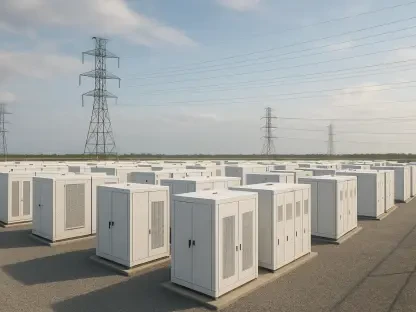
This framework transforms what was once a liability into a shared asset for the entire region. When a large customer funds a solar farm or a battery storage facility, that infrastructure contributes to the overall stability of the grid during peak hours. The utility maintains overall system control, but the specific carbon and capacity needs of high-demand users are met through private capital rather than public rate increases. This synergy creates a pathway for a cleaner grid that does not rely solely on the limited pockets of local families.
A National Movement: Financial Accountability in Energy
The movement in Georgia is not an isolated experiment but part of a growing national trend where regulators prioritize ratepayer protection. In Minnesota, tech giants like Google already began a similar transition, directly funding wind, solar, and battery storage capacities to support their expanding operations. Industry analysts suggest that this “user-pays” philosophy is becoming the blueprint for states struggling with high-capacity energy demands. By shifting the financial responsibility for new generation and transmission to the specific large-scale users driving the demand, utilities can safeguard the general public from the volatile costs of rapid industrialization.
This trend toward accountability reflects a broader understanding of energy as a finite resource that must be managed with precision. Other regions are watching these developments closely, recognizing that the old socialized models cannot survive the digital age. By establishing clear precedents for customer funding, states are proving that it is possible to attract high-tech investment without sacrificing the welfare of the existing population.
Strategies for Implementing: Scalable Utility-Customer Partnerships
To successfully replicate this model, state regulators and utilities established clear frameworks that balanced private investment with grid reliability. Key strategies included creating streamlined interconnection standards that allowed customer-funded projects to come online without bureaucratic delays. Additionally, utilities developed transparent credit systems that accurately reflected the energy value provided by these resources to the broader grid. Maintaining a diverse energy mix, which integrated these private clean energy projects alongside existing traditional assets, ensured that the transition did not compromise regional stability.
Success depended on the ability of utilities to move toward a more collaborative relationship with their largest customers. Regulators played a pivotal role by ensuring that every dollar of private investment directly offset what would have otherwise been a public expense. Ultimately, the transition to customer-funded power provided a roadmap for sustainable growth, where the companies driving the demand finally shouldered the responsibility for the resources they consumed. This proactive approach safeguarded the interests of the average ratepayer while fostering an environment of industrial innovation.