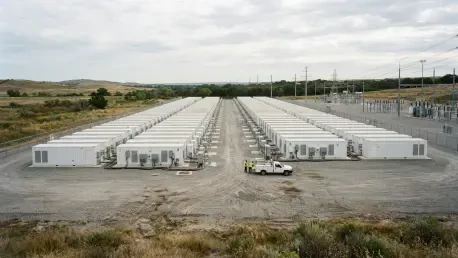

China and the European Union are responsible for the vast majority of the recent increase in global energy storage targets through 2030. This growth signifies a monumental shift in how grid operators and national governments perceive the role of flexibility in a decarbonized electricity system. Historically, energy storage was relegated to a secondary or peripheral status, often viewed as a luxury that would only become necessary once intermittent renewables reached a saturation point. However, the operational realities of a modern grid have pushed storage to the forefront of infrastructure planning. As wind and solar generation continue to surge, the ability to store energy for dispatch during peak demand has become the fundamental pillar upon which the entire energy transition rests. Despite this technological evolution, a widening chasm is opening between the rapid, market-driven deployment of these systems and the lagging policy frameworks that govern them.
Assessing Global Ambitions: The COP29 Gap
Global ambition for energy storage reached a critical milestone following the high-level agreements established during recent climate negotiations, specifically the Global Energy Storage and Grids Pledge. This initiative set an international benchmark of 1,500 gigawatts of total storage capacity to be achieved by 2030, a figure deemed necessary to keep the world on a net-zero trajectory. However, an analysis of current national policies reveals a stark discrepancy between these headline promises and actionable domestic plans. As of early 2026, the combined targets of global governments account for only 822 gigawatts, leaving a significant deficit of approximately 45 percent. This shortfall indicates that while the rhetoric surrounding the energy transition has intensified, the concrete regulatory commitments needed to support the storage boom are failing to keep pace. Without a more aggressive alignment of national goals, the transition may face severe bottlenecks.
Assessing Global Ambitions: The Rise of China and the EU
The current landscape of energy storage ambition is characterized by a high degree of geographic concentration rather than a balanced global effort. China has led this charge by dramatically revising its outlook, moving from a previous target of 130 gigawatts to a massive 460 gigawatts, incorporating both advanced battery technologies and traditional pumped hydro. Similarly, the European Union established its first bloc-wide storage target of 200 gigawatts in mid-2026, explicitly linking the technology to the strategic goal of reducing natural gas dependency. Outside of these primary movers, the response from other major economies has been notably subdued, with only a handful of nations updating their strategies since the global pledge was formalized. This lack of broad participation suggests that many regions are still operating under outdated energy models that do not account for the massive influx of renewable power and the resulting need for grid flexibility.
Market Momentum: Scaling Beyond Regulatory Projections
Private sector investment and market forces are currently moving at a velocity that far exceeds the most optimistic projections of government planners and regulatory bodies. In 2025, annual storage additions hit an unprecedented record of 118 gigawatts, with battery technology accounting for nearly the entire share of new capacity. The scaling of battery storage has been remarkably efficient, taking only four years to grow from 10 gigawatts of annual additions to 100 gigawatts. To put this into perspective, solar technology required nearly a decade to achieve a similar scaling milestone, while wind power took fifteen years. This rapid acceleration demonstrates that storage is no longer a future concept but an immediate market reality. If the global rate of installation simply maintains its 2025 levels through 2030, the world will reach over 1,020 gigawatts of capacity, effectively crashing through the current national policy floor without further government intervention.
Market Momentum: The Impact of Falling Battery Costs
Economic competitiveness is the primary engine driving the storage boom, as the costs associated with lithium-ion batteries have plummeted by an average of 20 percent annually over the last decade. This persistent decline in capital expenditure has fundamentally altered the financial landscape of power systems, allowing storage to compete directly with traditional peak-load power plants. Consequently, market signals are now often more influential than environmental mandates in dictating where and when new storage capacity is deployed. To meet the ambitious international goal of 1,500 gigawatts, the market only needs to sustain a fraction of the growth rate it has demonstrated since 2020. The fundamental challenge for the remainder of the decade is not the availability of technology or capital but rather the creation of a stable regulatory environment that can accommodate this growth and ensure that storage is effectively integrated into the existing grid infrastructure.
Strategic Integration: Addressing the Curtailment Challenge
A technical synergy exists between solar energy expansion and energy storage, yet this relationship is frequently neglected in long-term policy design. Solar generation is inherently diurnal, producing surplus energy during daylight hours while demand often peaks during the late afternoon and evening. Without adequate storage capacity, this mismatch leads to curtailment, a situation where clean energy is wasted because the grid cannot process the excess power. Remarkably, nearly half of the world’s top twenty solar markets currently operate without formal storage targets for 2030. While some of these nations, including the United States and Germany, are seeing significant storage deployment due to market incentives, the absence of official targets creates long-term uncertainty. This policy gap makes it difficult to coordinate storage projects with new transmission lines, potentially leading to a grid that is unbalanced and unable to support the next phase of renewables.
Strategic Integration: Building Resilience Through Electrification
The push for global electrification represents a monumental shift in energy consumption patterns, and storage is the key to ensuring this transition remains reliable. Current international pledges aim to increase electricity’s share of final energy demand from 20 percent to 35 percent by 2035, a transition that encompasses transport, industrial heating, and building climate control. Such a massive electrification effort is only viable if the grid is powered by a consistent and clean supply of energy, which requires a strategic pivot toward flexibility and resilience. Governments must begin to treat energy storage not as an optional addition but as core infrastructure comparable to transmission lines and substations. As the world moves toward 2030 and beyond, the success of these electrification goals will depend on national strategies that integrate short-duration battery solutions with long-duration storage technologies to manage the complexities of a 24/7 carbon-free grid.
Future Readiness: Beyond Traditional Energy Planning
National energy strategies required a total re-evaluation to reflect the unprecedented pace of technological deployment seen in recent years. Many existing plans were based on outdated assumptions about the cost and availability of storage, leading to a conservative approach that risked under-utilizing renewable assets and compromising energy security. The disconnect between market performance and policy ambition created a situation where governments were reacting to industry developments rather than providing the strategic guidance necessary for an efficient transition. By failing to set updated and credible storage targets, policymakers faced the risk of discouraging long-term investment needed for grid stability. It was essential for nations to move beyond viewing storage as a luxury and instead recognize it as a prerequisite for a functioning modern economy that relied on variable energy sources to power every aspect of industrial and residential life.
Future Readiness: Turning Pledges into Implementation
The final analysis of the global energy landscape showed that the storage industry proved its ability to scale rapidly and reliably under market pressure. Moving forward, the effectiveness of international climate pledges depended on how successfully national governments translated these broad goals into specific, actionable roadmaps. This process involved reviewing targets to reflect actual deployment rates, ensuring that storage was fully integrated into broader electrification and renewable energy frameworks. Leaders focused on creating investment conditions that placed capacity where it provided the most systemic benefit to the grid rather than just where immediate profit was highest. Ultimately, the next phase of the energy transition was defined by the intelligence and flexibility of the systems used to manage power rather than just the volume of clean electricity generated. This shift ensured that storage became a permanent and foundational component of the world’s power grid.