
Public commentary on the National Water Amendment Bill is being sought to ensure that new regulations are feasible and fit for their intended purpose. This legislative overhaul arrives at a moment of profound national reflection, as the country seeks to reconcile the progressive promises of its founding documents with the utilitarian crisis currently gripping its residential and industrial sectors. For over three decades, the South African government has championed the human right to water, yet the physical infrastructure required to sustain this right has eroded under the weight of systemic neglect and fiscal mismanagement. The current movement toward legal reform is not merely a bureaucratic update but a desperate attempt to bridge the widening chasm between the legal spirit of the Constitution and the lived experience of millions who face daily water shortages. By inviting technical experts and the general public to weigh in on these amendments, the state aims to build a framework that addresses the specific technical and financial hurdles that have historically turned legislative ideals into hollow promises for citizens.
The Foundations: Legal Pillars and Financial Mismanagement
The current legal framework rests on three main pillars established in the late 1990s to ensure equitable resource management across the diverse landscape of the nation. The National Water Act designates the federal government as the public trustee of all water resources, ensuring that water is protected, developed, and controlled in a sustainable manner for the benefit of all persons. Simultaneously, the Water Services Act mandates that municipalities deliver basic supply and sanitation to their residents, placing the burden of service delivery on local governments. These laws were originally designed to dismantle the exclusionary policies of the previous era and create a sustainable, fair system for every household. However, the sophisticated nature of these laws has often been undermined by the practical complexities of local governance, where the translation of legal mandates into functional tap water has remained an elusive goal for many underserved communities throughout the provinces.
Despite these sophisticated laws, the water sector has faltered due to poor fiscal management and a lack of accountability at the local level. The Municipal Finance Management Act was intended to guide how local governments spend their revenue, but in practice, funds meant for pipe maintenance and system upgrades have often been misallocated. This breakdown in implementation means that even though the legal spirit of the country is sound, the financial and operational reality of its water infrastructure is in a state of emergency. Legal experts note that the deterioration is not due to a lack of regulation, but rather a catastrophic failure in the execution of financial oversight dictated by these acts. The breakdown occurs when revenue generated from water sales is not reinvested into the systems that produce it, leading to a cycle of decay that has become increasingly difficult to break without significant national intervention and a total restructuring of how water budgets are specifically allocated for their intended engineering purposes.
The Crisis: Population Growth and Infrastructure Neglect
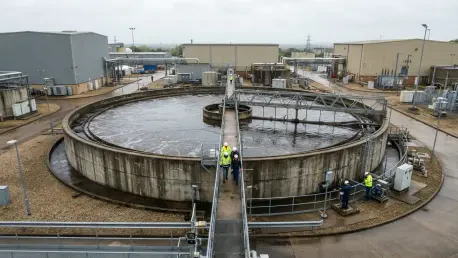
The primary cause of the current crisis is a significant failure in municipal delivery, worsened by decades of neglect and rapid population growth. Since 1994, the number of people living in South Africa has surged, yet the capacity of the country’s water systems has not kept pace with this expansion. This lack of foresight has left many regions with infrastructure that is overstressed and incapable of meeting the demands of a modern population. While the Department of Water and Sanitation has made strides in connecting rural areas to the national grid, the bulk water supply systems and wastewater treatment plants have remained largely stagnant. This imbalance has created a fragile network where any minor technical failure can escalate into a multi-week service disruption for entire districts. The failure to modernize these systems has not only inconvenienced citizens but has also begun to throttle economic growth in sectors that rely on consistent water pressure, such as manufacturing and commercial agriculture.
This mismanagement is most visible in a strange paradox where more people have pipes in their homes, but fewer have actual water running through them consistently. While access to the physical network has expanded significantly since the 1990s, the reliability of that service has dropped sharply, with a third of households now experiencing long-term service interruptions. Statistics indicate that approximately 34% of households report water interruptions lasting more than two days, a figure that has climbed steadily as maintenance budgets were diverted elsewhere. This highlights that simply installing infrastructure is not enough; without consistent maintenance and professional management, the system remains non-functional. The legal promise of water access is rendered moot when the physical assets are too dilapidated to perform their primary function. Addressing this requires a shift from focusing on new connections to ensuring the integrity of the existing network, a transition that the government is only now beginning to formalize through new legislative mandates and strict operational standards.
Modernizing Oversight: Strengthening Accountability and Equity
To fix these gaps in the system, the government has introduced the Water Services Amendment Bill, which seeks to hold local providers to much stricter standards. The new law moves away from a model where municipalities have an unchecked monopoly, instead requiring them to hold licenses that can be revoked if they fail to perform. By treating water provision as a strictly regulated activity, the state aims to force accountability on underperforming officials and ensure that services meet basic quality requirements. This licensing regime allows the national department to intervene directly when a municipality proves incapable of managing its water services, providing a legal mechanism to bypass local failure. It represents a significant shift toward centralized oversight, aimed at protecting the consumer from the inefficiencies of local politics. The move is designed to ensure that technical expertise, rather than political patronage, dictates the management of water treatment plants and distribution networks across the country.
These reforms also look toward the future by integrating water management with broader climate change policies and social justice goals. The National Water Amendment Bill aims to rebalance how water is shared between the massive agricultural sector and underserved communities to ensure both economic stability and social fairness. Coupled with the new Climate Change Act, these laws represent an attempt to protect a dwindling resource in an increasingly dry environment, finally turning paper rights into a sustainable reality for the next generation. Government strategists recognized that the historical allocation of water rights often favored large-scale commercial entities at the expense of communal development. By restructuring these rights, the state sought to foster an environment where resource scarcity did not lead to social unrest. The integration of climate resilience into water law ensured that the nation was prepared for the shifting rainfall patterns and prolonged droughts that have become the new normal in the Southern African region.
Strategic Pathways: Achieving Long-Term Resource Stability
The implementation of these legislative reforms demanded a coordinated effort between the public and private sectors to restore the integrity of the national water grid. Policymakers focused on creating investment-friendly environments that encouraged private entities to partner with municipalities for infrastructure refurbishment. These partnerships were designed to inject much-needed technical proficiency and capital into the system while maintaining the government’s role as the ultimate trustee of the resource. By adopting advanced leak-detection technologies and automated billing systems, providers began to recapture lost revenue, which was then directed back into essential maintenance and the expansion of storage facilities. This strategy was not merely about fixing pipes but about professionalizing the entire water value chain to ensure that every liter was accounted for and utilized efficiently. The result was a more resilient system capable of weathering both environmental challenges and the pressures of a growing industrial economy.
The transition toward a more accountable water management system required the state to enforce strict penalties for environmental non-compliance and financial mismanagement. Authorities established independent monitoring bodies that evaluated municipal performance against standardized benchmarks, ensuring transparency in how water budgets were utilized. These measures successfully restored public confidence in local utilities, as citizens saw a tangible correlation between their service payments and the reliability of their water supply. Looking forward, the focus shifted toward decentralized water solutions, such as localized desalination plants and sophisticated wastewater recycling systems, to reduce the burden on the overstretched national bulk supply. By diversifying the sources of water and decentralizing its management, the nation positioned itself to handle future shortages with greater agility. This proactive approach turned the tide on the infrastructure crisis, moving the country toward a future where the constitutional right to water was backed by a robust and modern physical reality.