
Traditional carbon dioxide removal methods like chemical absorption and cryogenic distillation are notoriously energy-intensive and operationally complex compared to modern membrane-based separation. As the global community strives to mitigate the escalating climate crisis, the pursuit of efficient biogas upgrading technologies has become a central pillar of the green energy transition. By 2026, the volume of anthropogenic carbon dioxide emissions from fossil fuel combustion and industrial processes has surged beyond 37.41 billion metric tons, intensifying the urgency for carbon capture solutions. While raw biogas—typically a mixture of fifty-five to seventy percent methane and thirty to forty-five percent carbon dioxide—offers a renewable alternative to coal, its utility is hampered by the high concentration of non-combustible gases. Traditional separation infrastructures require massive footprints and high maintenance, making them less feasible for decentralized agricultural or municipal digesters. Membrane technology, however, provides a compact and low-energy pathway, yet current synthetic membranes often struggle with the inherent trade-off between gas permeability and selectivity. This challenge has prompted a radical shift toward exploring circular economy materials, specifically the upcycling of agricultural waste into functional fillers that can enhance the performance of polymer matrices.
The search for sustainable fillers has led researchers to chicken eggshells, an abundant waste product that is often discarded in landfills despite its high mineral content. Utilizing such waste aligns with circular economy principles by turning a disposal problem into a high-value engineering solution. Ordinary chicken eggshells are rich in calcium carbonate, making them an ideal precursor for synthesizing nanostructured calcium oxide. Unlike synthetic fillers such as metal-organic frameworks or zeolites, which require expensive precursors and complex chemical synthesis, eggshell-derived fillers are nearly free of cost and environmentally benign. When integrated into a polymer matrix like poly(vinylidene fluoride), these particles create mixed-matrix membranes that can potentially bypass the traditional limitations of pure polymer films. This approach not only addresses the technical requirements of biogas purification but also provides a scalable model for how low-cost agricultural residues can be transformed into advanced functional materials for industrial gas separation.
1. Step One: Synthesizing the Active Filler from Raw Waste
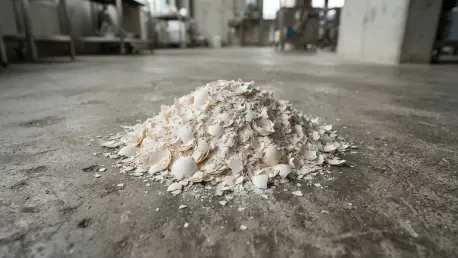
To create the functional material without using aggressive or hazardous chemicals, the researchers followed a meticulously designed green thermal decomposition procedure. The initial phase of this process involved the collection of chicken eggshells from local university cafeteria waste streams, ensuring that the raw material was sourced from a sustainable and representative urban environment. Once gathered, these eggshells were broken into small, manageable fragments to facilitate the subsequent cleaning stages. The shell fragments underwent an intensive washing process using deionized water to eliminate all adhering organic residues, such as protein membranes and internal yolk traces, which could otherwise interfere with the purity of the final oxide product. This preparation stage was critical, as residual organic matter could cause unwanted carbonization during high-temperature processing. After thorough cleaning, the material was air-dried at ambient room temperature for four days, allowing for the complete removal of moisture before the shells were mechanically ground into a fine, uniform powder using a high-energy milling system.
Following the preparation of the precursor powder, the material underwent a precise thermal transformation known as calcination. This thermal processing involved heating the pulverized eggshell powder in a furnace at 900 degrees Celsius for 60 minutes, with a controlled ramp rate to ensure uniform heat distribution. At this temperature, the calcium carbonate naturally present in the eggshells decomposed into calcium oxide and carbon dioxide, leaving behind a highly porous and reactive mineral filler. This calcination step was fundamental in creating a material with a high affinity for carbon dioxide, as the resulting calcium oxide provides basic adsorption sites that attract acidic gas molecules. Once the heating cycle was complete and the furnace reached room temperature, the resulting calcium oxide was immediately transferred into sealed containers and stored within a desiccator. This secure storage was necessary to prevent the reactive powder from absorbing moisture or atmospheric gases, ensuring that the filler maintained its structural integrity and chemical potency prior to its integration into the polymer matrix.
2. Step Two: Fabricating the Mixed-Matrix Membranes
The fabrication of the mixed-matrix membranes was executed using a specialized phase inversion technique designed to produce consistent flat-sheet composite films. The process began with the dispersion of the eggshell-derived calcium oxide and polyethylene glycol, which served as a pore-forming agent and plasticizer, into a solvent. For this research, N-Methyl-2-Pyrrolidone was used due to its excellent solubility for high-performance polymers. To ensure that the inorganic fillers did not aggregate into large clusters, the mixture was subjected to ultrasonic waves for fifteen to thirty minutes. This ultrasonication step was vital for achieving a homogeneous distribution of the nanostructured particles, which is necessary for maintaining consistent gas transport properties across the entire membrane surface. By preventing particle clumping, the researchers were able to maximize the interfacial area between the calcium oxide and the polymer, creating a more effective pathway for gas diffusion.
Once the fillers were properly dispersed, the team integrated the polymer component by adding analytical-grade poly(vinylidene fluoride) granules to the mixture. This blend was stirred continuously at 90 degrees Celsius for six hours to ensure that the polymer was completely dissolved and the filler particles were evenly suspended within the “dope” solution. Following the stirring period, the solution was left to degas overnight in a dark environment to ensure that all entrapped air bubbles were eliminated. This degassing phase was crucial because even minute air pockets could lead to structural defects and mechanical weak points in the final membrane. The following day, the solution was cast onto a clean glass plate using an automatic casting knife set to a 150-micrometer gap. Immediately after casting, the glass plate was submerged in a distilled water bath for three hours, triggering the phase transition that solidifies the membrane. Finally, the completed membranes were removed from the water bath and dried at room temperature for twenty-four hours to achieve full dehydration before testing began.
3. Step Three: Characterizing the Material and Optimizing the Blend
To confirm that the eggshells had been successfully converted into a high-performance filler, the researchers analyzed the physical and chemical properties of the material. Spectroscopy and X-ray diffraction confirmed the complete transformation from calcium carbonate to pure, polycrystalline calcium oxide, revealing a crystallite size of approximately 41.25 nanometers. Further analysis using Brunauer-Emmett-Teller theory demonstrated that the material possessed a mesoporous architecture, which is ideal for providing a large surface area for gas interaction. The high purity of the oxide—measured at 94.7 percent—ensured that the filler would provide the necessary basic adsorption sites without introducing unwanted impurities into the polymer matrix. Microscopic imaging further revealed a spongy, foamy structure, which suggested that the filler could significantly increase the free volume within the membrane, thereby facilitating the rapid transport of gas molecules while maintaining high selectivity.
Building on these structural insights, the research team employed a statistical experimental design to determine the most effective ratio of components. Using response surface methodology with a central composite design, the scientists investigated how varying concentrations of calcium oxide and polyethylene glycol affected the permeability and selectivity of the membranes. This approach allowed the team to develop sophisticated mathematical models to predict the transport behavior of carbon dioxide and methane under different formulation conditions. Through this rigorous statistical modeling, the study identified an ideal blend of 4.5 percent calcium oxide and 2.5 percent polyethylene glycol. This specific formulation was found to maximize the transport of carbon dioxide through the membrane while simultaneously restricting the passage of methane. The validation experiments closely matched these statistical predictions, proving that the systematic optimization process was successful in balancing the often-conflicting goals of high gas throughput and high purification efficiency.
4. Step Four: Validating Performance and Testing Industrial Viability
The optimized membrane underwent a series of rigorous performance trials to determine its effectiveness compared to traditional separation technologies. During gas permeation trials, the membrane was exposed to both single-gas and mixed-gas feeds, simulating the conditions found in real-world biogas streams. The results were striking, with the composite membrane achieving a carbon dioxide permeability of 12,108.97 Barrer, which represents a sevenfold increase over pure polymer films. Even under the more challenging mixed-gas conditions—consisting of forty percent carbon dioxide and sixty percent methane—the membrane maintained high efficiency, significantly outperforming membranes fabricated with other bio-fillers such as rice husks or coconut fiber. This superior performance was attributed to the high affinity of the eggshell-derived calcium oxide for carbon dioxide molecules, which allowed the gas to transition through the membrane matrix with minimal resistance while the methane was effectively excluded.
Beyond simple gas separation, the researchers evaluated the membrane’s durability through a series of pressure assessment tests ranging from two to twenty bars. These trials were essential to ensure that the membrane could withstand the high-pressure environments typically encountered in industrial gas processing without losing its separation efficiency. The results proved that the composite structure could maintain its integrity and performance even as pressure levels increased, showing no signs of structural failure or significant compaction. Crucially, the membrane successfully resisted the negative effects of carbon dioxide-induced plasticization, a common problem where high concentrations of the gas cause polymer chains to swell and lose their selective properties. By maintaining a stable and selective barrier throughout the entire pressure range, the eggshell-enhanced membrane demonstrated its potential for long-term industrial use, offering a robust and sustainable alternative to conventional gas purification materials.
5. Next Steps: Advancing Toward Sustainable Commercial Integration
The findings of this research provided a clear pathway for the future of sustainable biogas upgrading, demonstrating that waste-derived fillers can rival or exceed the performance of synthetic alternatives. By successfully upcycling eggshells into nanostructured calcium oxide, the researchers established a protocol that reduced both the economic and environmental costs of membrane production. The past trials indicated that these mixed-matrix membranes could effectively bridge the gap between high permeability and high selectivity, a goal that has long eluded the gas separation industry. This success was not merely a laboratory curiosity; it represented a shift toward more responsible manufacturing practices where waste streams are viewed as assets rather than liabilities. The integration of response surface methodology ensured that the results were reproducible and statistically sound, providing a reliable foundation for scaling up the technology to meet larger industrial demands.
Moving forward, the implementation of this technology will require a focus on several key areas to ensure its viability in diverse operational environments. It was recommended that future testing involve humidified gas streams containing common biogas impurities like hydrogen sulfide, as these substances can affect membrane longevity in real-world scenarios. Furthermore, exploring surface functionalization techniques, such as the use of amine-based silane agents, could further strengthen the adhesion between the calcium oxide particles and the polymer matrix, potentially leading to even higher selectivity. Industrial stakeholders should consider pilot-scale modules for integration with existing anaerobic digesters to validate the technology’s performance over extended periods. By continuing to refine these bio-enhanced membranes, the industry can move closer to a truly circular energy economy, where the waste from one process becomes the essential fuel for another, ultimately driving down the carbon footprint of global natural gas and biogas networks.