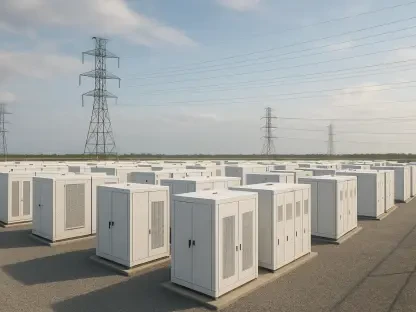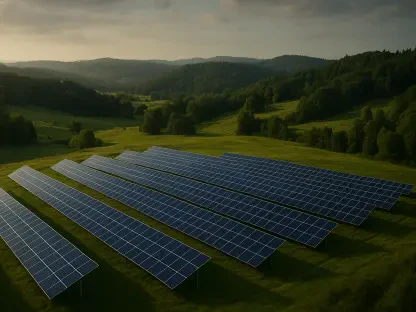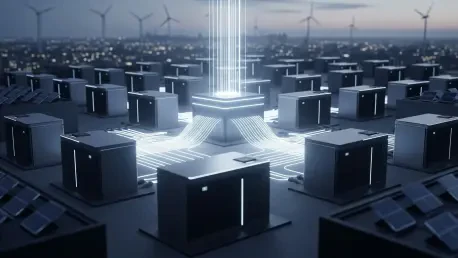

Thousands of decentralized storage units nestled in suburban garages are currently coalescing into a massive, invisible network that rivals the output of the most traditional gas-fired electricity generators across the state. This transition marks a fundamental shift in how energy is produced, stored, and distributed. California is leading a radical experiment in energy management that seeks to address the vulnerabilities of an aging electrical grid while meeting ambitious decarbonization targets. By aggregating thousands of individual residential batteries and electric vehicles, the state is attempting to transform private investments into a collective public asset through the creation of virtual power plants. This article examines the market dynamics, legislative frameworks, and economic incentives that are turning ordinary households into critical components of a resilient energy infrastructure.
From Private Backup to Public Utility: The Evolution of Residential Storage
Historically, home battery systems were viewed primarily as a luxury or a safeguard against frequent wildfires and the subsequent power outages that plagued the region. Early adopters typically installed systems like the Tesla Powerwall to ensure their lights stayed on when the grid went dark, treating the technology as a personal insurance policy rather than a market tool. However, as the state aggressively pursues its clean energy goals, the sheer volume of distributed energy resources has reached a tipping point that demands a new approach toward integration.
The foundational concepts of the energy market have shifted as these individual units have grown in number and capacity. Currently, the market sees roughly 8,000 new battery installations occurring every month, which adds approximately 100 MW of capacity to the landscape regularly. This historical shift from individual resilience to systemic utility highlights a significant maturation of the storage sector. What were once isolated “behind-the-meter” assets are now being recognized by grid operators as valuable reserves that are far too significant to leave idle during periods of peak demand.
The Legislative Engine: Economic Incentives and Market Integration
Codifying the Virtual Power Plant: The Role of SB 913
A critical turning point in this transition is Senate Bill 913, which was introduced to place distributed energy resources on a level playing field with traditional, centralized power plants. This legislation formalizes the process of allowing aggregated home batteries and electric vehicles to count toward resource adequacy requirements. By acknowledging that a thousand homes can provide the same grid reliability as a single gas-fired plant, the state has fundamentally restructured how energy capacity is measured and compensated. This policy shift ensures that decentralized storage is no longer a peripheral interest but a core element of long-term planning and procurement processes.
Incentivizing Participation: The Ava Community Energy Model
While legislation provides the necessary framework, utility programs like the SmartHome Battery initiative by Ava Community Energy provide the immediate motivation for consumer participation. These programs offer substantial financial incentives, such as rebates of $500/kWh for income-qualified residents and $90/kWh for others, alongside monthly payments for sharing battery capacity. By offering $3 per shared kilowatt-hour, utilities have made it financially viable for homeowners to treat their hardware as a source of passive income. This model addresses the affordability crisis by lowering the net cost of green technology, which encourages a broader demographic to join the energy transition.
Market Shifts: The Lasting Impact of NEM 3.0
The move toward battery integration is also a pragmatic response to recent regulatory changes, most notably the implementation of the NEM 3.0 compensation framework. This policy significantly reduced the credits solar-only customers receive for sending excess energy back to the grid, making standalone solar less economically attractive. Consequently, the market has seen a dramatic shift where the attachment rate for solar-plus-storage systems has more than doubled. Consumers are no longer viewing batteries as an optional add-on but as an essential tool for maximizing the value of their solar panels, ensuring a steady supply of storage capacity for the state to harness.
Anticipating the Grid of Tomorrow: Trends and Innovations
The integration of residential assets is expected to accelerate as vehicle-to-grid technology matures and becomes a standard feature in the automotive industry. As electric vehicles become ubiquitous, their massive battery capacities represent a dormant energy reserve that could eventually dwarf stationary home storage systems. Sophisticated software platforms are currently being developed to use artificial intelligence to predict demand spikes and automatically dispatch power from thousands of vehicles and home batteries simultaneously. Regulators and technology companies are prioritizing interoperability standards to allow different brands of hardware to communicate seamlessly with utility operators.
Strategic Insights: Navigating the New Energy Landscape
For homeowners and businesses, the takeaway is clear: electricity is no longer a one-way commodity purchased from a central provider. To maximize the return on investment for green technology, consumers should prioritize grid-interactive equipment that is compatible with local demand-response programs. Professionals in the real estate and construction sectors should transition toward battery-ready designs, as these features have become essential for property valuation and energy independence. The best practice in the current market involves viewing a home battery not just as an emergency backup, but as a mini-utility that requires active management to capture the highest possible financial incentives.
Conclusion: A New Paradigm for Energy Reliability
The strategy to transform home batteries into functional power plants demonstrated a sophisticated understanding of decentralized infrastructure. By leveraging private investments for the public good, the state built a more resilient and flexible grid that successfully mitigated the volatility of modern electricity demand. This model proved that the solution to large-scale energy challenges often rested in the collective power of individual consumer choices. Stakeholders who adopted grid-tied storage early positioned themselves to benefit from a smarter, cleaner electrical ecosystem that served as a blueprint for global energy reform. Actionable steps for the future involved expanding these programs to include low-income housing and commercial fleets to ensure equitable access to the benefits of virtual power plants.