
The steady hum of over a million inverters across the California landscape signifies a fundamental restructuring of the American power grid that was once thought to be a logistical impossibility. This June 2026 milestone achieved by Pacific Gas and Electric (PG&E) transcends simple environmental statistics; it represents the definitive conclusion of the traditional, top-down electrical distribution model. As the first utility in the United States to reach such a scale, PG&E is successfully transforming a massive network of private residences into an interactive, decentralized power plant. This evolution challenges the historic definition of a “customer” and sets a precedent for every major utility in the nation.
The significance of this achievement lies in the scale of integration rather than just the raw number of panels installed on rooftops. By shifting the perspective from individual solar arrays to a collective energy resource, the utility has created a framework where homes contribute to the stability of the entire region. This move away from centralized dependence marks a new chapter in how energy is managed, distributed, and valued within a modern society.
A Million Rooftops and the End of the One-Way Power Line
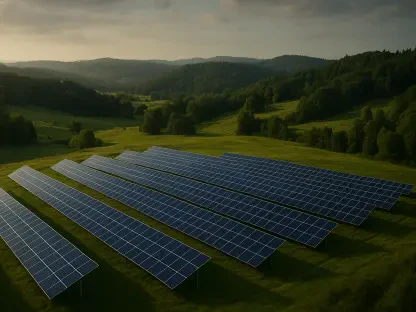
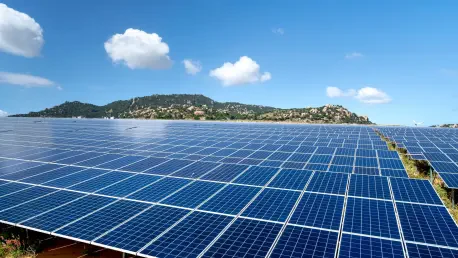
Electrical distribution used to be a strictly one-way street, moving power from massive, isolated plants to remote households. Today, the grid functions like a multi-lane highway with power flowing in every direction, requiring a complete overhaul of how infrastructure is monitored and maintained. This transformation has turned a million rooftops into a massive, distributed generator capable of feeding electricity back into the system during periods of high demand.
Reaching this threshold requires more than just hardware; it demands a cultural and operational shift within the utility itself. By embracing this scale, PG&E has effectively acknowledged that the grid of the future is not a central fortress but a distributed ecosystem. This milestone demonstrates that residential solar can move from a niche luxury to a core pillar of energy infrastructure, provided the management systems are robust enough to handle the complexity of millions of points of generation.
From Passive Consumers to Prosumers: Why the Shift Matters
For a century, the relationship between utilities and households remained static: the company generated power, and the customer paid the bill for what was used. However, soaring electricity rates and the rising frequency of Public Safety Power Shutoffs (PSPS) have altered the fundamental value proposition of solar technology for the average resident. In a state where wildfire risks often necessitate preemptive blackouts to ensure safety, the primary motivation for solar installation has shifted toward absolute energy reliability.
Homeowners are no longer merely seeking to lower monthly expenses; they are actively pursuing energy independence to protect their families during grid failures. This transition from passive consumption to “prosumption” forces a total rethink of grid management across the entire sector. Dealing with a population that both consumes and generates electricity requires sophisticated balancing acts that traditional grids were never designed to handle, yet this shift provides the very flexibility needed for a cleaner future.
The Technological Engine Powering the Distributed Grid
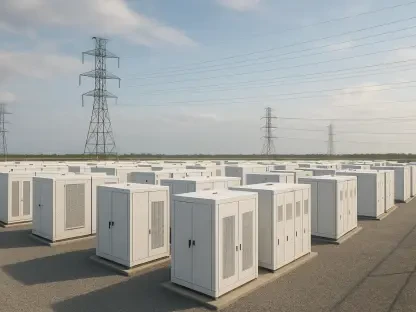
Managing a million decentralized generators relies on a sophisticated digital layer rather than just physical copper wires. PG&E’s strategy focuses on Virtual Power Plants (VPPs) that aggregate thousands of individual solar-plus-storage systems into a single, controllable resource. Through advanced forecasting and grid automation, the utility can now tap into customer-owned batteries to stabilize the entire system during peak summer loads when the demand for cooling is at its highest.
The efficacy of this digital engine was recently proven during a coordinated response test that delivered 535 MW of power to the grid. This output, roughly equivalent to a mid-sized traditional power plant, was generated entirely by customer assets without burning any fossil fuels. By utilizing existing resources already installed on homes, the utility demonstrates that software-driven coordination can effectively replace physical fuel consumption in critical moments of grid stress.
Lessons in Resilience and Economic Practicality
Real-world data shows that the solar-plus-storage model is becoming the gold standard for reliability in high-risk environments. Programs like the Self-Generation Incentive Program (SGIP) provided the initial financial scaffolding for this growth, but the real-world catalyst has been the need for hyperlocal solutions. Partnerships with private providers like Sunrun have proven that placing generation closer to the point of use can defer multi-billion dollar infrastructure upgrades that would otherwise be passed on to ratepayers.
Leveraging customer-owned assets allows the utility to alleviate distribution constraints more efficiently than building new transmission lines through difficult terrain. Transmission projects often face decades of regulatory hurdles, high costs, and environmental opposition, whereas rooftop installations happen rapidly at the local level. This economic practicality makes the distributed model attractive even beyond environmental mandates, providing a faster path toward a modernized and resilient electrical network.
Frameworks for Implementing a Participatory Energy Ecosystem
To replicate this milestone elsewhere, policymakers moved beyond simple interconnection toward a strategy of full system integration. They prioritized solar-plus-storage over standalone solar panels to ensure that energy generated during the day stabilized the grid at night. This approach transformed the rooftop from a peripheral add-on into a vital component of the energy landscape, effectively using residential storage to smooth out the inherent variability of renewable power.
Regulators established clear financial pathways that rewarded customers for providing essential grid services like demand response and frequency regulation. This transition to digital management systems successfully created a participatory energy ecosystem where the utility and the homeowner shared the responsibility for reliability. The milestone eventually served as a definitive blueprint for balancing clean energy goals with the rigorous demands of modern grid stability and wildfire prevention across the country.