
Despite a late-quarter surge in diesel fuel prices, Waste Connections achieved a robust 34% adjusted EBITDA margin through disciplined operational efficiency and cost management. This performance reinforces the company’s status as a top-tier operator in the North American solid waste sector, especially following the recent announcement of a 10% increase in the quarterly dividend. Representing the sixteenth consecutive year of double-digit dividend growth, this milestone highlights a period of sustained excellence and fiscal prudence that remains rare in the current industrial landscape. Over the past decade, the company has rewarded its shareholders with a remarkable 266% gain in stock price, a result of its unwavering focus on essential services and strategic expansion. By prioritizing stable cash flows and maintaining a conservative approach to its capital structure, the organization has navigated the complexities of fluctuating waste volumes and global economic shifts with notable precision and confidence.
Strategic Operations and Infrastructure Control
Vertical Integration: Internalization and Ownership
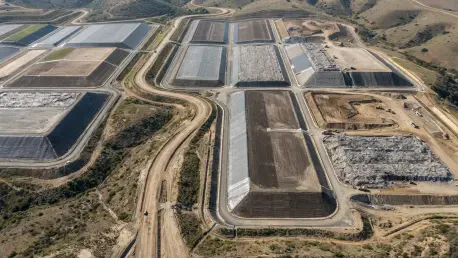
The logistical superiority of Waste Connections is largely defined by its impressive internalization rate, which currently sits at 58% across its sprawling network. This specific metric identifies the portion of collected waste that is deposited into landfills owned and operated by the company itself, rather than being diverted to third-party facilities that charge external tipping fees. By controlling the entire lifecycle of the waste stream—from the initial curbside collection to the final disposal site—the company effectively doubles its revenue potential for every ton of material handled. This vertical integration strategy not only protects the business from the price volatility of external disposal markets but also ensures a higher level of margin capture that competitors without their own landfills simply cannot match. Maintaining such a high level of infrastructure control allows for a streamlined operational flow that maximizes the efficiency of every route and disposal cycle.
Asset Control: Long-Term Fiscal Stability
Securing ownership of the final disposal point provides a unique competitive advantage that serves as a foundation for long-term fiscal stability. When a waste management firm owns the landfill, it transforms a significant operational cost into a high-margin internal revenue source. This structural benefit becomes even more pronounced during periods of high inflation, as the company can avoid the rising disposal rates set by competitors while simultaneously raising its own fees for third-party haulers who need to use their facilities. Furthermore, the ability to manage the capacity and lifespan of these landfills allows the leadership to plan with a multi-decadal horizon, ensuring that they remain the dominant force in their specific geographic regions. This strategic focus on asset ownership reduces the reliance on external partners and creates a self-sustaining ecosystem where every truckload of waste contributes directly to the company’s margin expansion and overall financial health.
Market Dominance: The Secondary Market Advantage
Beyond its physical assets, the company has strategically positioned itself within exclusive and secondary markets where competition is naturally limited by geographic or contractual barriers. Unlike the crowded metropolitan centers where multiple haulers fight for thin margins, Waste Connections often operates as the primary or sole service provider in smaller towns and rural franchise territories. These markets are typically governed by long-term municipal contracts that provide a high degree of revenue predictability and act as a formidable competitive moat against potential new entrants. A rival firm attempting to penetrate these areas would face significant capital requirements to establish a competing route network and secure local disposal permits, making the existing presence of Waste Connections nearly unassailable. This deliberate focus on non-urban regions allows the company to maintain a dominant market share while avoiding the aggressive price wars that often plague more densely populated cities.
Franchise Territories: Predictable Revenue Streams
The reliance on franchise territories and secondary markets provides a buffer against the broader economic fluctuations that can impact industrial-heavy waste providers. In these regions, residential and municipal waste levels tend to remain remarkably consistent, providing a steady baseline of activity regardless of the current stage of the business cycle. By securing exclusive rights to these areas, the company ensures that its trucks are operating at high density, which reduces fuel consumption and wear and tear on the fleet. This operational model creates a virtuous cycle where high density leads to lower costs, which in turn supports the company’s ability to offer competitive service while maintaining superior profitability. The predictability of these cash flows is a primary reason why the organization can commit to aggressive dividend growth and share buyback programs, as the leadership team has a clear view of its long-term revenue trajectory based on these established municipal partnerships.
Financial Discipline and Shareholder Value
Pricing Power: Offsetting Volume Contractions
A defining characteristic of the current waste management landscape is the successful use of pricing power to counteract the challenges of declining volumes. Over the course of the last four quarters, Waste Connections has observed a consistent contraction in solid waste volumes, with some periods experiencing drops as high as 2.7%. However, the company has effectively navigated this trend by implementing core price increases ranging from 5.5% to 6.4%, ensuring that revenue growth remains positive despite the physical decrease in trash collected. This strategy underscores the essential nature of waste services; because businesses and households cannot simply stop producing refuse, the company holds significant leverage in its pricing negotiations. By prioritizing value over volume, the management team has ensured that the company does not sacrifice its profitability to chase lower-margin contracts, maintaining a high standard of service while protecting the interests of its shareholders.
Market Elasticity: The Essential Nature of Waste
The inherent inelasticity of demand for garbage disposal services allows the organization to pass through inflationary costs to its customers with minimal resistance. While many other industries struggle to maintain volume when prices rise, the waste sector remains shielded by the fact that its services are a biological and logistical necessity for modern society. This pricing leverage is particularly vital during periods of rising labor and fuel costs, as it allows the company to preserve its 34% EBITDA margin even when the underlying cost of doing business increases. Furthermore, as landfill volumes begin to stabilize—noted by a recent 70-basis-point sequential improvement—the combination of high pricing and steadying volume points toward a period of accelerated earnings growth. This balanced approach to revenue management demonstrates the company’s ability to adapt to changing market conditions without compromising its long-term financial objectives or operational integrity.
Dividend Strategy: Consistent and Sustainable Growth
The decision to raise the quarterly dividend to $0.385 per share is a testament to the company’s robust free cash flow generation and commitment to returning value to its owners. While a yield of approximately 0.9% might appear modest to some at first glance, the compounding impact of sixteen consecutive years of double-digit increases is remarkably significant for long-term investors. Since 2017, the quarterly payout has surged by a total of 175%, reflecting a growth trajectory that far outpaces many other companies in the industrial and utility sectors. This consistent upward movement in the dividend provides a reliable income stream that is backed by the physical reality of the waste industry’s stable and recurring demand. For investors, this represents more than just a quarterly check; it is a signal of the company’s underlying health and the management team’s belief in the durability of their current business model regardless of the fluctuations in the broader stock market.
Capital Allocation: Buybacks and Reinvestment
Equally important to the growth of the dividend is its sustainability, as evidenced by a conservative payout ratio that consumed only 27% of the free cash flow in the previous year. This high level of coverage ensures that the company has ample capital remaining for other strategic initiatives, such as debt reduction, infrastructure investment, and opportunistic acquisitions. In fact, share buybacks have emerged as a primary tool for capital allocation, with over $1 billion utilized year-to-date to retire approximately 2.5% of the company’s outstanding shares. This dual approach of increasing dividends while reducing the share count serves to amplify the earnings per share and provides a powerful tailwind for future stock price appreciation. Management’s updated guidance for the current year anticipates adjusted free cash flow reaching between $1.40 billion and $1.45 billion, providing a solid foundation for continued shareholder rewards and future investment.
Long-Term Outlook and Risk Management
Growth Catalysts: Infrastructure and Fleet Optimization
As the company moves forward, its focus remains firmly on internalizing more of its landfill assets and optimizing its existing route density to drive further operational efficiencies. The ongoing transition of more waste into company-owned sites is a critical component of the long-term strategy to insulate the business from external cost pressures and expand its competitive advantage. While the stock has experienced a period of relative stagnation recently after a decade of massive growth, the fundamental business drivers remain as strong as ever. The unique positioning in secondary markets combined with a highly disciplined management team creates a profile that is well-suited for an environment characterized by persistent inflation and economic uncertainty. By focusing on the durable aspects of waste logistics, the organization continues to prove that consistency and operational excellence are the most reliable paths to long-term wealth creation for all of its stakeholders.
Performance Review: Key Strategic Outcomes
In the recent performance cycle, the management team successfully addressed the challenge of rising fuel costs by prioritizing route optimization and logistical efficiency across all secondary markets. They established a clear precedent for utilizing pricing power as a primary defensive mechanism against declining volumes, ensuring that margins remained protected even during periods of lower industrial activity. Moving forward, the company intensified its focus on the acquisition of local disposal sites to further increase the internalization rate beyond the current 58% threshold. These strategic steps provided a roadmap for maintaining double-digit dividend growth while simultaneously funding large-scale share repurchase programs. The organization shifted its capital allocation strategy to prioritize the modernization of its fleet with natural gas vehicles to further insulate the bottom line from diesel price fluctuations. These decisions offered a stable pathway for navigating future inflationary pressures.