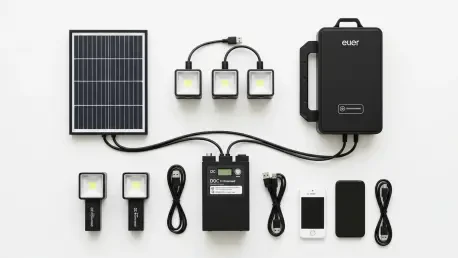

The rapid democratization of renewable energy technology has effectively erased the traditional boundaries between a comfortable home life and the rugged unpredictability of the great outdoors. Modern portable solar systems have evolved from niche equipment used by specialized researchers into essential tools for the average digital nomad, camping enthusiast, and homeowner preparing for potential grid failures. Despite the widespread availability of these systems, many users struggle to reconcile their expectations with the physical limitations of solar energy harvesting and storage. A functional portable setup typically consists of two primary components: high-efficiency solar panels and a portable power station that serves as a high-capacity battery. The power station is the most critical element because it bridges the gap between the erratic nature of sunlight and the steady energy requirements of modern electronics. By converting direct current into the alternating current used by most household gadgets, these stations allow users to maintain a degree of normalcy in off-grid environments. Understanding what these systems can actually do requires a shift in perspective from viewing them as infinite power sources to seeing them as carefully managed energy reservoirs that demand strategic utilization.
Decoding the Mechanics: Energy Storage and Hardware
The current marketplace for solar generators is defined by a sophisticated range of products from companies like EcoFlow, Jackery, and Bluetti, which have refined the integration of lithium iron phosphate batteries and high-wattage inverters. To understand the capabilities of these systems, it is necessary to look beyond the marketing numbers and focus on the technical synergy between the solar panel’s input and the power station’s output. A 400-watt panel might suggest a high degree of power, but if the station’s internal inverter is only rated for 500 watts, it will never be able to run high-demand appliances like a blender or a hair dryer. The inverter serves as a gatekeeper, determining the peak amount of energy that can be drawn at any single moment, while the battery capacity dictates the total runtime. Without a balanced understanding of these two factors, users often find themselves with plenty of stored energy but no way to push enough wattage to start their more demanding devices, or conversely, a powerful inverter that drains a small battery in less than ten minutes.
Clarity regarding the distinction between wattage and watt-hours is fundamental for anyone looking to maximize the utility of a portable solar system. Wattage represents the instantaneous demand of an appliance, similar to the speed of a car, whereas watt-hours represent the total energy capacity, much like the volume of a fuel tank. For instance, a basic LED bulb might only draw 10 watts of power, allowing a 500 watt-hour battery to keep that light running for fifty hours in a theoretical vacuum. However, real-world conditions introduce conversion losses and temperature fluctuations that reduce this efficiency. Modern systems are increasingly equipped with smart displays that show real-time consumption and estimated remaining time, which helps users manage their energy “budget.” For smaller electronics under 200 watts, even compact stations are highly effective, but as the demand moves toward larger household items, the bottleneck transitions from how much energy is stored to how quickly that energy can be safely discharged and replenished.
The internal Battery Management System, or BMS, acts as the brain of the portable power station, ensuring that the lithium cells operate within safe temperature and voltage parameters. In 2026, these systems have become incredibly advanced, allowing for faster charging cycles and longer lifespans that can exceed three thousand full charge and discharge cycles. This longevity makes the investment in portable solar more practical for long-term emergency preparedness rather than just occasional recreational use. The BMS also handles the transition between charging via solar panels and discharging to devices, a process known as pass-through charging. While convenient, using a device while the system is charging can increase heat and slightly degrade the battery over time. Efficient energy management involves understanding these internal processes to ensure that the system remains reliable when it is needed most, particularly in extreme weather conditions where battery performance can naturally dip due to the cold.
Everyday Electronics: Connectivity and Personal Computing
Handheld devices such as smartphones and tablets represent the most compatible and efficient category for portable solar power. These gadgets are designed to run on low-voltage direct current, which aligns perfectly with the native output of solar panels and the internal batteries of power stations. In many scenarios, small folding solar panels with built-in USB ports can charge a phone directly without the need for a large storage station, provided the sunlight is consistent. However, using a power station as a buffer remains the superior method because it prevents the charging “stutter” that occurs when a cloud passes overhead, which can sometimes confuse the charging circuitry of sensitive modern smartphones. Because these devices typically draw very little power, often between 5 and 15 watts, a medium-sized portable system can keep a family’s worth of mobile devices operational for weeks if solar conditions allow for even a few hours of daily replenishment.
Laptops and portable workstations have become the cornerstone of the remote work movement, and they are excellent candidates for solar integration. Most modern laptops draw between 30 and 100 watts during active use, making them manageable for even entry-level power stations. To achieve the highest level of efficiency, it is often better to use a USB-C Power Delivery port rather than a traditional wall plug. This direct DC-to-DC connection bypasses the power station’s internal AC inverter, which typically loses a significant percentage of energy to heat during the conversion process. By staying within the DC ecosystem, users can extend their laptop’s battery life by up to twenty percent compared to using the standard charging brick. This level of efficiency is vital for professionals who need to maintain a reliable connection for video conferencing and data processing while operating in locations far from the traditional power grid.
The rise of satellite internet technology, specifically systems like Starlink Mini, has changed the power requirements for remote communication. These dishes and their associated routers generally consume between 25 and 50 watts, representing a constant drain that must be accounted for in an energy budget. While this is a modest draw, it can add up over a full workday, necessitating a solar array that can produce at least double that amount to both run the device and recharge the station for nighttime use. Many off-grid workers have adopted a strategy of intensive “harvesting” during peak sun hours, where they download large files or perform energy-heavy tasks while the panels are at their most productive. This proactive management ensures that the remaining battery capacity is preserved for essential communication during the evening or on overcast days when solar input is significantly reduced.
Vital Gear: Medical Needs and Outdoor Sustenance
For individuals who rely on medical equipment such as CPAP machines, portable solar technology is a matter of safety and health rather than mere convenience. A standard CPAP machine typically draws between 30 and 60 watts, which can be easily supported by a 500Wh to 1000Wh power station for one or two nights. To maximize runtime, experts suggest disabling the heated humidifier and heated tubing, as these resistive heating elements can triple the power consumption. Using a dedicated DC converter cable instead of the standard AC wall plug is another critical optimization that reduces energy waste. With these adjustments, a portable solar system becomes a reliable lifeline during power outages or camping trips, providing peace of mind to users who previously felt tethered to the electrical grid. As battery technology continues to improve through 2027 and 2028, these systems are becoming lighter and more portable, making medical freedom more accessible than ever before.
Specialized camping refrigerators have replaced traditional ice chests for many travelers, offering a way to keep food fresh indefinitely without the hassle of melting ice. Unlike a residential refrigerator, these 12V units are designed with highly efficient compressors that cycle on and off based on the internal temperature. When the ambient temperature is moderate, a portable fridge might only draw an average of 1 or 2 amp-hours, which is well within the capabilities of a mid-sized solar setup. The key to success with these devices is maintaining a consistent solar input to offset the daily drain. A 200-watt solar array is usually sufficient to keep a portable fridge running while also topping off the power station for other uses. This creates a sustainable loop where the sun provides the energy to keep food cold, allowing for extended stays in remote areas without the need to return to civilization for supplies.
Lighting remains one of the most efficient uses of stored solar energy due to the incredible low-draw nature of modern LED technology. Portable LED lanterns and light strings often consume as little as 2 to 5 watts, meaning they can provide illumination for an entire campsite or a room in a house for hundreds of hours on a single charge. By utilizing DC-powered lights that plug directly into USB or 12V ports, users can avoid the “phantom draw” of the AC inverter entirely. This is particularly important for emergency preparedness, where a small, inexpensive solar setup can provide essential lighting for an extended period after a disaster. The reliability of LED lighting combined with the simplicity of solar charging ensures that even the most basic setups can significantly improve safety and comfort in environments where traditional power is unavailable.
High-Demand Challenges: The Limits of Resistive Heating
The primary limitation of portable solar systems is encountered when attempting to power devices that utilize resistive heating. Appliances like hair dryers, curling irons, and electric space heaters are designed to convert massive amounts of electricity directly into heat, often requiring between 1,000 and 1,800 watts of power. Even the most advanced portable power stations in the current 2026 market will struggle with these loads; a hair dryer can drain a standard portable battery in as little as fifteen minutes of continuous use. Beyond the rapid battery drain, the high wattage can exceed the surge capacity of the inverter, causing the system to shut down as a safety precaution. For those living off-grid or traveling, it is almost always more efficient to look for non-electric alternatives for personal grooming and warmth rather than trying to force a portable solar system to handle these intensive thermal tasks.
Cooking with electricity presents a similar set of challenges that can quickly deplete even a large-scale portable energy reserve. Induction cooktops and electric hot plates are praised for their efficiency in a home setting, but in an off-grid solar context, they are incredibly demanding, often pulling up to 2,000 watts on high settings. While a top-tier power station can technically run a single burner for a short period, the energy required to boil a large pot of water or simmer a meal could easily consume half of the total stored power. This leaves very little energy for lights, communication, or refrigeration. For this reason, most experienced solar users continue to rely on propane, butane, or wood-burning stoves for their cooking needs. Using solar power for low-wattage electronics and saving chemical fuels for cooking is a much more balanced and sustainable approach to resource management.
Electric kettles are often the most deceptive “battery killers” because they are used frequently and for short durations, yet they require an enormous burst of energy to function. A typical kettle uses about 1,500 watts to bring water to a boil, and while the process only takes a few minutes, it places a heavy strain on the battery’s discharge rate. Repeatedly pulling this much current can generate internal heat within the power station, potentially shortening the lifespan of the battery cells over time. When solar replenishment is limited by cloud cover or short winter days, using stored energy for hot water is rarely the most strategic choice. Many users find that a simple insulated carafe and a gas burner are far more effective for maintaining a supply of hot coffee or tea without compromising the energy needed for more vital functions like medical devices or GPS equipment.
Climate Control: Managing Temperature and Airflow
Portable air conditioners and electric space heaters represent the upper limit of what portable solar technology can realistically sustain. A standard space heater set to its lowest setting still draws around 750 watts, which would fully deplete a high-capacity 2000Wh power station in less than three hours. Converting electricity into heat is an inherently inefficient process for portable systems, making them poor choices for maintaining a comfortable temperature during cold nights. Instead of relying on the battery for warmth, users are better served by investing in high-quality insulation, thermal blankets, or specialized fuel-powered heaters designed for indoor or tent use. These alternatives provide far more heat for a much longer duration without the risk of waking up to a completely dead power station and no way to charge essential communication tools in the morning.
Cooling an environment presents its own set of technical hurdles, particularly due to the high startup surge required by traditional air conditioning compressors. While there are “solar-ready” portable air conditioners that run on DC power, they still require a massive solar array and a significant battery bank to operate for more than a few hours. A typical small AC unit might pull 400 to 600 watts continuously, which necessitates a constant influx of solar energy that is difficult to maintain with foldable or portable panels. For most users, high-efficiency DC fans are a much more viable solution, as they can move a significant amount of air while drawing less than 20 watts. By focusing on airflow rather than active refrigeration of the air, it is possible to maintain a comfortable environment without overwhelming the limits of a portable solar infrastructure.
The practical application of solar power for climate control involves a deep understanding of thermal management and passive cooling techniques. In 2026, many off-grid enthusiasts are utilizing specialized thermal curtains and reflective materials to minimize heat gain during the day, which reduces the need for active cooling. When active cooling is necessary, timing the use of devices to coincide with peak solar production can help mitigate the strain on the battery. For example, running a small DC-powered evaporative cooler during the afternoon when the sun is brightest allows the system to run primarily off the panels’ output rather than the stored battery reserves. This strategic synchronization of energy production and consumption is the hallmark of a successful off-grid setup, ensuring that the limited resources are used in the most effective manner possible to maintain comfort and safety.
Strategic Optimization: Planning for Long-Term Independence
The most effective way to utilize portable solar power is to prioritize the “DC Advantage” by using devices that do not require the activation of the power station’s AC inverter. Every time a power station converts its internal DC battery power into AC for a standard wall outlet, it loses roughly 10 to 15 percent of that energy as waste heat. By sourcing 12V or USB-powered versions of common gear—such as fans, lights, and laptop chargers—users can effectively “gain” extra battery capacity simply by avoiding this conversion loss. This approach is especially critical during the winter months or in regions with frequent cloud cover, where every watt-hour of stored energy is precious. Transitioning to a DC-first mindset allows a smaller, more portable, and less expensive system to perform the same amount of work as a much larger setup that relies heavily on the AC inverter.
Successful energy management in an off-grid scenario requires a proactive approach to harvesting and rationing power based on the weather forecast and daily needs. Experienced users treat their power station like a checking account, carefully tracking “deposits” from the solar panels and “withdrawals” from their devices. During periods of peak sunlight, it is wise to perform energy-intensive tasks such as charging all handheld gadgets, running a small vacuum, or topping off power tool batteries. Conversely, as the sun begins to set, the focus should shift to conservation, turning off unnecessary displays and unplugging devices that have a “vampire draw.” This rhythmic cycle of energy use ensures that the battery remains at a healthy state of charge, preventing deep discharges that can be stressful for the lithium cells and ensuring that there is always a reserve for emergencies.
Ultimately, the transition to portable solar energy was defined by a shift in user behavior and a better alignment between technology and lifestyle needs. Users who took the time to understand the wattage requirements of their specific devices and invested in high-quality DC-native accessories found that they could maintain a high standard of living regardless of their proximity to the electrical grid. The most successful implementations involved a combination of efficient hardware, smart energy harvesting, and a realistic understanding of the physics of heat and power. By focusing on electronics, communication, and specialized low-draw appliances, individuals were able to build resilient systems that provided years of reliable service. The lessons learned from managing these portable systems provided a blueprint for more sustainable living, emphasizing that energy independence was as much about the choices made by the user as it was about the panels and batteries themselves.