
The implementation of the Future Homes Standard (FHS) and the Future Buildings Standard (FBS) represents a seismic shift in how the British construction industry operates, effectively ending the era of fossil fuel-reliant residential and commercial development. These regulations, which entered into force in March 2026, are not merely incremental updates to existing building codes but are instead a comprehensive reimagining of the built environment’s relationship with energy. The primary objective is to ensure that any structure erected from this point forward is inherently “zero-carbon ready,” meaning it will require no further retrofitting or modification to achieve net-zero operational emissions as the national electricity grid continues its path toward full decarbonization by 2030. This transition marks the culmination of a policy journey that began nearly two decades ago, overcoming numerous economic shifts and political cycles to finally establish a mandatory baseline for sustainability that is among the most stringent in the world.
The Technical Mechanics of Compliance
Navigating the technical landscape of the 2026 standards requires a fundamental departure from traditional construction methods toward a highly integrated, data-driven approach to building performance. The government has moved away from the more lenient frameworks of the past, replacing them with a “notional building” methodology that serves as a rigorous benchmark for every new project. Under this system, developers must prove that their proposed designs match or exceed the carbon performance of a theoretical model equipped with high-efficiency heat pumps, superior triple-glazing, and advanced wastewater heat recovery systems. This shift ensures that the reduction in carbon emissions—targeted at a minimum of 75% compared to 2013 levels—is achieved through the intrinsic quality of the building itself rather than through external offsets or temporary technological additions that might not last the lifetime of the structure.
Evolution of Energy Modeling: Transitioning from SAP to HEM
The centerpiece of this technical overhaul is the retirement of the long-standing Standard Assessment Procedure (SAP) in favor of the more sophisticated Home Energy Model (HEM). For years, the industry struggled with a persistent “performance gap,” where the theoretical energy efficiency of a building at the design stage rarely aligned with its actual energy consumption once occupied. The HEM seeks to eliminate this discrepancy by utilizing a much higher temporal resolution for energy data, allowing for more granular assessments of how a building interacts with the electricity grid and ambient environmental conditions. This new modeling tool is specifically designed to accommodate modern technologies like battery storage and smart thermal management, providing a more realistic picture of how residents use energy throughout the day. By moving to this high-fidelity simulation, the government has made it significantly more difficult for developers to mask poor architectural design with high-tech add-ons.
Furthermore, the introduction of the Home Energy Model coincides with a mandatory 24-month dual-running period where both the old SAP and the new HEM will coexist to facilitate a smoother industry transition. This window allows architectural and engineering firms to recalibrate their internal processes and software suites without facing immediate legal penalties for modeling errors. However, the rigor of HEM necessitates an earlier involvement of energy consultants in the design process, as the model penalizes inefficient building orientations and excessive glazing more heavily than its predecessor. Developers who fail to adopt this integrated modeling approach early in the feasibility stage risk discovering that their designs are non-compliant only after significant capital has been committed to specific architectural plans. The move to HEM is essentially a move toward digital twins, where every new home exists first as a perfectly simulated energy entity before the first brick is laid.
Prioritizing the Fabric-First Philosophy in Construction
At the heart of the 2026 regulations is the “fabric-first” approach, a philosophy that prioritizes the insulation, airtightness, and thermal mass of the building envelope over the installation of renewable energy systems. This strategy recognizes that while a heat pump or a solar array can be replaced every fifteen to twenty years, the walls and foundations of a building are permanent fixtures that define its energy demand for decades. Consequently, the new standards have significantly tightened the U-values required for walls, floors, and roofs, pushing the industry toward thicker insulation profiles and more advanced building materials. This focus on the physical envelope reduces the overall heat demand of the structure, ensuring that even if energy prices fluctuate or mechanical systems fail, the building remains habitable and efficient. This focus represents a departure from earlier trends where developers often relied on large solar PV arrays to compensate for mediocre insulation levels.
The practical implication of this fabric-first mandate is a total ban on new gas boiler installations, a move that has effectively made electric-based heating the national standard. To meet the stringent energy limits, developers must now integrate air-source or ground-source heat pumps as the primary heating mechanism, often paired with mechanical ventilation with heat recovery (MVHR) systems. These systems are essential for maintaining indoor air quality in the highly airtight environments that the FHS demands. By focusing on the structural integrity and thermal performance of the building, the standard ensures that the built environment is resilient against the extreme weather patterns that are becoming more frequent. For the developer, this means a shift in procurement priorities, where the quality of sealants, thermal bridges, and insulation continuity becomes just as critical to the final sign-off as the structural stability of the building itself.
Impact on Commercial and Residential Sectors
The application of the Future Buildings Standard (FBS) to the non-domestic sector introduces a different set of challenges compared to the residential market, primarily due to the vast diversity of commercial building types. While a residential home has a relatively predictable energy profile, the energy needs of a high-tech data center, a massive logistics warehouse, or a specialized surgical theater are fundamentally different. The FBS addresses this by creating category-specific targets that reflect the operational realities of different businesses. For instance, commercial office spaces are now required to demonstrate significant reductions in cooling loads through passive design measures like external shading and natural ventilation, while industrial units must focus on high-efficiency lighting and heat recovery from manufacturing processes. This nuanced approach prevents the “one size fits all” failure of previous regulations and forces developers to understand the specific operational carbon footprint of their commercial tenants.
Differentiating Building Requirements: Commercial and Institutional Standards
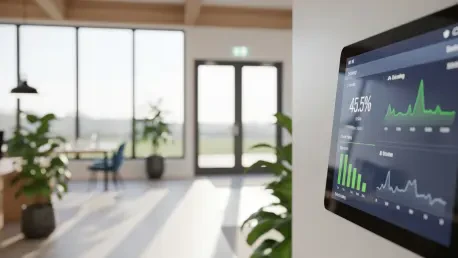
The FBS focuses heavily on the decarbonization of heat and the improvement of building services in institutional settings such as schools and hospitals. In these environments, the priority shifts from mere energy efficiency to the integration of health-focused technologies, such as advanced filtration and demand-controlled ventilation. For developers working on public sector contracts, compliance with the FBS is now a prerequisite for any government funding or planning approval. The standard requires that non-domestic buildings over a certain size install sophisticated building management systems (BMS) that can monitor energy usage in real-time, providing the data necessary for ongoing operational transparency. This move toward mandatory monitoring is designed to hold commercial landlords accountable for the energy performance of their assets, moving the industry away from the “design and forget” mentality that characterized earlier decades.
Furthermore, the FBS introduces specific challenges for the retail and hospitality sectors, where large glass storefronts and frequent door openings traditionally led to massive energy losses. Under the new rules, these sectors must adopt innovative solutions such as air curtains, high-performance glazing, and heat recovery from refrigeration units to meet their carbon targets. The complexity of these requirements means that the role of the mechanical and electrical (M&E) engineer has become central to the commercial development process. Developers are finding that the cost of compliance is often higher in the commercial sector due to the specialized nature of the equipment required. However, the long-term value of these assets is bolstered by their “zero-carbon ready” status, which protects owners from the risk of “stranded assets” as carbon taxes and environmental disclosures become more aggressive in the financial markets.
Managing Complexities in Mixed-Use and High-Rise Developments
Mixed-use developments present one of the most significant regulatory hurdles under the 2026 framework, as they often fall under the jurisdiction of both the FHS and the FBS simultaneously. A single building containing ground-floor retail units and upper-floor apartments must now navigate two distinct sets of compliance pathways, which can lead to friction in the design of centralized heating and cooling networks. For example, the thermal requirements for the residential portion may necessitate a different temperature flow from a district heat network than the commercial portion requires for its cooling-heavy operations. Developers must therefore employ highly skilled consultants to design integrated systems that satisfy both standards without compromising the efficiency of either. This often leads to more complex plant room layouts and the need for sophisticated metering systems to accurately allocate energy usage between the various stakeholders within the building.
The situation is further complicated for high-rise developments, which face unique technical constraints regarding the installation of on-site renewables. While the standards generally encourage the use of solar panels and other micro-generation technologies, buildings over 18 meters are granted certain exemptions due to the limited roof space relative to the total floor area. However, these exemptions do not relieve the developer of the obligation to meet the carbon reduction targets through other means, such as enhanced fabric performance or connection to a low-carbon district heating grid. The legal and technical planning for these large-scale projects must now account for the interplay between fire safety regulations and energy efficiency requirements, as many high-performance insulation materials are subject to strict combustibility rules. This intersection of safety and sustainability requires a more holistic approach to building design, where every component is scrutinized for its contribution to both the carbon footprint and the life safety of the occupants.
Operational and Economic Risks
The transition to zero-carbon standards has introduced a new layer of economic complexity, particularly concerning the transitional rules that govern how existing planning permissions are handled. Unlike previous updates which applied to entire sites, the 2026 regulations utilize a “per-building” rule, meaning that individual plots within a large development must comply with the standard in effect at the time their construction begins. This has created a phenomenon of “mixed-standard” sites, where a housing development may contain some homes built to 2013 standards and others built to the rigorous 2026 requirements. From an asset management perspective, this is a potential nightmare for developers and social housing providers, as it results in a neighborhood with vastly different maintenance requirements and energy performance profiles, potentially leading to inconsistencies in property valuation and resident satisfaction within the same street.
Navigating Transitional Rules and Increased Capital Expenditure
From a financial standpoint, the increase in capital expenditure (CAPEX) required to meet these standards is a primary concern for the development community. Initial government estimates suggested an additional cost of approximately £4,350 per dwelling, but real-world data from the early months of 2026 suggests that the true cost is often double that figure when accounting for labor shortages and supply chain premiums. The sudden, mandatory surge in demand for heat pumps, MVHR units, and high-spec insulation has outpaced the domestic manufacturing capacity, leading to longer lead times and higher prices for essential components. Developers are also facing higher insurance premiums as insurers grapple with the risks associated with new, complex heating systems and the potential for installation defects in highly airtight buildings. These rising costs are putting pressure on land values, as developers must adjust their bids to account for the higher price of construction.
Moreover, the financial risks extend beyond the construction phase into the long-term viability of projects. Developers who have not adequately prepared for these costs are finding their profit margins squeezed, particularly in regions where house price growth has slowed. This economic pressure is driving a trend toward greater standardization and off-site manufacturing, as developers seek to control costs through factory-controlled environments where material waste can be minimized and labor efficiency maximized. However, even with these efficiencies, the initial outlay remains high, and many smaller developers are finding it difficult to compete with larger volume builders who have the scale to negotiate better rates with green technology suppliers. This shift in the market structure could lead to further consolidation in the construction industry as the cost of compliance becomes a barrier to entry for smaller, less capitalized firms.
Evaluating the Financial Impact on Residents and Tenants
While the 2026 standards are a triumph for environmental policy, the immediate financial benefit for the end-user is a subject of ongoing debate within the industry. Because electricity is currently priced significantly higher than gas in the UK, the residents of these new zero-carbon-ready homes may not see an immediate or dramatic reduction in their monthly energy bills, despite the drastic drop in their carbon footprint. This “pricing gap” between gas and electricity presents a challenge for developers who want to market these homes based on their low running costs. Until the government rebalances energy levies to favor low-carbon electricity over fossil fuels, the financial incentive for the average homeowner to move into a highly efficient property remains partially obscured by the high cost of the units of energy they consume. This creates a marketing hurdle that developers must overcome by emphasizing the long-term resilience and health benefits of these homes.
For commercial tenants, the shift to FBS-compliant buildings brings its own set of economic realities, particularly in the form of increased service charges. The sophisticated building management systems and advanced ventilation equipment required to meet the 2026 standards are more expensive to maintain and require specialized technicians to service. Commercial landlords must carefully draft their leases to ensure that these costs are transparently communicated to tenants, who may be willing to pay a premium for “green” office space but will be wary of unexpected operational expenses. However, as more corporations commit to science-based net-zero targets, the demand for high-performance commercial space is expected to remain strong, potentially allowing developers to recoup their higher CAPEX through higher rental yields. The economic success of these developments will ultimately depend on how well the industry can communicate the value of “zero-carbon ready” assets to a market that is increasingly sensitive to environmental performance.
Strategic Implementation for Developers
The successful delivery of a project under the new standards depends heavily on the integration of environmental targets into the earliest stages of the architectural process. No longer can sustainability be treated as a decorative layer added to a nearly finished design; instead, it must dictate the very form, orientation, and layout of the building. Architects must now prioritize solar gain management to prevent overheating in the summer while maximizing natural light to reduce energy demand in the winter. This restriction on design flexibility means that certain aesthetic trends, such as floor-to-ceiling glass walls or complex building shapes with high surface-area-to-volume ratios, are becoming increasingly difficult to justify from a compliance perspective. Developers are finding that simpler, more compact building forms are not only easier to insulate but also more cost-effective to build, leading to a subtle but noticeable shift in the visual language of new British architecture.
Addressing Architectural Constraints and Legal Frameworks
Beyond the physical design, the legal frameworks governing construction and leasing have had to evolve rapidly to accommodate the 2026 mandates. Construction contracts now include more detailed specifications regarding airtightness testing and thermal bridging inspections, with stricter penalties for failing to meet the modeled performance targets. Legal teams are also revising “Green Leases” for commercial properties, incorporating clauses that require tenants to share data on their energy usage and adhere to specific operational guidelines to ensure the building remains within its carbon budget. These legal shifts are necessary to protect the interests of both the developer and the owner, as the regulatory environment now demands ongoing proof of performance rather than just a one-time certificate at the completion of construction. The rise of “performance-based contracts” is becoming a standard feature of the industry, where payments to contractors may be tied to the actual energy efficiency of the building over its first year of operation.
The supply chain and labor market also represent a significant strategic hurdle that developers must actively manage to avoid project delays. There is a profound shortage of qualified technicians capable of installing and commissioning the advanced systems required by the FHS and FBS, particularly heat pumps and MVHR systems. This skills gap increases the risk of “latent defects,” where poorly installed systems fail to deliver the expected efficiency or lead to problems with dampness and mold in airtight structures. To mitigate this, forward-thinking developers are investing in their own training programs or forming long-term partnerships with certified installers who have a proven track record in high-performance building. Rigorous due diligence on subcontractors has become more critical than ever, as the reputation of a developer is now directly linked to the operational success of the complex green technologies they are legally required to install.
Future-Proofing Through Strategic Adaptation
The shift toward zero-carbon standards has fundamentally altered the landscape of the UK construction industry, requiring developers to embrace a new level of technical precision and strategic foresight. By adopting the Home Energy Model and prioritizing fabric-first design, the industry successfully navigated the initial complexities of the 2026 regulations, even as the transition period presented significant financial and operational challenges. The move away from fossil fuels was a necessary evolution, and the early adopters who invested in workforce training and sophisticated modeling software are now seeing the benefits of their preparation. These firms established themselves as leaders in a market where sustainability is a mandatory baseline rather than an optional feature, ensuring their portfolios remained attractive to institutional investors who are increasingly focused on environmental risks.
Moving forward, the focus shifted toward the long-term management of these high-performance assets and the ongoing challenge of decarbonizing the existing building stock. The industry moved beyond the simple goal of compliance and began exploring how these highly efficient new buildings could interact with smart grids to provide peak-shaving and energy storage services. Legal frameworks continued to adapt, with performance-linked leases becoming the industry standard, ensuring that both landlords and tenants remained aligned in their pursuit of net-zero operations. Developers also played a key role in advocating for the rebalancing of energy prices, which eventually allowed the residents of zero-carbon-ready homes to realize the full financial benefits of their efficient dwellings. Through this comprehensive adaptation, the built environment became a central pillar of the nation’s broader strategy to achieve a resilient and carbon-neutral economy.