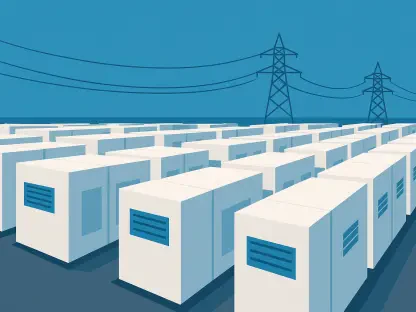

The rapid expansion of hyperscale data centers across the rolling hills of Kentucky has ignited a fierce national conversation regarding the long-term sustainability of the state’s power infrastructure and the potential financial liabilities for ordinary citizens. As massive facilities housing thousands of energy-hungry servers become the new pillars of the regional economy, the underlying question remains whether the heavy costs of upgrading substations and transmission lines will be borne by the technology giants themselves or shifted onto the monthly utility bills of residential families and local small businesses. This tension is particularly acute in a state that has long prided itself on some of the lowest energy rates in the nation, a competitive advantage that is now being tested by the sheer scale of the artificial intelligence boom. While the promise of high-tech jobs is attractive, the actual number of permanent positions is often dwarfed by their colossal demand for electricity.
Navigating the Challenge: Industrial Energy Demand
The transition from a traditional manufacturing base to a modern hub for digital infrastructure requires a fundamental rethinking of how energy is allocated and priced across the Commonwealth. In counties such as Boyd and Greenup, the arrival of multi-billion dollar data center projects was initially met with celebration, yet the lack of transparency in early negotiations left many residents feeling vulnerable to future rate hikes. Local community leaders and consumer advocates are now scrutinizing the fine print of these agreements to ensure that the massive capital investments required for grid hardening are not socialized across a customer base that derives little direct benefit from these facilities. This struggle for energy equity highlights a growing divide between state-level economic development goals and the ground-level reality of maintaining affordable living standards for Kentuckians who are already facing inflationary pressures.
Existing regulatory frameworks were largely designed for traditional industrial users like aluminum smelters or automotive plants, which provide thousands of jobs and operate with predictable load patterns. In contrast, modern hyperscale data centers operate with an extremely high load factor, meaning they draw a constant, massive amount of power twenty-four hours a day, which places a unique continuous strain on the generation fleet. Critics argue that without significant updates to the current tariff structures, these global technology firms could inadvertently receive an implicit subsidy from the very people they intended to serve. The Public Service Commission is now tasked with determining if the current cost-of-service models are sufficient to handle this new breed of consumer or if specialized classification is necessary to ring-fence the costs associated with their expansion while protecting small businesses.
Executive Accountability: The Public Service Commission
Governor Andy Beshear has consistently maintained a public position that data center operators must be held responsible for one hundred percent of the infrastructure and energy costs they generate during their tenure in the state. While this executive directive provides a clear political signal, the actual mechanism for setting utility rates resides within the quasi-judicial environment of the Kentucky Public Service Commission. This body must balance the needs of the utility companies to remain solvent and reliable with the rights of consumers to receive fair and reasonable rates under state law. Because the commission operates based on evidence-backed filings and existing statutes, a simple executive promise does not automatically translate into binding policy without formal regulatory changes. This gap between political rhetoric and regulatory reality has led to a push for more explicit legal guardrails.
Major utility providers like Louisville Gas and Electric and Kentucky Utilities have pushed back against the narrative of impending rate hikes, pointing to their existing tariffs as a robust defense mechanism. These specific rules are designed to ensure that industrial customers who require vast amounts of capacity must pay for that reservation regardless of their actual usage, effectively securing the revenue needed to maintain the equipment. Furthermore, long-term contracts often include clauses that require these large-scale users to provide significant upfront capital or collateral to cover the costs of dedicated substations and transmission extensions. The utilities argue that these high-capacity customers can actually help lower overall rates for everyone by spreading fixed costs across a larger volume of energy sales, provided the infrastructure is paid for correctly by the developers themselves.
Regulatory Gaps: Protecting the Local Infrastructure
Organizations like the Kentucky Resources Council are sounding the alarm that the current safeguards may not be granular enough to handle the unprecedented scale of the ongoing data center build-out. One of the primary concerns involves the upward pressure on residential rates that occurs when the general grid requires reinforcement to handle the increased throughput necessitated by industrial expansion. To mitigate this risk, advocates are calling for new requirements that would force data centers to adjust their power consumption during periods of peak demand, such as extreme weather events, to prevent the need for expensive new peaker plants. Another proposed solution involves mandating that these facilities pay for all connection hardware upfront, rather than allowing utilities to recover those costs over several decades through depreciation schedules, ensuring risks remain with the tech firms.
There is a growing movement to encourage or even require data centers to invest in their own on-site power generation, such as large-scale solar arrays or advanced battery storage systems, to offset their massive demand. This approach would alleviate the burden on Kentucky’s existing power fleet, which is already transitioning away from older coal-fired units toward a mix of natural gas and renewables. By generating a portion of their own electricity, these tech firms could reduce the overall strain on the regional transmission network and contribute to the state’s broader energy goals without requiring massive new investments from the utilities. Some experts suggest that such a requirement would serve as a natural filter, ensuring that only the most committed and well-capitalized companies establish a presence in the Commonwealth while protecting the reliability of the local electrical grid for residents.
Financial Risk: Managing the Artificial Intelligence Bubble
The speculative nature of the current artificial intelligence boom has raised significant concerns among policymakers regarding the long-term viability of the data centers currently under construction. If the market for these services were to experience a sudden downturn, or if technological shifts rendered these massive facilities obsolete, the state could be left with expensive and unneeded electrical infrastructure. To prevent this scenario, there is a push for the implementation of high collateral requirements and substantial exit fees that would protect utilities and their customers from being left with the bill for abandoned projects. By securing these financial guarantees at the outset, the Public Service Commission can ensure that the cost of decommissioning or repurposing the grid assets remains the responsibility of the private developers, rather than the general public who had no part in the risk.
While recent attempts to codify a statewide standard for data center energy costs failed to pass the General Assembly, the issue remains a top priority for lawmakers as they look toward upcoming legislative sessions. There is a growing consensus that a patchwork of individual utility contracts is insufficient to protect the interests of all Kentuckians, necessitating a more comprehensive and permanent legislative solution. Lawmakers are exploring various policy levers, including the creation of specialized tax districts or the implementation of state-level oversight specifically for large-scale digital infrastructure projects. Such legislation would aim to create a predictable and transparent environment for tech companies while providing ironclad protections for residential energy consumers who depend on stable rates for their livelihoods and to maintain their households in an increasingly digital world.
Forward Progress: A Sustainable Model for the Commonwealth
Stakeholders across the Commonwealth recognized that the rapid influx of hyperscale data centers required a fundamental shift in how the state managed its energy resources and regulatory oversight. To move forward, it became clear that the Public Service Commission needed to implement mandatory, transparent reporting for all industrial energy contracts to ensure that no hidden subsidies were being passed to the residential sector. Policymakers also moved to establish a dedicated grid-resiliency fund, financed entirely by tech industry fees, which served to decouple infrastructure modernization costs from the standard rate base. Furthermore, the adoption of strict energy-efficiency mandates for new facilities ensured that Kentucky did not become a haven for outdated or wasteful cooling technologies, which was vital for the long-term health of the regional environment.
Future considerations involved the creation of a statewide energy dashboard that provided real-time data on industrial load impacts, allowing the public to monitor the effectiveness of these new safeguards. By formalizing a collaborative framework between tech companies, utilities, and community advocates, Kentucky established a sustainable model for technological growth that did not rely on the financial vulnerability of its citizens. The transition from reactive regulation to proactive energy management ensured that the Commonwealth remained a leader in the digital economy without sacrificing its commitment to affordable living. Moving forward, the focus remained on diversifying the energy mix and incentivizing data centers to contribute to local grid stability through innovative demand-response programs. These strategies were essential for maintaining public trust and growth.