
Christopher Hailstone brings a wealth of specialized knowledge to the table regarding the evolving landscape of energy management and grid security. As a seasoned utilities expert, his perspective is crucial for understanding how the United States can navigate the technical and geopolitical complexities of transitioning to a renewable-heavy power grid. In this discussion, we examine the emergence of zinc-based batteries as a formidable alternative to lithium-ion technology. We delve into the safety advantages of non-flammable chemistries, the necessity of long-duration storage for grid stability, and the strategic importance of domestic mineral supplies in securing our energy future.
Lithium-ion systems currently dominate the market but require expensive fire suppression and thermal management. How do zinc-based batteries change the safety and economic calculus for utilities?
The shift toward zinc-based systems fundamentally alters the risk profile and cost structure of large-scale storage projects. Because zinc is inherently thermally stable, it eliminates the terrifying prospect of thermal runaway that often haunts lithium installations, meaning we can strip away the heavy, expensive fire suppression systems and complex cooling rigs that typically bloat project budgets. This stability allows for a 25% longer service life, giving utilities a sense of long-term reliability that is hard to find with more temperamental chemistries. When you factor in the ability to operate in extreme temperatures without failure, the total cost of ownership drops significantly, providing a sense of relief to operators who are looking for durable, low-maintenance solutions.
As the U.S. integrates more wind and solar, the need for long-duration storage becomes critical. What role does zinc play in bridging the gap during those periods when the sun isn’t shining and the wind isn’t blowing?
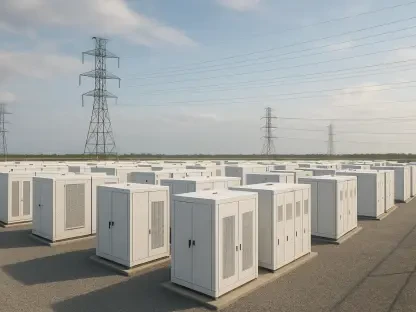
Zinc batteries really shine when we look past the typical four-hour discharge window that lithium currently covers. They are significantly more economical for maximum-power discharge durations that exceed eight hours, which is exactly what we need to keep the lights on during a multi-day weather event or a period of low solar output. Specifically, chemistries like zinc-air are being looked at for multiday storage, offering a robust solution for stabilizing a grid that faces high renewables penetration. Having a storage system that can discharge for days rather than hours provides the kind of backbone the modern energy system requires to remain reliable and secure.
There is a growing concern about the geopolitical vulnerabilities of our energy supply chains. How does the domestic availability of zinc strengthen the resilience of the U.S. power grid?
Securing our energy future means breaking away from the tension of global lithium shortages and the heavy reliance on supply chains controlled by geopolitical rivals. Zinc was designated as a “critical mineral” by the federal government last year, giving the industry a massive head start on building a domestic pipeline from mines in the Mountain West. While we currently import about 77% of our refined zinc, the vast majority of that comes from reliable neighbors like Canada and Mexico rather than overseas. By boosting production to meet just 10% of U.S. zinc demand, we could create 40 GWh of annual storage capacity, effectively insulating our grid from the volatility of the global market and the looming lithium shortages predicted by 2030.
Despite these benefits, zinc remains a small fraction of the current storage market. What are the primary hurdles preventing this technology from reaching the same scale as its lithium counterparts?
The biggest challenge is the “chicken and egg” problem of manufacturing scale, where most current installations are still quite small, often hosting 1 MW of capacity or less. While companies like Eos Energy are making big moves to double their production capacity to 8 GWh within the next two years, much of the industry is still operating at a smaller scale. We are also fighting an uphill battle against safety standards and regulatory frameworks that were written specifically for flammable lithium batteries, which can unfairly penalize the safer zinc alternatives. There is a palpable sense that utilities and end-users are often hesitant to change their habits or step away from what they know, even when a more recyclable and durable option is available.
The path forward seems to require a mix of policy support and market education. What specific actions should the federal government and industry leaders take to accelerate the adoption of zinc batteries?
We need to move beyond research and development and start putting serious capital into scaling up manufacturing lines through the Department of Energy’s loan and grant programs. Standing up a dedicated pilot manufacturing line would provide the concrete proof of concept needed to convince skeptical independent power producers that this technology is ready for prime time. Establishing an industry advisory board would also help bridge the gap between laboratory innovation and real-world utility needs, ensuring that the 40 GWh of potential capacity doesn’t just stay on paper. Ultimately, it’s about creating a sense of comfort and familiarity through public-private links, showing the market that zinc is a vital component of a secure and reliable grid.
What is your forecast for energy storage?
I foresee a diversification of the storage market where lithium-ion’s absolute dominance begins to wane as the reality of resource scarcity and safety costs sets in. By the end of this decade, zinc-based technologies will move from being a “rounding error” to a cornerstone of the grid, particularly for the long-duration applications that stabilize our volatile renewable energy supply. We will see the U.S. successfully leverage its domestic mineral wealth to build a more localized, secure energy economy that isn’t at the mercy of global supply shocks. It is going to be an era defined by reliability and common-sense engineering, where the thermal stability and longevity of zinc finally get the recognition they deserve on the national stage.