
The global waste management sector is currently grappling with a monumental crisis as traditional landfilling methods become increasingly unsustainable and environmentally hazardous. As municipalities across North America search for viable alternatives to bury their mounting refuse, Aries Clean Technologies has stepped forward with a sophisticated gasification strategy designed to convert problematic biosolids into renewable energy and carbon-rich biochar. This technological evolution arrives at a critical juncture where the intersection of strict regulatory mandates and the need for fiscal stability has forced a complete reimagining of how organic waste is processed. By leveraging advanced thermal conversion, the company aims to move beyond the limitations of conventional incineration and land application, which are increasingly banned due to chemical contamination concerns. The current initiative represents a fundamental shift in the company’s operational philosophy, moving away from experimental pilot programs toward a standardized, utility-grade infrastructure model that promises to redefine the economic landscape of municipal waste treatment over the coming years.
Financial Restructuring and Leadership Transitions
The path toward commercial viability for Aries Clean Technologies has recently been secured through a significant capital infusion and a strategic overhaul of its corporate hierarchy. Lead investor Spring Lane Capital has played a decisive role in this stabilization by purchasing two critical bond series, providing the necessary liquidity to resume debt payments and reactivate infrastructure that had previously been idled due to financial constraints. This financial reset serves as the foundation for a broader organizational transformation intended to reassure municipal partners and private investors of the company’s long-term solvency. By restructuring its balance sheet, the firm has effectively cleared the path for sustained operational growth, allowing management to focus on technical excellence rather than immediate liquidity crises. This transition marks the end of a period characterized by fiscal uncertainty, replacing it with a disciplined capital allocation strategy that prioritizes the reliability of existing assets before pursuing further market expansion.
Accompanying this financial stabilization is a pivotal change in executive leadership, with Kari Mueller ascending from senior vice president of operations to the role of Chief Executive Officer. This shift signals a departure from the vision-heavy approach of previous administrations toward a strategy rooted in technical execution and engineering precision. Mueller’s background in high-level operations is essential for a company that must now prove its technology can function consistently at a commercial scale without the frequent downtime that plagued earlier iterations. The new leadership team is tasked with transforming Aries from a technology developer into a reliable service provider for the public sector, where consistency is valued above all else. Under this new direction, the company is implementing rigorous performance benchmarks and standardized operational protocols across its portfolio. This internal cultural shift ensures that every engineering decision is weighed against its impact on uptime and total cost of ownership, aligning the company’s internal goals with the practical needs of the municipalities it serves.
Technical Refinements and Operational Resilience
Practical experience gained at the flagship facility in Linden, New Jersey, has provided invaluable data that is now driving a total redesign of the company’s technical standards. Since the plant began processing biosolids in late 2024, engineers have closely monitored the system’s performance, identifying significant bottlenecks that hindered maximum throughput. The primary challenge centered on the facility’s drying units, which proved to be the Achilles heel of the entire operation. In the original configuration, the lack of mechanical redundancy meant that even routine maintenance on a single dryer required a complete cessation of all gasification activities. This design flaw resulted in inconsistent processing volumes and increased operational costs, as the facility could not maintain the steady-state temperatures required for optimal efficiency. These hard-earned lessons have led to a new engineering mandate: all future facilities must incorporate a “three-dryer” system, providing the necessary overlap to ensure that maintenance does not disrupt the continuous flow of waste processing.
The requirement for enhanced redundancy and intermediate storage has necessitated a significant change in the company’s site selection criteria and spatial planning. Previously, Aries had pursued smaller, urban sites such as those in Newark, New Jersey, and Taunton, Massachusetts, but these locations proved too constrained to accommodate the expanded machinery footprint required for the new reliability standards. Consequently, the company has strategically withdrawn from these compact sites to focus on larger industrial parcels where the upgraded equipment can be installed without compromising safety or efficiency. This shift in physical strategy reflects a deeper understanding of the industrial realities of gasification; the process requires not just the core reactors, but a complex ecosystem of pre-treatment and storage solutions. By prioritizing larger sites, Aries is ensuring that its future plants possess the physical flexibility to integrate additional modular components as technology evolves. This move toward a larger, more robust plant design is a proactive response to the operational volatility that often undermines the success of emerging waste-to-energy projects.
Regional Expansion and Regulatory Alignment
Aries is now focusing its primary growth efforts on a second major facility in Sanford, Maine, which is currently projected to reach full operational capacity by late 2028. This geographic pivot is a direct response to Maine’s pioneering environmental legislation, which has created a high-demand market for alternative waste solutions. In 2022, Maine became the first state in the nation to implement a total ban on the land application of biosolids, a move driven by widespread concerns over PFAS contamination in agricultural soils. This ban effectively eliminated the most common and least expensive disposal method for local municipalities, forcing them to transport waste long distances to landfills at a massive expense. The Sanford project is positioned as a vital piece of state infrastructure, offering a localized solution that eliminates the need for long-haul trucking while simultaneously addressing the chemical contamination crisis. By aligning its business model with these strict regulatory environments, Aries secures a consistent feedstock of waste from municipalities that have run out of other viable options.
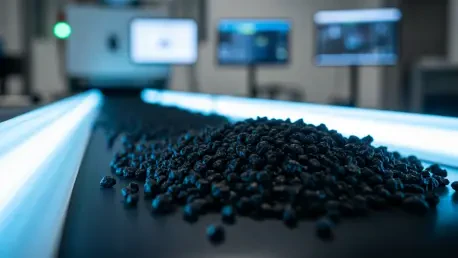
The gasification technology employed by Aries offers a unique value proposition in this context, specifically regarding the destruction of “forever chemicals” like PFAS and the production of marketable byproducts. Unlike traditional incineration, which has faced public opposition due to air quality concerns, the gasification process occurs in a controlled, low-oxygen environment that breaks down complex molecular chains at extremely high temperatures. This process not only reduces the volume of waste by up to 90 percent but also generates biochar, a high-carbon material that can be sold for use in soil remediation and industrial filtration. The ability to turn a liability—contaminated sewage sludge—into an asset like biochar creates a circular economy model that is highly attractive to state regulators and environmental advocates alike. As Maine sets the precedent for how states handle biosolids, the Sanford facility will serve as a definitive proof of concept for Aries’ ability to solve complex ecological challenges while generating a steady stream of revenue through byproduct sales and tipping fees.
Implementation Strategies and Future Considerations
The path forward for the waste-to-energy sector requires a transition from isolated technological breakthroughs to the establishment of standardized, reliable municipal utilities. For Aries Clean Technologies, the immediate priority must be the seamless integration of the three-dryer redundancy system into the Sanford facility to demonstrate that gasification can meet the 24/7 uptime requirements of modern cities. Municipal leaders should view the upcoming 2026 to 2028 development cycle as a critical window for evaluating the scalability of these thermal conversion systems. As more states consider following Maine’s lead in banning land application, the demand for PFAS-destructive technologies will likely outpace the current supply of processing facilities. Stakeholders should prioritize the development of regional waste hubs that can aggregate feedstock from multiple smaller towns, thereby achieving the economies of scale necessary to make advanced gasification financially competitive with traditional landfilling. This regional approach will be essential for stabilizing the fluctuating costs of waste disposal for small-to-mid-sized communities.
Looking beyond the current construction phase, the long-term success of the waste-to-energy industry hinges on the ability to consistently monetize the outputs of the gasification process. Future operational strategies should focus on refining the quality of produced biochar to meet the specific requirements of the high-end agricultural and industrial markets, rather than treating it merely as a secondary waste product. By achieving certifications for carbon sequestration and soil health, companies can tap into lucrative carbon credit markets, providing an additional layer of financial resilience. Furthermore, the heat generated during the gasification process should be captured and utilized for district heating or industrial steam, maximizing the energetic efficiency of every ton of waste processed. The successful overhaul of the Linden plant and the commissioning of the Sanford site were the first steps in a broader movement toward a zero-landfill future. Moving forward, the industry must maintain a relentless focus on engineering reliability and regulatory transparency to ensure that these advanced technologies become the global standard for sustainable waste management.