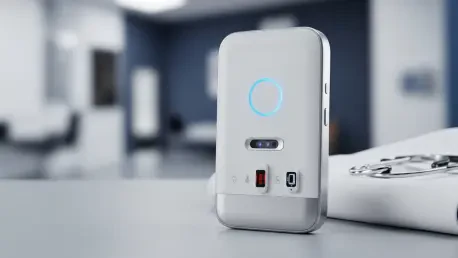

Current healthcare systems are facing a definitive turning point as provider shortages and escalating patient volumes necessitate a migration toward decentralized clinical care models. This transition has elevated the status of medical device connectivity from a peripheral convenience to a mission-critical component that determines the ultimate success of therapeutic interventions. In the current landscape, the ability to maintain a persistent and high-fidelity data stream is being engineered into devices with the same level of rigor once reserved for structural integrity and biocompatibility. As hospitals increasingly look to clear bed space by utilizing sophisticated remote monitoring tools, the risk profile of these devices has changed significantly. A failure in the communication layer now carries the same weight as a mechanical malfunction in a ventilator or an infusion pump, as it directly impedes the clinician’s ability to monitor vital signs and react to life-threatening changes in a patient’s condition.
Integrating Reliability Into the Core Engineering Standard
Transitioning From Secondary Features to Core Functionality
The shift toward connectivity as a primary function reflects a deeper understanding of how modern diagnostic and therapeutic pathways operate in real-time environments. Engineering teams are now tasked with implementing redundant communication protocols that ensure data integrity remains uncompromised even in signal-congested hospital wards or isolated rural residences. This evolution represents a departure from the “connected-afterthought” era where wireless modules were often integrated late in the development cycle using off-the-shelf components. Today, the design process begins with a connectivity-first mindset, incorporating fail-safe mechanisms that allow devices to cache critical data locally if a network interruption occurs. By treating the digital link as a core functionality, manufacturers can meet the stringent regulatory requirements emerging in 2026, which demand that any connected medical instrument demonstrate high availability and resilience against varying levels of network latency.
Furthermore, the convergence of hardware and software reliability has led to the adoption of advanced predictive maintenance for the communication modules within these devices. Engineers are utilizing diagnostic algorithms that monitor the health of the radio frequency components, identifying potential degradation before it leads to a total loss of service. This proactive approach mirrors the rigorous stress testing applied to physical valves and rotors, ensuring that the software stack governing data transmission is robust enough to handle the complexities of modern network switching. The industry is moving toward a standardized framework where connectivity performance metrics are included in the risk management file, treating signal stability as a quantifiable safety parameter. This level of technical oversight is essential for devices that rely on low-latency feedback loops, such as automated insulin delivery systems, where a delay in data processing could result in incorrect dosing.
Prioritizing Embedded Systems Over Secondary Hardware
To eliminate the vulnerabilities inherent in consumer-grade networks, there is a clear trend toward integrating embedded cellular IoT technology directly into the device circuitry. Historically, many portable medical monitors relied on the patient’s personal smartphone or a home Wi-Fi router to bridge the gap between the hardware and the cloud. However, this dependency introduced too many variables, including outdated operating systems, forgotten passwords, or the simple loss of power to a home router, all of which could sever the vital link to the caregiver. By utilizing built-in cellular modules that operate on dedicated frequencies, manufacturers provide an “out-of-the-box” connectivity experience that functions independently of the user’s technical setup. This strategy not only simplifies the user experience for elderly or non-tech-savvy patients but also ensures that the device maintains a consistent connection during transit, providing a seamless layer of protection.
Integrating these embedded systems also allows for more sophisticated over-the-air updates, which are essential for maintaining the security and performance of medical devices throughout their lifecycle. When a device possesses its own managed connection, the manufacturer can push critical security patches and feature enhancements directly to the hardware without requiring any intervention from the healthcare provider or the patient. This capability is particularly vital in 2026 as cyber threats continue to evolve, requiring a rapid response mechanism to close vulnerabilities before they can be exploited. Moreover, embedded connectivity facilitates better asset tracking and management for hospital systems, allowing them to locate and update large fleets of mobile devices across expansive medical campuses. This move toward self-sufficient hardware represents a significant leap forward in operational efficiency, as it removes the administrative burden of managing local network credentials.
Ensuring Clinical Efficacy and Secure Global Deployment
The Clinical Imperative for Constant Data Streams
The direct correlation between persistent connectivity and improved patient outcomes has been validated by numerous clinical studies involving high-stakes cardiovascular monitoring. For instance, remote monitoring of implantable cardioverter-defibrillators has shown that real-time data transmission can reduce mortality rates by over sixty percent compared to traditional in-office follow-ups. This drastic improvement is largely attributed to the device’s ability to alert clinicians to asymptomatic rhythmic anomalies or early signs of heart failure long before the patient experiences physical distress. Without a reliable network, these early warning signs would go unnoticed, delaying necessary adjustments to medication or surgical interventions. The network is essentially the delivery vehicle for life-saving information, and its stability is now recognized as a clinical imperative that bridges the gap between proactive care and reactive treatment, prompting systems to prioritize uptime.
In the context of critical care, the necessity for constant data streams extends to the monitoring of vitals in high-acuity environments where every second counts toward a patient’s survival. Medical devices used in these settings must support high-frequency sampling and immediate transmission to centralized nursing stations to allow for instant clinical decision-making. If the connectivity fails even for a few minutes, the resulting data gap can obscure a patient’s downward trend, leading to a delayed response from the medical team. Consequently, manufacturers are focusing on creating “self-healing” network configurations that can automatically switch between multiple carriers or transition from Wi-Fi to cellular in the event of a local outage. This level of redundancy ensures that the flow of diagnostic information remains uninterrupted, providing doctors with a complete physiological profile that is essential for managing complex cases where the margin for error is thin.
Protecting Patient Privacy in an Interconnected Ecosystem
As the volume of sensitive medical data traveling over public and private networks increases, the imperative to secure this information has reached a level of unprecedented urgency. Protecting patient privacy is no longer just about meeting compliance standards like HIPAA; it is a fundamental pillar of patient safety, as a breach can lead to the manipulation of data or the disruption of device functionality. Modern medical devices are being designed with end-to-end encryption and secure boot processes that verify the integrity of the software at every startup. Furthermore, the use of private Access Point Names helps isolate medical traffic from the general internet, creating a virtual private tunnel that significantly reduces the attack surface for malicious actors. These security architectures are essential for maintaining the trust of both patients and providers, who must be confident that the data driving clinical decisions is both authentic and confidential.
The complexity of securing an interconnected ecosystem is further heightened by the diversity of stakeholders involved in the data chain, including device manufacturers, network providers, and cloud services. To address this, industry leaders are adopting a “zero-trust” security model where every connection request must be continuously authenticated and authorized before data can be exchanged. This approach ensures that even if one component of the system is compromised, the threat remains contained and cannot propagate to other connected devices or hospital databases. By embedding security protocols directly into the communication hardware, manufacturers are creating a “secure-by-design” environment that protects the patient’s identity and medical history from the moment the data is captured. This level of protection is vital for the continued expansion of telehealth services, as it provides the necessary assurance that digital transformation will not come at the cost of personal privacy.
Facilitating Seamless Mobility and Global Scalability
The global healthcare landscape successfully transitioned toward a model where connectivity served as the backbone of patient-centered care and clinical efficacy. Organizations moved away from fragmented technical solutions, choosing instead to implement unified communication strategies that guaranteed data persistence across international borders. By prioritizing embedded cellular technology and robust encryption, manufacturers ensured that devices remained functional and secure regardless of the user’s local infrastructure. Moving forward, the industry identified the necessity of continuous monitoring for communication hardware to prevent silent failures in the field. Leaders also emphasized the importance of cross-industry collaboration to establish universal interoperability standards for the next generation of wearable sensors. These decisive actions established a resilient framework that allowed medical technology to keep pace with the growing demands of modern medicine while significantly improving long-term outcomes.
Global scalability presented a final challenge that required a sophisticated approach to connectivity capable of navigating diverse regulatory and technical landscapes. Stakeholders moved away from treating software and hardware as separate entities, choosing instead to unify them under a single framework of clinical safety and data integrity. This strategic shift enabled healthcare providers to expand the reach of their services while maintaining a high standard of care for patients in remote or underserved areas. Moving forward, manufacturers identified the need to invest in multi-path communication strategies and localized data processing to further mitigate the risks of network latency. Industry leaders also prioritized the development of standardized protocols to ensure interoperability between different device ecosystems, which simplified the integration of new technologies into existing clinical workflows. These actions provided the foundation for a more responsive and patient-centric healthcare model.