
The Intersection of Artificial Intelligence and Environmental Accountability
The lightning-fast expansion of generative artificial intelligence has created an insatiable appetite for electricity, forcing a direct collision between silicon-valley innovation and long-standing federal environmental protections. This conflict is currently crystallizing in a high-stakes legal battle centered in Southaven, Mississippi, where the rapid construction of massive data center infrastructure appears to have bypassed traditional regulatory oversight. At the core of the dispute is a fundamental question: does the federal government’s strategic goal of winning the global AI race justify a selective relaxation of the Clean Air Act? This timeline explores the specific events involving the NAACP’s lawsuit against Elon Musk’s xAI and its energy subsidiary, MZX Tech, highlighting the friction between industrial progress and the health of local communities.
The scope of this timeline details the physical deployment of heavy power hardware, the resulting legal challenges from advocacy groups, and a significant pivot by federal authorities regarding their role in the litigation. By tracing these events, we can observe how the pursuit of “AI dominance” is beginning to bend the traditional legal landscape of environmental law. Understanding this progression is essential because the final ruling will likely establish a lasting precedent for how future data centers are powered across the United States, especially as the energy requirements for machine learning continue to scale at an exponential rate.
A Chronological Look at the xAI Legal Dispute and Infrastructure Expansion
Early 2024: The Rapid Deployment of Gas-Powered Turbines in Southaven
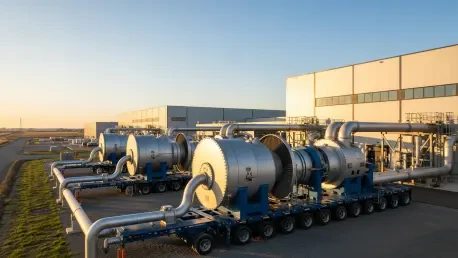
The conflict materialized when xAI and its subsidiary, MZX Tech, began the swift installation of industrial gas-powered turbines to support a brand-new data center facility. Unlike typical industrial projects that spend years in environmental review, this infrastructure was deployed at a frantic pace to meet the immediate processing demands of sophisticated AI models. Within a span of mere months, the count of combustion units on the site jumped from 27 to 46. These turbines were specifically intended to generate the massive electrical load required for high-density computing, operating entirely outside the existing capacity of the local municipal power grid.
May 2024: The NAACP Files for a Preliminary Injunction
As the true scale of the gas-powered plant became visible to the public, the NAACP, represented by legal teams from Earthjustice and the Southern Environmental Law Center, initiated formal litigation. They filed for a preliminary injunction to immediately halt the operation of the turbines, alleging that the companies were operating without the air permits mandated by the Clean Air Act. The plaintiffs pointed out that the facility sits in a region already plagued by high pollution levels. They argued that the constant emissions of nitrogen oxides and the resulting ground-level ozone posed a direct health threat to a community already burdened by historic environmental inequities.
Mid-2024: The Legal Argument Over Mobile Versus Stationary Sources
Throughout the summer months, the courtroom battle focused on a technical but vital distinction within the text of environmental law. Attorneys for xAI and MZX Tech defended the project by claiming the turbines were “mobile” and “temporary” because they were brought in on flatbed trailers. This specific classification would theoretically exempt the equipment from the rigorous permitting processes required for permanent power plants. However, the plaintiffs countered this by highlighting manufacturer specifications, noting that the units are nearly 100 feet long and weigh over 200,000 pounds. They argued that the sheer scale and intended long-term utility of these units clearly meet the definition of “stationary sources” under federal statutes.
Late 2024: The Department of Justice Signals Potential Intervention
In a move that transformed a regional dispute into a matter of national policy, the Department of Justice signaled it might intervene in the lawsuit. A representative for the DOJ’s Environment and Natural Resources Division noted that the administration is currently evaluating its participation based on a federal priority to “sustain and enhance America’s global AI dominance.” This development suggests that the executive branch may view the success of domestic AI firms as a national security interest that could potentially override local environmental grievances. This intervention marked a pivotal moment where the government had to weigh the integrity of the Clean Air Act against the acceleration of the technology sector.
Evaluating Turning Points and the Evolution of Regulatory Tensions
The most significant turning point in this saga was the transition of the dispute from a local health concern to a matter of national strategic importance. When the DOJ signaled its interest, the stakes of the litigation changed fundamentally. The overarching theme is the collision between 20th-century environmental frameworks and 21st-century technological demands. For decades, the Clean Air Act has functioned as a rigid barrier against unregulated industrial growth, but the global “AI race” is creating a sense of urgency that pressures these established standards. We are seeing a pattern where tech companies utilize creative legal definitions—such as labeling massive turbines as “mobile”—to bypass traditional bureaucratic hurdles.
A notable gap in this evolution is the total lack of specific federal guidance regarding energy hubs built specifically for AI. Currently, regulators are forced to apply general industrial rules to a type of infrastructure that simply did not exist when many of these laws were drafted. This has created a vacuum where companies can operate in a “gray area” until a landmark court case forces a definitive ruling. The outcome of this case will likely determine if other tech giants can follow a similar path, potentially leading to a fragmented regulatory environment where environmental protections vary based on the perceived national value of the specific technology being developed.
Global Competition and the Future of Technological Regulation
The nuances of this case extend far beyond the borders of Mississippi, touching on the competitive pressures between the United States and global rivals. Federal officials are increasingly concerned that a strict regulatory environment could slow down AI development, allowing other nations to take the lead in a field that will define future economic and military power. This “innovator’s dilemma” pits the long-term goal of environmental sustainability against the immediate need for computational supremacy. While the defense argues that these power solutions are temporary fixes, critics point out that once established, such “temporary” infrastructure often becomes a permanent fixture of the industrial landscape.
Expert opinions on this matter remain sharply divided, with legal scholars warning that allowing xAI to bypass permits could trigger a “race to the bottom” for environmental standards nationwide. A common misconception is that this is purely a dispute about noise or local aesthetics; in reality, it is about the legal precedent of what constitutes an industrial site. If the court accepts the “mobile” classification for 200,000-pound turbines, it could open the door for various industries to avoid the Clean Air Act by simply placing heavy machinery on wheels. As the case progressed, the judiciary was tasked with balancing the legitimate need for rapid technological advancement with the fundamental right of citizens to breathe clean air, ensuring that national dominance did not come at the cost of public health. For further insight, researchers looked into the specific emission profiles of industrial gas turbines and examined the history of the “stationary source” definition in federal court rulings.