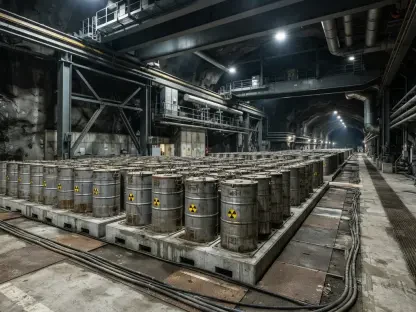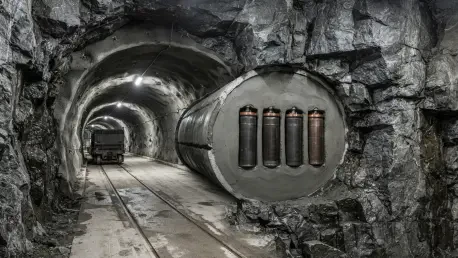

By sealing spent fuel rods into corrosion-resistant copper canisters, Finland has established a permanent solution for the waste generated by the Olkiluoto and Loviisa nuclear power plants. This monumental achievement by Posiva Oy represents the culmination of decades of research, effectively moving beyond the temporary surface storage methods that have characterized nuclear energy since the middle of the twentieth century. Located in Eurajoki, the Onkalo facility is carved deep into crystalline bedrock that has remained stable for approximately 1.9 billion years. By placing high-level radioactive waste more than 1,300 feet below the surface, the project ensures that these materials are isolated from the biosphere until their radiation levels naturally decay to match those of natural uranium ore. This decision marks a significant turning point in global energy history, addressing the challenge of managing waste traditionally kept in temporary cooling ponds.
The Technical Foundation: Engineering a Geological Fortress
The Multi-Barrier Defense System
The technical core of the repository rests on the sophisticated multi-barrier defense system known as the KBS-3 method, which provides redundant layers of protection against radioactive leakage. This meticulous process begins at the above-ground encapsulation plant, where spent nuclear fuel is carefully managed and sealed into thick, corrosion-resistant copper canisters. These canisters are engineered to withstand the chemical and physical stresses of the deep subsurface for millennia. Once the fuel is securely contained, the canisters are transported deep underground and lowered into individual deposition holes. Each hole is lined with high-density bentonite clay, a natural material selected for its ability to swell when exposed to moisture. This swelling creates a watertight seal that cushions the canisters against potential tectonic shifts while preventing groundwater from reaching the metal surface, forming a robust shield.
Subterranean Infrastructure and Layout
Reaching the final resting place for this waste required a massive engineering feat, with tunnels extending more than 1,300 feet into the ancient Fennoscandian Shield. This specific geological formation was chosen for its extreme stability, having remained relatively unchanged for nearly two billion years. The infrastructure is designed to handle a total capacity of 6,500 tonnes of uranium, which is sufficient to accommodate the lifetime waste production of Finland’s current nuclear fleet. Operations involve the placement of approximately 60 canisters per year, a pace that allows for rigorous quality control at every stage. As specific tunnel sections reach their capacity, they are sealed with massive, steel-reinforced concrete plugs to prevent any human intrusion or environmental exposure. This underground network operates as a self-sustaining system, relying on the inherent properties of the bedrock to provide a stable thermal environment for the radioactive decay process.
Strategic Implementation: Regulatory Oversight and Global Leadership
Safety Protocols and Compliance
The granting of the operating license by the Finnish government is not a final step, but rather the beginning of a strictly monitored operational phase that prioritizes intergenerational safety. Under the oversight of the Radiation and Nuclear Safety Authority, known as STUK, the facility is subject to continuous monitoring and rigorous safety assessments that must be updated every decade. While the current authorization extends through 2070, the facility’s long-term viability depends on meeting evolving regulatory standards and technological advancements. This proactive regulatory framework ensures that the repository remains compliant with the highest international safety protocols as it transitions toward full capacity. The Finnish approach highlights the necessity of a transparent partnership between scientific experts and government regulators. By requiring periodic reviews, the state maintains the flexibility to incorporate new data, ensuring the isolation of waste remains absolute.
Future Trajectory of Global Nuclear Stewardship
Finland’s successful implementation of this deep geological repository provided a definitive roadmap for other nations currently facing the burden of aging surface storage facilities. By moving from theoretical designs to a functional reality, the Onkalo project proved that the technical challenges of high-level waste management were solvable through sustained investment and public trust. The initiative surpassed similar efforts in Sweden and France, setting a benchmark for environmental responsibility and long-term planning. Moving forward, the international community should prioritize the adoption of standardized geological criteria and the integration of multi-barrier technologies to address the global nuclear waste backlog. This transition required a shift in perspective, viewing waste management not as a contemporary nuisance but as a 100,000-year commitment to planetary health. The completion of this facility allowed the energy sector to decouple the benefits of carbon-free power.