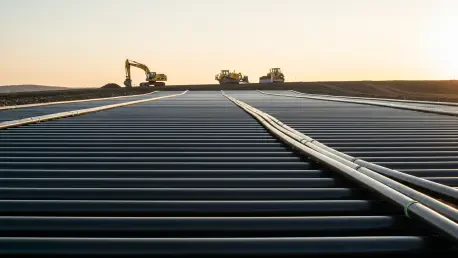

The rapid decomposition of organic waste in modern landfills generates a significant volume of methane almost immediately after disposal, creating a pressing need for early-stage collection strategies that traditional vertical wells simply cannot provide. Because these facilities are often under intense scrutiny from environmental regulators and local communities, managing odors and greenhouse gas emissions from the moment a new waste cell is opened has become a top operational priority. Vertical extraction systems, while effective for long-term stability, typically require the waste mass to reach a substantial depth or final grade before installation is even feasible. This inherent delay creates a dangerous window of several years where methane can migrate freely into the atmosphere or into surrounding soil. To address this vulnerability, site managers are increasingly adopting proactive collection methods that utilize horizontal infrastructure. By doing so, they bridge the crucial gap between the initial waste disposal and final cell capping.
Strategic Benefits of Horizontal Installation
Operational Agility: Expanding Speed With Standard Resources
One of the primary advantages of implementing horizontal gas collection systems is the remarkable increase in operational agility they provide to landfill managers facing tight schedules. Unlike the heavy, specialized drilling rigs required for vertical wells, horizontal collectors are installed using common earthmoving equipment like standard excavators and loaders that are already present on the site. This logistical simplicity means that crews can respond almost instantly to emerging issues like localized gas pressure buildup or sudden odor complaints without waiting for outside contractors to arrive. By integrating the installation process into the daily routine of waste placement, the facility reduces the mobilization costs and administrative delays that often plague large-scale infrastructure projects. Furthermore, this approach allows for the incremental expansion of the gas network as the landfill grows, ensuring that collection capacity always matches the rate of waste intake on a weekly basis.
Regulatory Standards: Enhancing Compliance Through Proactive Control
In addition to speed, horizontal systems play a crucial role in meeting the stringent requirements of surface emission monitoring that dominate the current regulatory environment. Many environmental agencies now mandate that landfills control methane levels even in active areas where the waste is relatively shallow and lacks the stability for permanent vertical infrastructure. Horizontal collectors allow operators to stay ahead of these mandates by capturing gas at the source before it has the chance to penetrate the surface layers and enter the atmosphere. This proactive stance significantly reduces the risk of receiving costly violations and maintains the facility’s standing with the public by minimizing the ‘garbage smell’ often associated with active disposal operations. By treating gas management as a continuous process rather than a final step, landfills can demonstrate a higher level of environmental stewardship. This shift from reactive fixes ensures the site remains compliant through its life.
Design Standards and Technical Precision
System Integrity: Managing Condensate and Liquid Accumulation
The technical success of a horizontal collection system is fundamentally tied to how effectively it manages the heavy liquid load that naturally accompanies landfill gas. As warm, moisture-laden gas travels through the cooler pipes buried within the waste mass, it produces a significant amount of condensate that can quickly accumulate and block the flow. If the design does not incorporate a consistent positive grade, these liquid pockets will create ‘watered-out’ sections that essentially disconnect the vacuum from the waste mass, rendering the expensive infrastructure useless. Engineers must carefully calculate the necessary slopes and ensure that all pipes are tied into robust sumps or the primary leachate collection system for efficient drainage. Modern designs also emphasize the use of high-density polyethylene pipes with precision-cut slots to maximize gas intake while resisting the corrosive environment. Ensuring a steady, downward flow of liquids is the most critical factor in this entire process.
Design Variations: Precision in Specialized Pipe Configurations
Beyond simple drainage, the physical placement of collectors within the landfill’s geometry is vital for capturing gas as it moves along preferential flow paths. Operators typically deploy three specific configurations—slope, toe, and floor collectors—to create a comprehensive barrier against uncontrolled gas migration. Slope collectors are strategically positioned on the interior or exterior inclines of the waste mass to intercept gas that naturally drifts toward the edges of the cell. Toe collectors are installed at the transition point where the base meets the side slopes, acting as a final safeguard against gas escaping through the bottom perimeter. Floor collectors are placed directly at the base of new lifts to pull methane from the most densely packed regions where decomposition is most intense. By utilizing this multi-layered approach, engineers can tailor the gas collection network to the specific topographic features of each cell. This level of precision ensures that no single area becomes a blind spot.
Vulnerabilities and Lifecycle Management
Resource Longevity: Mitigating Structural Risks and Physical Damage
While horizontal systems are indispensable for active gas control, they face significant physical threats from the very environment they are designed to manage. Because these pipes are buried relatively close to the active working face, they are constantly subjected to the immense weight and vibrations of heavy compactors and haul trucks. If the protective gravel envelope is not thick enough, the pipe can easily be crushed or shifted, leading to a permanent loss of vacuum in that section of the cell. Additionally, as waste decomposes and shifts, the soil and fine debris can migrate into the permeable backfill, eventually clogging the slots in the collector pipes. This biological and physical fouling acts as a slow strangulation of the system, gradually reducing its effectiveness over several years. Site managers must account for this inevitable degradation by viewing horizontal collectors as temporary assets with a finite operational life. Understanding these vulnerabilities allows for more realistic planning.
Lifecycle Coordination: Strategic Integration With Vertical Infrastructure
The long-term health of a landfill’s gas management strategy depends on the seamless coordination between temporary horizontal systems and the permanent vertical well network. Operators must meticulously plan the layout of horizontal collectors to ensure they do not interfere with the future drilling locations of vertical wells, which are typically installed once the cell reaches final grade. This high-level planning prevents the accidental destruction of active horizontal pipes during the drilling of deep wells, which could lead to dangerous gas leaks or operational downtime. A well-designed site plan treats the horizontal system as a bridge that maintains methane capture until the more stable, permanent infrastructure can be deployed. This handoff must be carefully timed to ensure that there is no gap in vacuum coverage during the transition period. By viewing the landfill as a dynamic, changing structure, engineers can create a resilient system that eventually transitions into the final, capped state.
Strategic Outcomes: The Evolution of Proactive Gas Capture
The implementation of horizontal gas collection systems proved to be a transformative shift for landfill operators seeking to balance environmental compliance with active waste disposal. By moving away from purely reactive strategies, facilities were able to capture significant volumes of methane during the most active phases of decomposition, which was previously a major gap in the industry. This proactive management significantly lowered the greenhouse gas footprints of several major sites and set a new standard for operational excellence. Moving forward, the industry benefited from the development of more durable pipe materials and advanced moisture sensors that provided real-time data on system health. These advancements allowed managers to predict failure points and adjust their collection strategies before significant emission leaks occurred. Ultimately, the successful integration of these systems demonstrated that early intervention was not just an environmental necessity but also a very practical solution to management.