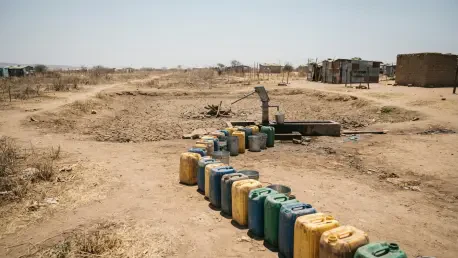

The persistent over-pumping of the deep Marshall Aquifer has caused static groundwater levels to plummet by as much as forty-five feet since the 1970s. This geological and environmental phenomenon represents a severe threat to the long-term sustainability of Ottawa County, a region that currently stands as one of the fastest-growing areas in Michigan. Despite being situated along the expansive coastline of Lake Michigan, much of the county remains geographically and financially isolated from the Great Lakes’ surface water, forcing residents and industries to rely on subterranean reserves. This reliance has exposed a systemic vulnerability: the rate of human extraction is far outpacing the natural hydrologic cycle’s ability to replenish the deep bedrock formations. As the population approaches 310,000, the pressure on these underground resources has shifted from a localized concern to a regional emergency, demanding immediate intervention to prevent the permanent loss of water security for future generations of residents and farmers.
The Subsurface Reality: Barriers to Natural Replenishment
The primary obstacle preventing the recovery of the Marshall Aquifer is a massive geological formation often described as a subterranean lid. Unlike most regions in the Great Lakes Basin where rainwater and snowmelt easily percolate through porous sandy soil to refill groundwater reserves, Ottawa County is defined by an eighty-foot-thick layer of dense, impenetrable clay. This massive barrier effectively seals off the deep bedrock from the surface, preventing the natural downward migration of freshwater. Because this clay layer is so widespread and thick, the Marshall Aquifer functions as a historical reservoir rather than a renewable resource. The geological structure dictates that for a single drop of water to reach the bedrock through natural rock fissures, it must travel for ten to twenty years, a timeline that is fundamentally incompatible with the daily demands of a modern suburban and agricultural economy.
This lack of natural recharge has effectively turned the process of drawing water into a mining operation. When a residential or agricultural well extracts water from the bedrock, there is no immediate mechanism for that volume to be replaced, creating a localized vacuum within the rock formations. Over decades of intensive use, this has led to a consistent and measurable drawdown, where the water table continues to drop year after year without any signs of stabilization. Geologists have noted that while the shallow glacial aquifers near the surface can fluctuate with seasonal rainfall, the deep Marshall Aquifer remains isolated and vulnerable. Without the ability to bypass this clay lid through artificial means, the region faces a future where the deep wells that have sustained its development for over a century may eventually run dry or become economically unfeasible to maintain.
Economic Pressures: Growth and Agricultural Demand
The rapid expansion of Ottawa County has placed an unprecedented strain on its finite water resources, driven by a combination of residential sprawl and industrial success. As the county maintains its status as a top-tier growth corridor in Michigan, the proliferation of new housing developments has led to a surge in private well installations. Many of these subdivisions are constructed in areas where connecting to municipal water systems, which draw from Lake Michigan, is cost-prohibitive due to the vast distances and infrastructure requirements. Consequently, thousands of individual “straws” are now drawing from the same deep bedrock source, primarily to support residential lawn irrigation. Local officials have identified this specific use as a significant contributor to the current crisis, as the volume of water required to maintain lush suburban landscapes often exceeds the volume needed for basic human consumption and sanitation.
Beyond the residential sector, Ottawa County is a powerhouse of agricultural production, ranking third in the state for total market value. With more than 144,000 acres of dedicated farmland generating over $720 million annually, the agricultural community is deeply dependent on consistent access to groundwater. Farmers rely on the Marshall Aquifer to irrigate high-value crops like soybeans, blueberries, and nursery stock, which are essential to the regional economy. However, the sheer scale of agricultural withdrawal, combined with the rising demand from new residents, has created a competitive environment where the total discharge from the aquifer far exceeds its recharge capacity. This tension between economic prosperity and resource conservation highlights the need for a comprehensive management strategy that balances the needs of the farming industry with the long-term viability of the county’s drinking water supply.
Chemical Consequences: Salinity and Infrastructure Decay
The depletion of freshwater in the Marshall Aquifer has triggered a dangerous secondary effect known as saltwater upwelling. Beneath the freshwater layer of the bedrock lies an ancient, stagnant deposit of prehistoric brine and sodium chloride that has remained undisturbed for millennia. As the freshwater levels are drawn down by intensive pumping, the reduction in hydrostatic pressure allows this heavier, salt-laden water to rise from the depths and infiltrate the upper freshwater zones. This intrusion has fundamentally altered the chemistry of the water in several parts of the county, turning once-reliable wells into sources of brackish brine. Farmers were among the first to witness the devastating impacts of this change, as the high chloride concentrations began to dehydrate and burn the leaves of sensitive crops, leading to significant yield losses and threatening the stability of local food production.
The rise in salinity is not merely an agricultural problem; it is also causing widespread damage to residential and industrial infrastructure. Homeowners in the central portions of the county have reported that their tap water has developed a distinct salty taste, signaling that the chloride levels have surpassed safe or palatable thresholds. Furthermore, this brackish water is highly corrosive, aggressively attacking household plumbing systems, water heaters, and expensive irrigation pumps. The chemical degradation of these components leads to premature failure and costly repairs, placing a financial burden on residents who are already struggling with the uncertainty of their water supply. In the most severe cases, the water has become several times saltier than the ocean, rendering existing wells completely useless and forcing property owners to seek alternative, often more expensive, sources of water for their daily needs.
Technical Solutions: The Managed Aquifer Recharge Model
In response to the geological limitations of the region, local leaders are advocating for the implementation of Managed Aquifer Recharge, or MAR. This technical solution involves the intentional injection of high-quality water directly into the bedrock, bypassing the impenetrable clay lid that prevents natural replenishment. By adopting methods that have been successful in arid regions of the American West, such as Scottsdale, Arizona, Ottawa County aims to transform its water management philosophy from one of simple extraction to one of active stewardship. This approach views water as a precious commodity that must be cycled back into the ground after use, ensuring that the subterranean reservoir remains pressurized and protected from saltwater intrusion. The transition to MAR represents a shift toward a circular water economy, where human intervention mimics the natural hydrologic processes that are currently blocked by the county’s unique geology.
A key component of the proposed recharge strategy involves partnering with the county’s robust food processing industry. Facilities operated by major companies like Leprino Foods and fairlife generate millions of gallons of clean process water every day, which is currently treated and discharged into the Grand River. Instead of allowing this resource to flow out to Lake Michigan and be lost to the county, officials envision a system where this water is purified to drinking water standards and then reinjected into the Marshall Aquifer. This would create a reliable, year-round source of recharge that could potentially offset the massive withdrawals made by residents and farmers. By leveraging existing industrial outputs and advanced filtration technologies, the county could establish a sustainable loop that stabilizes the water table and provides a long-term buffer against the ongoing depletion of the bedrock reserves.
Administrative Hurdles: Regulatory and Local Policy
The path toward implementing a large-scale aquifer recharge program is complicated by a significant lack of state-level regulatory frameworks. The Michigan Department of Environment, Great Lakes, and Energy currently does not have a specific permit category or set of guidelines for the intentional injection of water into an aquifer for the purpose of maintaining a drinking water supply. Historically, Michigan’s water laws have been focused on managing an abundance of surface water rather than the technical nuances of groundwater recharge. This regulatory vacuum creates a challenge for local officials who must work with state legislators to establish new rules that ensure the safety and legality of these projects. Without a clear path forward from the state, innovative solutions like Managed Aquifer Recharge remain in a legal gray area, delaying the deployment of critical infrastructure.
At the local level, the governance of water resources is fragmented across various townships and municipal bodies, often leading to inconsistent policies and conflicting priorities. While the Ottawa County Groundwater Board serves an advisory role, it lacks the legislative authority to mandate specific water-use restrictions or coordinate regional infrastructure projects. This has forced individual townships to take independent action, with some banning new developments on private wells or implementing strict zoning requirements to limit the strain on the aquifer. However, these localized efforts are often insufficient to address a problem that spans the entire county. Advocates for a more unified approach are calling for the creation of a regional Water Authority or a Board of Public Works that would have the power to set rates, manage large-scale recharge projects, and ensure that all residents have equitable access to a sustainable water supply.
Scientific Mapping: The Airborne Electromagnetic Survey
A critical step in the current recovery effort is a comprehensive feasibility study designed to map the county’s subsurface geology with unprecedented accuracy. This initiative utilizes advanced airborne electromagnetic technology, where helicopters equipped with specialized magnetic sensors fly at low altitudes to scan the earth beneath them. This technology allows scientists to see through the dense clay layers and identify the exact locations of freshwater pockets, saltwater deposits, and the most promising sites for injection wells. By creating a high-resolution, three-dimensional model of the Marshall Aquifer, the county can replace guesswork with hard data, ensuring that future infrastructure investments are placed where they will have the greatest impact on replenishing the water table and pushing back saltwater intrusion.
The data gathered from this study is essential for determining the technical limits of the recharge process and preventing unintended consequences. Officials must understand how much water can be safely injected into the bedrock without causing geological instability or interfering with existing well systems. The mapping also helps identify areas where the “upwelling” of brine is most aggressive, allowing for the strategic placement of recharge points to create a hydraulic barrier against the encroaching saltwater. This scientific foundation is the cornerstone of the county’s long-term strategy, providing the evidence needed to secure state funding and convince skeptical stakeholders of the viability of managed recharge. By grounding their decisions in empirical research, local leaders hope to build a water management system that is both technically sound and environmentally responsible.
Strategic Evolution: Moving Toward Water Stewardship
The shift toward a comprehensive water management strategy in Ottawa County focused on long-term sustainability through unified action. Stakeholders recognized that relying on “soft” solutions, such as voluntary conservation and native landscaping, was insufficient to counter the massive daily withdrawals from the Marshall Aquifer. Consequently, the county prioritized the establishment of a centralized Water Authority that could oversee regional infrastructure and coordinate the integration of industrial process water into the recharge system. They identified the repurposing of clean water from large-scale food processors as a primary goal, ensuring that millions of gallons were returned to the ground rather than lost to the river system. This transition moved the county from a reactive posture to a proactive model of environmental stewardship, securing the bedrock reserves for agricultural and residential use alike.
Decision-makers concluded that the success of these efforts depended on bridging the gap between local policy and state regulation. They successfully advocated for new legislative frameworks that provided a clear path for managed aquifer recharge, allowing Michigan to adapt to the realities of groundwater scarcity even in a water-rich state. The county also moved forward with the results of the airborne electromagnetic survey, utilizing the subsurface maps to guide the installation of the first generation of injection wells. These actions collectively established a blueprint for other regions facing similar geological constraints, demonstrating that technological innovation and administrative reform could overcome even the most daunting environmental challenges. By committing to these strategic next steps, Ottawa County took the necessary actions to preserve its economic vitality and ensure that its water resources would remain viable for decades to come.