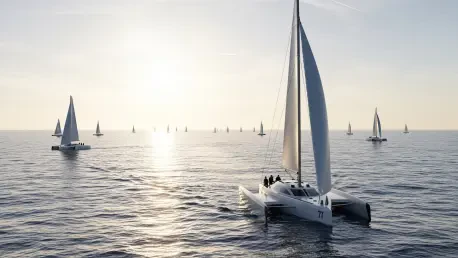

The global energy transition is currently navigating a period of intense pressure where land-based renewables struggle to meet the surging demands of heavy industry and international shipping sectors. While traditional offshore wind farms remain anchored to the seabed, a revolutionary concept is emerging from the United Kingdom that treats the entire ocean as a dynamic energy plantation. DRIFT Energy is leading this charge by developing a fleet of autonomous sailing vessels designed to harvest wind energy while in motion, rather than remaining stationary. By utilizing advanced aerodynamics and hydrodynamics, these ships represent a fundamental departure from existing green hydrogen production methods. Instead of relying on long-distance undersea cables or fixed infrastructure, these mobile units function as floating factories that can be deployed wherever wind conditions are most favorable. This flexibility allows for the tapping of high-energy wind zones in the deep ocean that were previously considered inaccessible.
Kinetic Energy Conversion: Transforming Ocean Currents Into Fuel
At the core of this technological leap lies a specialized propulsion and generation system that flips the traditional maritime model on its head. Whereas conventional vessels burn fuel to create movement, these energy-harvesting ships use massive, high-efficiency sails to generate immense pulling force, dragging the hull through the water at high speeds. This forward momentum drives submerged turbines attached to the underside of the vessel, which spin rapidly to generate electricity through the kinetic energy of the passing water. This electricity is immediately fed into an onboard electrolysis unit, which splits desalinated seawater into oxygen and pure green hydrogen gas. The hydrogen is then compressed and stored in specialized tanks within the hull, effectively turning the ship into a mobile energy carrier. This closed-loop system ensures that the energy harvested from the wind is converted into a versatile fuel source without any carbon-emitting intermediary processes.
Operating on the high seas provides a unique solution to the visual and logistical limitations that often plague onshore wind and solar projects. By moving production far beyond the horizon, these ships bypass local opposition to visual blight and the ecological concerns associated with permanent coastal installations. Furthermore, this mobile approach directly addresses the problem of grid congestion, where land-based power lines are often overwhelmed by the intermittent nature of renewable energy. Since the hydrogen is produced and stored on the vessel, it can be delivered directly to any port with the necessary offloading infrastructure, circumventing the need for expensive and vulnerable subsea cables. This decoupling of energy generation from the electrical grid allows for a more resilient and distributed energy supply chain, capable of reaching remote islands or industrial hubs that are currently underserved by traditional green energy networks or aging infrastructure.
Intelligent Navigation: Smart Software and Regulatory Benchmarks
To optimize the efficiency of hydrogen production, the fleet relies on a sophisticated digital brain known as the GOLDILOCKS routing algorithm. This proprietary software analyzes vast amounts of real-time meteorological data to chart the most productive course across the open ocean, seeking out specific zones where wind speeds are optimal. If the wind is too calm, production stalls; if it is too violent, the vessel risks structural damage. The algorithm ensures the ships remain in regions where the weather is just right, effectively chasing storms and high-pressure systems to maintain a continuous and high-capacity factor. This dynamic routing capability means the ships can achieve energy yields that far exceed those of stationary turbines, which are subject to the whims of whatever weather happens to pass over their fixed location. By constantly repositioning the fleet based on predictive modeling, the developers can guarantee a more reliable and predictable supply of green hydrogen.
Transitioning from an innovative prototype to a commercially viable maritime fleet requires rigorous adherence to international safety and engineering standards. The design has recently achieved a significant milestone by receiving an Approval in Principle from RINA, a major international classification society and naval registry. This certification serves as a formal validation that the engineering specifications, safety protocols, and structural integrity of the vessels meet the demanding requirements for open-ocean operations. For institutional investors and maritime insurers, this approval mitigates much of the perceived risk associated with such a radical departure from traditional ship design. It confirms that the combination of high-tension sailing rigs and high-pressure hydrogen storage systems is fundamentally sound and safe for deployment in high-traffic shipping lanes. With this regulatory hurdle cleared, the project has moved into a new phase of procurement and construction, signaling a clear path forward for adoption.
Financial Trajectory: Capital Investment and Market Integration
The financial landscape for mobile energy harvesting has shifted dramatically as private equity and venture capital firms recognize the scalability of the technology. A successful multi-million dollar seed funding round, led by prominent investors such as Octopus Ventures, has provided the necessary runway to expand engineering teams and begin the fabrication of full-scale demonstrators. This initial capital is being supplemented by strategic government grants aimed at decarbonizing the maritime sector, creating a robust financial foundation for a planned half-billion-dollar investment program. This capital injection is intended to accelerate the production timeline, with the goal of launching the first operational vessel by 2027 and expanding to a fleet of 50 ships by 2029. Such rapid scaling is essential to meet the burgeoning demand for green fuels, as international regulations continue to tighten around carbon emissions from traditional heavy fuel oils used in the global shipping industry.
While the original vision for these vessels focused on servicing the luxury yacht market—providing a shadow vessel that could refuel eco-conscious superyachts with zero-emission hydrogen—the scope has expanded to encompass much larger industrial applications. The hydrogen harvested at sea can be delivered to coastal terminals to serve as a clean feedstock for chemical manufacturing or as a fuel source for heavy-duty trucking fleets. Looking ahead, the potential for ship-to-ship refueling presents a transformative opportunity for the global logistics industry. Large container ships and bulk carriers could meet these energy tankers in mid-ocean transit to replenish their hydrogen fuel cells, significantly extending their range without the need for massive, heavy onboard storage tanks. This mid-sea refueling model would essentially create a refueling network on the high seas, allowing the world’s most critical trade routes to transition away from fossil fuels without expensive overhauls.
Technical Implementation: Overcoming Barriers and Environmental Impact
One of the most significant engineering challenges remaining involves the high-purity water required for the electrolysis process to function without degradation. While the ocean provides an inexhaustible supply of water, it is laden with salts and minerals that would quickly corrode and clog the delicate membranes within a hydrogen generator. To solve this, the ships must integrate high-efficiency desalination systems that can strip seawater of its impurities while consuming as little of the harvested wind energy as possible. Balancing the energy demands of water purification with the primary goal of hydrogen production is a delicate task that requires advanced heat recovery and energy management systems. Engineers are currently refining a modular desalination unit that utilizes the waste heat from the electrolyzers to assist in the purification process, thereby increasing the overall thermodynamic efficiency of the ship. Success in this area will ensure that the vessels can operate autonomously.
The transition toward a mobile, wind-powered hydrogen economy represented a pivotal moment in the broader effort to reach net-zero emissions within the maritime sector. Developers successfully demonstrated that the marriage of ancient sailing principles with modern electrochemical engineering could unlock energy reserves previously considered unreachable. This shift moved the industry away from static, infrastructure-heavy models toward a more agile and decentralized approach to fuel production. For stakeholders in the energy and shipping industries, the next logical step involved the early adoption of hydrogen-ready port infrastructure and the standardization of mid-sea refueling protocols. It was imperative for policymakers to establish clear regulatory frameworks that governed the operation of autonomous energy vessels in international waters to ensure safety and environmental protection. By investing in these modular and scalable technologies, global trade effectively secured a path toward a sustainable future.