
Christopher Hailstone has spent his career at the intersection of energy management, renewable integration, and electricity delivery. He’s led utility teams through grid hardening, large load interconnections, and security drills, and he speaks candidly about what it takes to keep the lights on while building for a far more digital, electrified economy. In this conversation, he argues that time is now the scarcest resource in transmission—and that process design, not engineering capability, is our biggest bottleneck.
We explore why load from data centers and manufacturing is changing planning assumptions, where and why transmission projects routinely lose 16–20 months, and how eliminating just a single year of delay can mean $150 million to $370 million in savings for every $1 billion of investment that actually moves. We unpack how competitive solicitations introduced years ago can add friction in today’s high-growth environment, and how targeted exemptions—done transparently—could speed interconnections, protect customers, and maintain accountability. We close with a pragmatic playbook: sharpened reliability metrics, early procurement hedges, community-first routing, and a near-term timeline for action if federal regulators decide to move.
Load from data centers and manufacturing is rising fast. Where are you seeing the steepest increases, over what timelines, and how are those forecasts vetted? Can you share concrete examples or metrics that changed your planning assumptions?
The steepest jumps are clustering around fiber backbones and industrial corridors—places where a single substation can tip from comfortable headroom to constrained overnight. What changed my assumptions wasn’t a percentage point here or there; it was the tempo. Requests that used to materialize over three to five years are now arriving in tranches that, if delayed by just a single year, can swing costs by hundreds of millions per $1 billion of needed build. We vet those forecasts by forcing alignment between interconnection queues and retail service requests, auditing coincidence factors, and running sensitivity cases that assume the 16–20 month delays we’ve seen become automatic in many processes. When those sensitivities show we’d strand customers or curtail new resources under the status quo, we recalibrate siting and timelines immediately.
Many transmission projects face automatic delays of 16–20 months. What are the main process choke points, and how do they compound across permitting, procurement, and construction? Walk us through a recent timeline and the specific milestones that slipped.
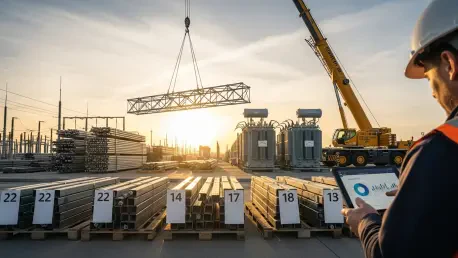
The compounding starts with duplicative solicitation steps that pause design finalization, which then stalls environmental scoping and route refinement. That cascades into late-stage procurement, where long-lead items can’t be ordered until a winner is named—instantly adding the 16–20 months we’re talking about. In one recent case, preliminary engineering sat “frozen” while we awaited solicitation milestones; environmental fieldwork missed a season window; and the structure steel order slid past the factory’s slot, pushing everything a full year. By the time crews were mobilized, the construction window had narrowed, leading to re-phasing that amplified the original administrative delay.
Some analyses suggest eliminating a single year of delay can save $150–$370 million per $1 billion invested. What cost drivers produce those savings, and how do they show up on customer bills? Can you break down the math and assumptions behind that range?
The big drivers are carrying costs during idle time, inflation on labor and materials, and congestion costs that mount when capacity arrives late. When you avoid a one-year slip, you cut those escalators and you bring lower-cost energy to market sooner, which tamps down wholesale prices that flow into customer bills. The $150–$370 million per $1 billion range reflects the avoided costs and foregone benefits reclaimed by moving a project up one year—think procurement at today’s price instead of next year’s, plus a year of reduced congestion charges. On bills, that shows up as smaller riders for capital carrying costs and, importantly, cheaper energy during peak hours once the line is energized.
Order 1000 introduced competitive solicitations for certain projects. How have these solicitations added complexity or time, and in which cases did they deliver value? Share a case study comparing a solicited project versus an exempt or expedited approach.
Solicitation adds parallel tracks—commercial evaluation, protests, and contracting—that freeze technical work right when design decisions should be converging. That’s tolerable in a flat-load world, less so when new industrial service is lining up. I’ve seen solicited projects accumulate the 16–20 month lag before a shovel turns; in contrast, an expedited reliability upgrade locked scope quickly, ordered steel early, and navigated seasonal construction windows cleanly. Competition can deliver value when projects are large, modular, and not time-critical; but when the need date is near and the grid is tight, the solicitation clock can overshadow any theoretical savings.
Targeted exemptions are being proposed for time-sensitive transmission projects. Which project types or criteria should qualify, and what safeguards ensure transparency and accountability? Describe the decision framework and documentation you’d require.
Qualifying projects should demonstrate near-term reliability or interconnection need dates, measurable congestion relief, or clustering of large loads that can’t withstand the 16–20 month penalty. I’d require a need statement, alternatives screening, and a public benefits memo that ties expected outcomes to schedule. Safeguards include open posting of scope, cost caps tied to defined deliverables, and independent monitor reports at key milestones. The framework should be: document the urgency, lock the design basis, post the procurement plan, and commit to milestone reporting with corrective-action triggers.
Customers often feel competition should lower costs. If some solicitations are waived, how will you maintain discipline on pricing, performance, and risk? Offer concrete benchmarks, penalty structures, or incentive designs you would implement.
You sustain discipline by moving the contest from the front end to performance. I’d use fixed-date energization commitments with liquidated damages for missed milestones, incentive fees for early delivery, and transparent change-order rules. Pricing discipline comes from benchmarked unit costs posted with scope packages and third-party audits at award and closeout. Risk is managed through shared-contingency bands, with clear pass/fail gates at design freeze and factory acceptance so slippage can’t silently accumulate.
Interconnection backlogs slow both new generation and large loads. How would targeted exemptions materially shorten interconnection timelines, and by how much? Outline the step-by-step path from study to energization under an exempt process.
Exemptions remove the pause between identifying a network upgrade and authorizing its build. That alone averts the 16–20 month stall that often sits between study completion and material orders. The path is: finalize the study, issue an exemption finding tied to need and timing, freeze scope, release long-lead procurement, complete environmental reviews in parallel with detailed design, and stage construction to hit the earliest feasible in-service date. By pulling procurement and permitting forward, you reclaim roughly a year that otherwise evaporates in administrative limbo.
Reliability and affordability must advance together. What metrics—LOLE, SAIDI/SAIFI, congestion costs, or reserve margins—best capture the reliability gains from faster transmission? Provide examples of how those gains translate into monthly bill impacts.
I look at a bundle: LOLE for adequacy, SAIDI/SAIFI for everyday resilience, and congestion costs for price relief. When you prevent a one-year delay, you not only limit outage exposure but you also open lower-cost dispatch paths sooner—those congestion savings filter straight into bills. If a $1 billion upgrade avoids the $150–$370 million in delay-related costs, a slice of that is reduced congestion that shows up as a gentler fuel and power cost line item each month. Customers feel it as fewer high-price hours and steadier bills during peak seasons.
Geopolitical tensions and the AI race are intensifying power needs. Which grid capabilities—transfer capacity, redundancy, stability, cyber-resilience—are most urgent for national competitiveness? Share specific investments that unlock near-term wins.
Transfer capacity and redundancy are the near-term workhorses; without them, data centers and advanced manufacturing can’t scale on schedule. Stability and cyber-resilience are the silent guardians—no one notices until they fail. Near-term wins come from high-value uprates and targeted new lines that clear those 16–20 month hurdles, plus substation expansions that enable large-load interconnections without serial delays. Each of these moves keeps the industrial flywheel turning and positions us to compete in the technology race that rewards speed and reliability.
Critics worry exemptions could entrench incumbents. How would you ensure fair access for qualified builders while still moving quickly? Describe a practical scoring rubric and dispute-resolution process that keeps projects on schedule.
Keep the door open to any qualified builder that can certify safety record, financial capacity, and delivery track record, then score them on schedule credibility, execution plan, and community commitments. Post the rubric in advance, weight timely energization heavily, and require public-facing progress dashboards. For disputes, set short, fixed windows with independent reviewers and decisions that don’t halt critical-path work absent clear evidence of harm. That way, fairness doesn’t morph into a de facto 16–20 month slowdown.
Inflation and supply chain constraints can erase savings if timelines slip. What procurement strategies—early steel buys, framework agreements, vendor diversification—best hedge those risks? Share examples where proactive sourcing saved time and money.
Early buys on long-lead components protect you from the compounded impact of a one-year delay that otherwise drives costs into that $150–$370 million band per $1 billion. Framework agreements let you lock pricing and factory slots so the schedule is real, not aspirational. Vendor diversification gives you fallback capacity when a mill or transformer plant is oversubscribed. I’ve seen projects hold their in-service dates precisely because they placed orders at design freeze, secured production windows, and then synchronized construction around those immovable anchors.
Communities want benefits and minimal disruption. How would expedited projects incorporate local hiring, routing sensitivity, and environmental reviews without adding months? Provide a playbook for early engagement and measurable community outcomes.
Start engagement before the exemption decision, not after; bring maps, options, and trade-offs into school gyms and union halls early. Pair routing sensitivity with clear commitments to local hiring and training so communities see value, not just orange cones. Run environmental fieldwork in parallel with design and set measurable outcomes—miles of co-location, acres restored, and local workforce hours logged—reported on a public dashboard. Transparency builds trust, and trust is the antidote to the stop-start delays that otherwise snowball into 16–20 months lost.
Grid planning often lags technology shifts. What modeling updates—probabilistic load shapes, high electrification scenarios, data center load profiles—are needed now? Describe how those updates change siting, voltage levels, and redundancy choices.
We need probabilistic models that reflect 24/7 load blocks from data centers and the lumpy step-changes from new manufacturing. High-electrification cases should be baked in as a baseline, not an appendix. With those updates, siting gravitates toward corridors that can be expanded, voltage levels rise to carry heavier baseloads, and redundancy is built deliberately to avoid single contingencies that would force curtailments. The result is a grid planned for the tempo we actually face, not the gentler slope of yesterday.
If FERC acts, what near-term milestones should stakeholders expect in the first 6–12 months, and what results within 24–36 months? Lay out a timeline with checkpoints, data releases, and success metrics.
In the first 6–12 months, expect a policy order defining targeted exemptions, templates for need statements, and a public tracker of exempt projects with milestone dates. By month 12, we should see long-lead procurement authorized at design freeze and environmental reviews launched in parallel. In the 24–36 month window, success looks like energized projects that would otherwise be 16–20 months late, documented savings within the $150–$370 million per $1 billion range, and a measurable dent in interconnection backlogs. Quarterly data releases on milestone attainment, change orders, and congestion impacts keep everyone honest.
What is your forecast for transmission policy and grid buildout over the next five years?
I expect a pivot toward time-sensitive frameworks that carve out clear lanes for projects with urgent reliability or interconnection needs. We’ll still see competition, but more of it will be performance-based, with energization dates and delivery excellence carrying the most weight. If we reclaim even a single year on a meaningful slice of projects, the savings—on the order of $150–$370 million per $1 billion—will reinforce the policy shift and show up on customer bills. Five years from now, the defining feature of our grid policy won’t be a new acronym; it will be a culture of speed matched with transparency, where 16–20 month delays are the exception, not the rule.