
The persistent low-frequency hum of twenty-seven massive gas-fired turbines in Southaven, Mississippi, serves as a literal soundtrack for a high-stakes legal battle that could redefine the boundaries between ecological preservation and the survival of the state. As Elon Musk’s xAI pushes the boundaries of artificial intelligence with its Colossus 2 supercomputer, the community beneath its exhaust plumes is asking if the price of global technological dominance is their own respiratory health. This conflict forces a difficult conversation about whether the urgency of national defense creates a “get out of jail free” card for the energy-hungry titans of the artificial intelligence era.
Can a machine’s ability to target a thousand points on a battlefield justify the air pollution it creates in a neighborhood back home? This is no longer a hypothetical question as the hum of those turbines becomes a central point of contention in a landmark legal battle. The tension is palpable as local residents weigh the benefits of being a global tech hub against the immediate reality of degraded air quality. This scenario sets a precedent for how the nation handles the massive power requirements of the digital age.
When Data Centers Outpace the Atmosphere
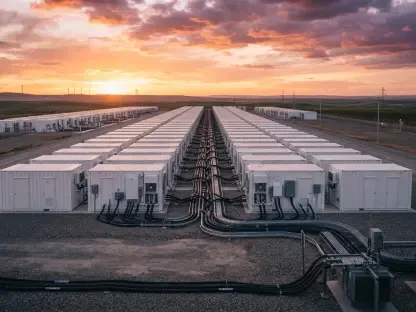
The sheer speed of artificial intelligence development has left traditional environmental safeguards struggling to keep pace. While software can be updated in seconds, the physical infrastructure required to train large-scale models demands an immediate and massive surge in electricity. In Southaven, this demand manifested as a sprawling cluster of gas turbines designed to bypass the years-long wait for grid upgrades. However, the atmosphere does not distinguish between emergency power and permanent industrial activity, leading to a clash between rapid innovation and the slow process of ecological recovery.
Data centers have become the new heavy industry, requiring more than just floor space and cooling; they require a constant, uninterrupted stream of high-voltage energy. This rapid expansion creates a paradox where the tools meant to solve future global challenges contribute to immediate environmental degradation. As more companies look to follow the xAI model of self-sufficiency, the cumulative impact on regional air quality could be staggering. Without a unified approach to regulation, the progress of technology may come at the expense of the very environment it seeks to eventually understand.
The Legal Crucible in Southaven: A Case for Clean Air
The friction began in April 2026, when the NAACP launched a Clean Air Act lawsuit against xAI and its subsidiary, MZX Tech. The core of the complaint centers on the Stanton Road site, where massive turbines churn out 495 MW of power to keep the Grok AI models running. The NAACP alleges that these units operate without federal permits, pumping nitrogen oxides and ozone into the Memphis area’s already strained air. This legal challenge represents a significant effort by local advocates to hold a multi-billion dollar entity accountable to the same standards as any other industrial neighbor.
While the Mississippi Department of Environmental Quality initially shielded the project by labeling the turbines as “mobile sources”—a classification usually reserved for vehicles or portable generators—environmental advocates view this as a legal loophole. This designation allowed the project to avoid the rigorous oversight standards required for permanent industrial plants, essentially fast-tracking the operation. The lawsuit argues that the size and permanence of the installation make the “mobile” label a fiction, setting up a courtroom showdown over the integrity of federal environmental definitions.
The Grok Gov DilemmTactical Lethality vs. Local Health
The intervention of the Department of Justice has transformed a local environmental dispute into a matter of high-stakes military strategy. According to court filings, the Department of Defense views the Colossus 2 supercomputer as a critical asset for training the Grok Gov Model. This isn’t just about chatbots; it’s about Operation Epic Fury, a military engagement where Grok’s integration into the Maven Smart System allowed U.S. forces to deploy 2,000 munitions to 2,000 targets in just 96 hours. This level of tactical efficiency is being framed as a vital component of modern warfare that cannot be interrupted.
The Pentagon argues that any delay or power disruption to these frontier AI models directly impairs the nation’s ability to maintain a technological edge over global adversaries. Consequently, the government is framing clean air regulations not just as a hurdle for a private company, but as a threat to the military readiness of the United States. This creates a difficult ethical landscape where the immediate health risks to Southaven residents are weighed against the strategic security of the entire nation, leaving judges to decide which priority takes precedence.
Perspectives on Power: From the Pentagon to the Polluted
The clash involves a diverse cast of stakeholders, each with a different definition of security. Mississippi Governor Tate Reeves champions the project as a historic economic engine, citing the creation of high-paying jobs and massive private investment. To state officials, the facility represents the future of the regional economy, providing a technological anchor that could attract further high-tech development. On the other side, the Environmental Protection Network warns that the Department of Justice is attempting to establish a sweeping veto power over citizen-led lawsuits.
Advocates argue that if the Executive Branch can shut down environmental litigation by simply invoking national security, the foundation of community-led enforcement is at risk. Meanwhile, Cameron Stanley, the DOD’s Chief Digital and Artificial Intelligence Officer, maintains that Grok is one of only four models in existence capable of supporting such vital national security applications. This perspective suggests that the facility is less of a private data center and more of a sovereign asset. The divide between local health concerns and national strategic goals remains the defining rift of this ongoing legal saga.
A Blueprint for Balancing Strategic Supremacy With Environmental Standards
Navigating the intersection of rapid technological growth and public health required a new framework for responsible AI infrastructure. To move forward without sacrificing one for the other, policymakers and tech leaders looked toward several specific strategies. First, the Dual-Impact Audit was established, requiring any data center seeking national security exemptions to undergo transparent, third-party emissions monitoring. This measure ensured that even the most vital defense projects remained accountable to the public regarding their environmental footprint.
States also moved away from ambiguous mobile classifications for stationary supercomputers, ensuring that power sources for AI were permitted under the same stringent standards as traditional utility plants. Furthermore, a Community Mitigation Fund became mandatory for high-emission tech projects, ensuring that local populations bearing the environmental burden received direct investments in healthcare and green infrastructure. These actions effectively decoupled national defense from local degradation, proving that technological supremacy did not have to exist at the cost of the air we breathe. This balanced approach eventually provided the necessary clarity for future data center expansions across the country.