
The landscapes of Wales have long been defined by the smoking chimneys of heavy industry and the rhythmic clanging of coal production, yet a remarkable quiet has settled over these valleys as the nation achieves its lowest greenhouse gas emission levels since records first began in the late twentieth century. This milestone serves as a definitive signal that the country has reached a critical junction in its environmental journey, effectively closing the chapter on the relatively straightforward phase of decarbonization that relied on the managed decline of fossil-fuel power. While the statistical victory is profound, it serves as a stark reminder that the low-hanging fruit of industrial transition has already been harvested, leaving behind a complex web of societal and economic challenges. Moving forward, the national strategy must pivot from shuttering massive coal plants to influencing the intimate details of daily life for millions of citizens. The ease of top-down industrial policy is fading, replaced by the friction of altering personal habits and upgrading old infrastructure as the nation moves toward a greener future.
The Transformation of the Welsh Carbon Landscape
Historical Progress: Industrial Shifts and Governance
Since the baseline year of 1990, Wales has managed to reduce its carbon footprint by more than 44%, an achievement punctuated by a significant 8.6% reduction recorded during the previous calendar year alone. This consistent downward trajectory indicates that the nation is currently successfully adhering to its mandated carbon budgets, largely because of the systemic phase-out of traditional coal-fired energy generation. Once recognized as a global epicenter for carbon-intensive steel production and manufacturing, the Welsh economy is now pivoting away from this historical legacy toward a cleaner, modern profile. This transition is not merely a matter of environmental policy but a fundamental restructuring of the industrial identity that once underpinned the entire region. The data reflects a society in flux, where the energy that powers homes and businesses is increasingly disconnected from the high-pollution methods of the past. Success in this area provides a solid foundation for more difficult work.
Governance structures are undergoing a parallel evolution as the decline of large-scale heavy industry alters the jurisdictional landscape of environmental regulation within the United Kingdom. For the first time in history, more than half of the nation’s greenhouse gas emissions now fall under the direct legislative authority of the Welsh Government, a shift away from the UK Government’s traditional oversight of massive industrial sites. This transfer of responsibility occurred primarily because the massive manufacturing sectors, such as the blast furnaces at the Port Talbot steelworks, have significantly diminished or closed their operations. While these closures have drastically improved the national carbon balance sheet, they also present a new regulatory challenge for local policymakers. The remaining sources of carbon are no longer centralized within a few large facilities but are instead scattered across thousands of smaller businesses and decentralized operations. This fragmentation requires a more nuanced and granular approach to regulation.
Sectoral Hurdles: Transportation and Rural Infrastructure
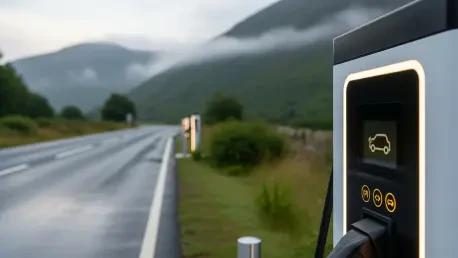
Transportation stands out as one of the most stubborn sectors in the national climate strategy, having achieved a meager 7% reduction in total emissions over the last thirty years of environmental effort. Despite a visible increase in the adoption of electric vehicles and expanded cycling networks in urban centers, gasoline and diesel engines continue to dominate the roadways across the country. The challenge is particularly acute in rural communities, where the absence of robust public transit options makes private vehicle ownership a necessity rather than a choice for daily commuting and essential services. Unlike a centralized power grid that can be greened through large-scale utility investments, the transportation sector involves millions of individual choices and deeply entrenched infrastructure limitations. Solving this issue requires more than just subsidizing new technology; it necessitates a complete rethinking of how communities are connected and how movement is prioritized across the diverse Welsh terrain.
The agricultural and residential sectors present similarly complex obstacles, characterized by biological processes and structural barriers that are resistant to rapid technological fixes. Emissions from farming, primarily derived from livestock methane and the use of synthetic fertilizers, have only decreased by 14%, reflecting the inherent difficulty of modernizing land management without disrupting food security. Meanwhile, the residential sector remains a significant contributor to the carbon load, as many homes continue to rely on antiquated gas boilers for heating. Retrofitting millions of older dwellings with heat pumps and improved insulation is a logistical and financial endeavor of unprecedented scale that touches upon the private lives of every household. These sectors do not respond to the same market forces as heavy industry, meaning progress is often slow and politically sensitive. Transitioning these areas will require significant public buy-in and a realization that greening the home is just as vital.
Future Outlook: Reconciling Statistics and Social Change
A significant statistical paradox complicates the narrative of success: while Wales is celebrating record-low emissions, its per capita carbon footprint remains the second-highest in the United Kingdom. At approximately 9.5 tonnes per person, the nation’s environmental impact sits significantly above the global average, though this figure requires careful context to be understood accurately. This high per capita rating is largely a result of the country’s role as a major industrial and energy exporter to the rest of the British Isles and beyond. Territorial emissions calculations include the outputs of refineries and cement plants that produce goods consumed elsewhere, rather than reflecting the personal carbon consumption of the local population. Distinguishing between what the nation produces as an industrial hub and what its citizens actually consume is vital for creating fair policies. Understanding this distinction allowed for a more honest dialogue about true global impacts.
The upcoming strategy for 2030 demanded an even more aggressive reduction of emissions by an additional 34% within a very compressed timeframe to satisfy legally binding environmental targets. Policymakers realized that the next phase of the transition had to move beyond corporate mandates to address the granular details of how people ate, traveled, and maintained their households. Success was no longer measured solely by the decommissioning of massive industrial polluters, but by the collective result of millions of small lifestyle adjustments made across every community. Local governments were encouraged to invest heavily in decentralized green energy cooperatives and district heating systems to replace individual gas dependencies. Educational initiatives focused on sustainable land use and circular economy principles provided a roadmap for diversifying the agricultural sector while maintaining economic stability. By focusing on these integrated solutions, the nation demonstrated that achieving net zero was a societal evolution.