
The American landscape for renewable energy has reached a bizarre crossroads where record-breaking levels of private capital and public interest are colliding with an unprecedented wave of project abandonment and fiscal retreat. While the domestic manufacturing sector has experienced a surge in interest over the last several years, recent data from Environmental Entrepreneurs paints a picture of a sector that is increasingly volatile and prone to sudden shifts. A “race to the finish line” is currently defining the industry’s behavior as corporations scramble to break ground on facilities before the critical July 4, 2026, phase-out of several federal clean energy tax credits. This high-stakes environment has created a flurry of front-loaded investment activity in early 2026, yet the sheer volume of capital being withdrawn from previously announced plans suggests that the industry is struggling to find its footing amidst shifting policy goalposts and a maturing market. It is a period defined by both immense promise and deep-seated systemic instability.
Historical Context: The Post-2022 Investment Surge
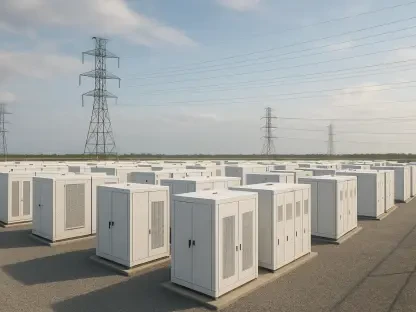
The current instability is most visible when examining the trajectory of the American energy market since the landmark legislative changes of late 2022, which triggered a massive influx of capital into renewable sectors. Between 2022 and 2024, the United States witnessed a historic surge in project development, culminating in a peak during 2024 with 377 new project announcements and a staggering $135 billion in total committed investment. During this period, the construction of massive utility-scale storage facilities and domestic manufacturing hubs for photovoltaic cells seemed to signal a permanent transformation of the national power grid. Thousands of new projects entered the pipeline, buoyed by federal incentives that promised long-term stability and a predictable return on investment for developers. This era of unbridled optimism transformed regional economies, particularly in the “Battery Belt” across the South, where massive factories were initially hailed as the future of American labor.
The Turning Point: Analyzing the 2025 Market Shift
This momentum shifted with startling speed as the industry transitioned into the early months of 2025, revealing the first significant cracks in the domestic clean energy expansion strategy. The number of new project announcements plummeted by more than two-thirds, and for the first time since the current boom began, project cancellations began to outpace new growth in several key sub-sectors. Since the start of 2025, the industry has recorded fewer than 200 new initiatives, a sharp decline that suggests the initial “gold rush” of the post-2022 era has been replaced by a much more constrained and cautious investment environment. For every dollar currently committed to new ventures in 2026, nearly two dollars of previously planned investment are being pulled back or indefinitely postponed. This reversal reflects a fundamental shift from aggressive expansion to defensive maneuvering as companies realize that the logistical and regulatory hurdles are far higher than initially projected.
Financial Implications: The Staggering Cost of Project Abandonment
The scale of abandoned projects since the start of 2025 has created a financial vacuum that is difficult to overstate, with over $125 billion in planned capital failing to materialize in physical infrastructure. Since that turning point, nearly 10 gigawatts of planned energy capacity have been wiped from the books, representing a significant setback for national decarbonization goals and the modernization of the electrical grid. In early 2026 alone, more than $18 billion in specific project investments were officially abandoned, illustrating that the trend is accelerating rather than stabilizing. These record reversals are not merely minor market corrections; they represent a tangible loss of energy independence and a blow to the reliability of future power supplies. When large-scale offshore wind or solar plus storage projects are canceled, the ripple effects extend through the supply chain, impacting raw material providers and secondary manufacturers who had scaled up for a boom.
Human Impact: The Erosion of the Clean Energy Workforce
Beyond the financial metrics, the human cost of these cancellations has manifested in the disappearance of tens of thousands of potential high-wage jobs that were central to the promised green transition. The clean energy sector typically differentiates between short-term construction roles and long-term operational positions, and both categories have been decimated by recent project terminations. Since 2022, the industry has seen the loss of over 147,000 promised construction jobs and roughly 62,000 long-term operational roles due to the cancellation of major manufacturing and generation facilities. While total employment figures since late 2022 remain high on paper, the recent spike in layoffs and retracted job offers has created a profound sense of unease within the domestic labor force. Workers who retrained for roles in battery assembly or solar installation now find themselves in a precarious position as the projects they were meant to staff have been shelved due to fiscal volatility.
Regulatory Barriers: The Challenge of Interconnection and Permitting
Paradoxically, the current slowdown is not a result of falling demand for clean electricity, as the need for power to support data centers and domestic manufacturing remains at historic highs. Instead, the primary drivers of this instability are an accumulation of policy obstacles and regulatory bottlenecks that have made project completion increasingly difficult. Complex siting and permitting processes, combined with the expiration of critical tax incentives by mid-2026, have created a regulatory environment that many investors now view as too risky. The market is demonstrably ready to build, but the political and administrative frameworks are currently acting as a barrier rather than a bridge to progress. Interconnection queues, where new projects wait for years to be linked to the national grid, have become a primary cause of project death, as developers can no longer justify the holding costs associated with these prolonged and unpredictable delays in moving forward.
Future Pathways: Establishing Long-Term Policy Stability
To restore confidence in the American clean energy sector, policymakers shifted their focus toward streamlining the permitting process and providing longer-term fiscal clarity beyond the 2026 cliff. Stakeholders recognized that the gap between market demand and policy certainty required immediate structural reform to prevent further capital flight and ensure domestic energy security. This transition demanded a move away from short-term subsidies toward a comprehensive national strategy that prioritized grid modernization and localized supply chain resilience. By addressing the interconnection backlog and simplifying the federal environmental review process, the industry laid the groundwork for a more stable and predictable investment climate. Moving forward, the emphasis remained on creating a resilient infrastructure that could withstand political shifts while maintaining the technological lead. These steps ensured that the reversals served as a catalyst for systemic reform rather than a permanent decline.