
The rapid expansion of high-density computing across the Virginia landscape has forced a dramatic confrontation between local utility reliability and federal air quality standards. As state legislators push for massive facilities to act as emergency reservoirs for the power grid, the Environmental Protection Agency is tightening the noose on the very diesel generators intended for that task. This regulatory bottleneck occurs because regional transmission organizations require predictable load-shedding capabilities that current environmental permits simply do not allow for non-emergency use. Data center operators now find themselves caught in a vice between complying with state-level demand-response mandates and avoiding federal penalties that could reach millions of dollars. The situation has shifted from a theoretical policy debate to a critical infrastructure crisis, demanding a fundamental rethink of how these digital giants interact with the electrical grid. By late 2026, the necessity for a technological pivot has become undeniable for all stakeholders involved.
Federal Standards: The Emergency Power Paradox
The Environmental Protection Agency maintains a strict oversight framework regarding the operational hours of stationary internal combustion engines, particularly those used for backup power. Under the existing federal standards, these units are restricted to a total of 100 hours of non-emergency operation per year, with a much narrower 50-hour allowance specifically for non-maintenance activities. This 50-hour window was historically viewed by some operators as a loophole for participating in grid-stabilization programs, but recent clarifications have effectively closed that door. A pivotal interpretive letter issued in late 2023 fundamentally redefined these boundaries by explicitly prohibiting the use of emergency generators for demand-response in regions controlled by an Independent System Operator or a Regional Transmission Organization. This change stripped away the legal flexibility that many facilities relied upon to justify their backup infrastructure as a dual-purpose asset.
Regional Impacts: Navigating the Transmission Constraints
For operators within major hubs like Northern Virginia, Illinois, or California, this federal stance creates an immediate operational paradox that is difficult to resolve. Since utilities in these regions are almost exclusively part of organizations like PJM Interconnection or MISO, their backup systems are strictly classified as emergency-only assets under the current EPA definitions. Transitioning these systems to a non-emergency status requires a comprehensive re-permitting process that subjects the facility to much more rigorous emission monitoring and local public scrutiny. The federal government has signaled that it will no longer tolerate the use of “emergency” labels as a cover for routine grid support, which essentially leaves large-scale power users without a traditional path to fulfill state-mandated load-shedding requests. Consequently, the reliance on legacy diesel systems has moved from a reliable safety net to a significant liability for the largest tech companies.
Economic Realities: The High Cost of Tier 4 Compliance
Achieving compliance with the EPA Tier 4 standards represents a massive capital investment that many facilities are currently struggling to justify within their existing budgets. To legally operate generators for non-emergency grid support, facilities must install sophisticated aftertreatment technologies, including diesel particulate filters and selective catalytic reduction systems. These upgrades are not merely minor additions; they often require substantial physical modifications to the exhaust architecture and the addition of chemical storage for diesel exhaust fluid. Industry estimates suggest that retrofitting a single large engine can cost as much as $500,000, which becomes an astronomical figure when multiplied by the dozens of generators found in a typical hyperscale data center. When the total cost of compliance is weighed against the potential revenue from utility demand-response programs, the financial incentive for using diesel backup often disappears entirely.
Regulatory Enforcement: Lessons from Environmental Litigation
The risks associated with ignoring these federal mandates have been underscored by recent high-profile legal battles and environmental advocacy campaigns. For instance, the controversy surrounding large-scale power installations in Memphis highlighted how quickly local communities and federal regulators can mobilize against unpermitted nitrogen oxide emissions. These unofficial power plants, which attempt to bypass the traditional utility queue by running on-site generation, have become prime targets for litigation. Beyond the immediate fines, companies face the threat of permanent operational restrictions and significant damage to their corporate sustainability profiles. This environment of heightened scrutiny ensures that any attempt to utilize legacy fossil-fuel systems for grid support will be met with immediate pushback. As a result, the industry is seeing a shift where the cost of doing nothing—or doing the wrong thing—is finally exceeding the cost of investing in cleaner technologies.
Sustainable Transitions: The Surge in Battery Installations
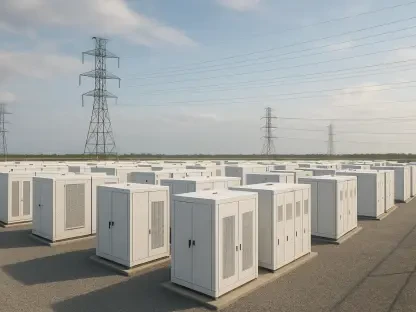
As the regulatory environment for internal combustion engines becomes increasingly hostile, the industry has rapidly pivoted toward Battery Energy Storage Systems. These systems offer a cleaner, more flexible alternative that allows data centers to store power during periods of low demand and discharge it when the grid faces peak stress. Unlike diesel generators, these battery installations do not produce on-site emissions, which exempts them from the specific EPA restrictions that currently plague the backup power market. This behind-the-meter strategy is gaining massive traction because it allows operators to participate in lucrative demand-response programs without triggering the complex permitting requirements of Tier 4 engines. In Virginia, the transition is being accelerated by state mandates that require utilities to procure over 21,000 megawatts of energy storage capacity by 2045, creating a favorable ecosystem for large-scale battery deployment.
Grid Integration: The Benefits of Behind-the-Meter Storage
Beyond the immediate benefits of avoiding federal emission penalties, energy storage provides a platform for deeper integration with renewable energy sources like wind and solar. Modern data center designs are increasingly incorporating short-duration lithium-ion batteries for immediate load-shedding and investigating long-duration options for multi-day reliability. Technologies such as pumped hydro, thermal storage, and iron-air batteries are moving from experimental phases into commercial reality, offering a way to bypass the inherent limitations of fossil fuels. This technological shift enables data centers to transition from being passive consumers of electricity to active participants in a more resilient and sustainable electrical grid. By investing in these storage assets now, operators are effectively future-proofing their facilities against future environmental regulations while simultaneously enhancing their operational autonomy in an era of increasing grid volatility and high demand.
Technological Innovation: Long-Duration Energy Solutions
The evolution of the energy landscape has also catalyzed the development of long-duration energy storage systems that go beyond the four-hour capacity of traditional lithium-ion batteries. These advanced technologies, including flow batteries and compressed air energy storage, provide the sustained output necessary to handle prolonged grid outages without relying on carbon-intensive backup. By adopting these systems, data centers can provide a more robust buffer for the utility grid, absorbing excess renewable generation during the day and releasing it during the evening peaks. This capability is becoming vital as the percentage of intermittent renewable power on the grid continues to rise. For data center operators, these assets represent a strategic move to decouple their growth from the physical limitations of the existing electrical infrastructure. The shift toward long-duration storage ensures that the digital economy remains operational even as the primary energy sources undergo a fundamental green transformation.
Actionable Strategies: Future Proofing Modern Infrastructure
The industry ultimately determined that the most viable solution involved the adoption of energy storage as the primary mechanism for grid interaction and emergency response. By moving away from the regulatory risks of internal combustion, data center operators secured a more predictable operational landscape and strengthened their relationships with local communities. This evolution proved that environmental stewardship and digital growth were not mutually exclusive, provided that the underlying infrastructure was designed with flexibility in mind. The actionable steps taken by industry leaders focused on rigorous energy audits, the implementation of sophisticated battery management software, and the early adoption of long-duration storage technologies. These efforts ensured that the massive demand for digital services did not come at the expense of regional air quality or grid stability. The resulting landscape reflected a more resilient and modern approach to powering the global digital economy through sustainable energy.