
A single spark from a crushed lithium-ion battery hidden deep within a garbage truck can ignite a chemical fire that burns at thousands of degrees, threatening both infrastructure and human lives. These incidents, colloquially known as “zombie fires,” have become a pervasive nightmare for waste management facilities across the United States. While consumers enjoy the convenience of portable power in everything from smartphones to electric toothbrushes, the disposal infrastructure has remained dangerously outdated. Traditional curbside recycling programs were never designed to manage the volatile chemistry of modern power sources, which can spontaneously combust when punctured or compressed in standard collection vehicles.
The necessity for a systemic overhaul has led to a fundamental shift in how states approach waste. Moving away from taxpayer-funded cleanup efforts, a new model of Extended Producer Responsibility (EPR) is taking hold. This “polluter pays” philosophy ensures that the companies profiting from battery production are also responsible for their safe retirement. By mandating that manufacturers manage the entire lifecycle of their products, states are finally addressing the root cause of the safety crisis while relieving local municipalities of the mounting financial and physical risks associated with battery-related disasters.
The Growing Crisis Hidden in America’s Trash Bins
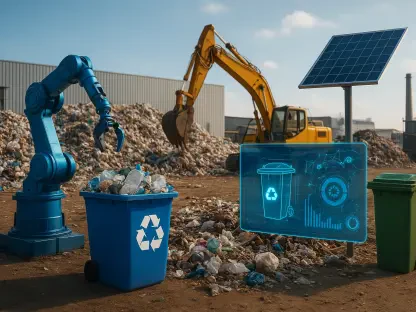
The alarming rise of fires at materials recovery facilities has forced a national conversation about the hidden dangers in the average household trash bin. As lithium-ion batteries have become the standard for portable energy, their presence in the waste stream has scaled exponentially, leading to dozens of documented blazes that cause millions of dollars in property damage annually. These fires are not merely an inconvenience; they release toxic fumes and require specialized firefighting techniques, often forcing the temporary closure of essential public services. The volatility of these high-energy cells means that even a minor mishap during the sorting process can lead to a catastrophic event.
Traditional curbside recycling programs are fundamentally unequipped to handle these modern power sources because the machinery is designed for inert materials like glass, paper, and plastic. When a battery enters this mechanical environment, the high-pressure balers and sorting arms act as triggers for thermal runaway. To combat this, the transition toward Extended Producer Responsibility is gaining traction as the only sustainable path forward. By shifting the financial and logistical burden of end-of-life management from local governments to the producers, the industry is incentivized to design for recyclability and establish specialized collection channels that bypass the dangerous curbside route.
Understanding the Shift Toward Battery Stewardship
The environmental and safety risks inherent in battery disposal are driving a sense of legislative urgency across the Midwest and South. Legislative bodies are increasingly recognizing that the status quo is no longer tenable, particularly as the demand for critical minerals grows. Through the lens of Extended Producer Responsibility, the end-of-life burden shifts from the public sector to the manufacturers who bring these products to market. This model creates a closed-loop system where batteries are no longer viewed as waste but as a reservoir of valuable raw materials that can be reintegrated into the manufacturing process.
Beyond safety, these laws support a burgeoning “circular economy” by facilitating the recovery of critical minerals like lithium, cobalt, and nickel. Recovering these elements from spent batteries reduces the ecological footprint of mining and strengthens the domestic supply chain for high-tech industries. At the federal level, the Environmental Protection Agency has shown significant interest in these state-led initiatives, viewing them as essential laboratories for creating a standardized national framework. This alignment between state mandates and federal goals ensures that battery recovery is not just a local safety measure but a strategic national priority for resource security.
Decoding Wisconsin’s Assembly Bill 713: A Mandatory Framework
Wisconsin has taken a definitive stance with the passage of Assembly Bill 713, establishing a rigorous mandatory framework that is currently in its preparation phase. The state is gearing up for a full-scale rollout scheduled for January 2027, giving producers and retailers a clear window to align their operations with the new standards. The law applies a weight-based categorization system that ensures nearly every consumer battery is covered, ranging from small button cells to “medium-format” batteries that weigh up to 25 pounds. This inclusive approach targets the specific lithium-ion cells often found in power tools and electric bicycles, which have historically been the most difficult to manage.
Under this mandate, producers must join state-approved stewardship organizations that are responsible for the logistics of collection and recycling. These organizations are tasked with ensuring that collection points are free, continuous, and convenient for all residents, regardless of their geographic location. Wisconsin has also set clear performance metrics to gauge success, aiming for a 60% recycling rate for rechargeable batteries and a 70% rate for primary, non-rechargeable cells. By codifying these targets, the state is providing a measurable roadmap that holds the industry accountable for the effectiveness of its recovery programs.
Kentucky’s Approach: Balancing Voluntary Participation With Strict Disposal Bans
Kentucky’s legislative response, signed into law by Governor Andy Beshear, offers a different structural philosophy while pursuing the same safety goals as its northern neighbor. Unlike the mandatory participation required in Wisconsin, the Kentucky model utilizes a voluntary producer framework, allowing companies more flexibility in how they organize their stewardship efforts. However, this flexibility is balanced by a strict “Curbside Ban” that makes it illegal for residents to toss covered batteries into standard trash or recycling bins. This legal prohibition serves as a powerful deterrent, forcing a shift in consumer behavior and protecting waste workers from hidden hazards.
The Kentucky law also includes specific economic safeguards designed to keep the program consumer-friendly and transparent. By preventing point-of-sale fees, the state ensures that the cost of recycling is integrated into the producer’s business model rather than appearing as a hidden tax on the resident. This approach aims to foster high participation rates by making the recycling process as frictionless as possible. As the state moves toward establishing the full program by early 2027, the focus remains on creating a system that balances industrial responsibility with public accessibility without placing an undue financial burden on the average shopper.
The High Cost of Inaction: Safety and Economic Drivers
The financial consequences of battery fires are becoming impossible for the waste industry to ignore. Firsthand accounts from waste management experts highlight a grim reality where facility fires are no longer rare anomalies but daily threats. In Wisconsin, the economic impact was quantified when Waste Management (WM) invested $39 million to fireproof a single recovery facility, a staggering cost driven primarily by the need for advanced thermal detection and suppression systems. These investments are necessary for survival, yet they highlight how the lack of proper battery disposal channels has forced the waste industry to spend heavily on defensive infrastructure.
Furthermore, the insurance crisis is hitting local waste departments particularly hard, as battery-related incidents drive up premiums to unsustainable levels. In many jurisdictions, the cost of insuring a sorting facility has skyrocketed, siphoning funds away from other essential public services. This economic pressure has led to an “all-in” philosophy regarding battery types; many experts argue that including alkaline batteries in recycling mandates is necessary to prevent consumer confusion. When all batteries are treated the same at the point of disposal, it eliminates the risk of residents accidentally placing a volatile lithium-ion battery into a stream meant only for inert alkaline cells, thereby reducing the chance of cross-subsidization and accidental fires.
Implementing New Standards: What Consumers and Businesses Need to Know
As the industry moves toward the 2027 implementation milestones, identifying “covered” batteries is the first step for consumers and businesses alike. The scope of these laws is broad, encompassing everything from household electronics and medical devices to small appliances and toys. Producers, retailers, and local governments are currently following a detailed roadmap to ensure that the necessary infrastructure is in place before the mandates take effect. Educational initiatives are already being designed to train retailers on safe handling procedures and to inform the public about the locations of new, specialized collection sites that will soon become a common sight in retail environments.
Looking toward the horizon, it is clear that the trail blazed by Wisconsin and Kentucky is being followed by a growing number of states. Oregon has already enacted similar legislation, while New Hampshire and Iowa are actively considering their own battery stewardship bills to address the same safety and environmental concerns. This regional momentum suggests that a patchwork of state laws may eventually coalesce into a more unified national standard. By taking proactive steps today, these states provided a template for how the modern world can safely manage the power sources that drive the digital economy while protecting the people who handle the nation’s waste. The transition toward these robust recycling frameworks ensured that the responsibility for hazardous materials was placed squarely on those who manufactured them, fostering a safer and more sustainable future for the entire community.