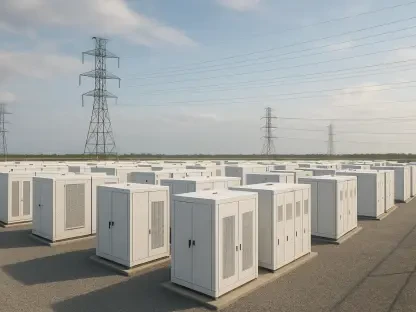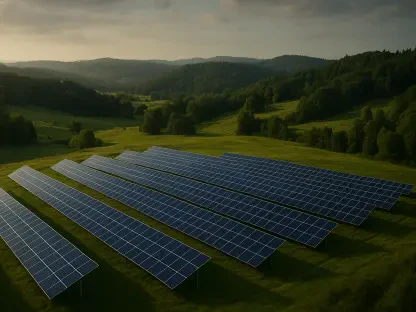

The silent hum of data centers has recently evolved into a thunderous demand for gigawatts, forcing the architects of the digital age to become the new masters of physical power generation in a rapidly changing world. This transition represents a significant departure from the era of pure software services, as the world’s leading technology firms now find themselves managing complex energy portfolios that rival those of mid-sized nations. As artificial intelligence models grow in complexity, the reliance on traditional electrical grids has reached a breaking point, prompting a structural shift that echoes the historical vertical integration of the industrial revolution.
In the current landscape, electricity has transitioned from a basic commodity into a primary strategic bottleneck for technological progress. Industry analysts observe that the move toward deep vertical integration is no longer a matter of corporate preference but a requirement for survival. Large-scale tech enterprises are now overseeing everything from the construction of advanced nuclear reactors to the manufacturing of micro-components. This convergence of the digital and physical realms suggests that the titans of Silicon Valley are effectively rewiring the global energy landscape to suit the high-density requirements of the next generation of computing.
The Great Convergence: Why Silicon Valley Is Rewiring the Global Energy Landscape
The shift from providing digital services to managing physical infrastructure has drawn striking parallels to the industrial titans of the Gilded Age. Just as the railroad barons of the nineteenth century were forced to build their own steel mills and coal mines to ensure the reliability of their networks, today’s hyperscalers are investing billions into power generation. This move signifies a realization that the existing utility model cannot support the exponential scaling required by modern computational demands. The focus has moved from the cloud to the ground, where the control of electrons is now as vital as the control of data.
The insatiable energy demands of artificial intelligence have fundamentally transformed the economics of the power sector. Where electricity was once a background cost, it is now the deciding factor in where data centers are built and how companies compete. This has created a scenario where energy availability, rather than software talent, dictates the pace of innovation. Consequently, tech firms are adopting a strategy of vertical integration that spans the entire energy value chain. By securing direct access to power sources, these companies are bypassing traditional market constraints to maintain their competitive edge in a resource-constrained environment.
A preview of this transformation reveals a future where tech giants act as de facto power brokers. They are no longer merely signing power purchase agreements; they are funding the revitalization of legacy energy assets and the development of experimental power technologies. This includes everything from the life extension of existing nuclear facilities to the scaling of small modular reactors. By taking an active role in generation and transmission, these firms are effectively building a parallel energy economy that operates alongside the public grid, prioritizing the uninterrupted flow of power to their massive processing clusters.
From Cloud Providers to Power Brokers: The Mechanics of a Private Infrastructure Takeover
The Brutal Math of Artificial Intelligence and the Electrical Grid’s Breaking Point
The scale of the current energy surge is best understood by contrasting the power density of traditional infrastructure with modern requirements. Historically, standard server racks operated within a range of five to fifteen kilowatts, a load that traditional cooling and distribution systems could manage with ease. However, modern artificial intelligence racks now frequently demand 100 kilowatts or more, creating heat and power requirements that overwhelm existing facilities. This massive leap in density has forced a complete redesign of the electrical architecture within data centers.
Furthermore, the existing public utility model is struggling to keep pace with these unprecedented demands. The interconnection queue for new power projects has swelled to over 2,000 gigawatts, with multi-year lead times for critical equipment like high-voltage transformers and turbines. This stagnation has rendered the traditional “wait-and-see” approach to grid expansion obsolete for companies that need to scale within months rather than decades. In response, the industry has embraced the “Bring Your Own Energy” movement, where developers integrate on-site generation to ensure they are not left stranded by a failing public grid.
Bypassing Bureaucracy Through the Private Ratepayer Model
Traditional utilities operate under a framework of “prudency reviews” and heavy regulation, which, while necessary for public protection, results in a slow pace of capital deployment. In contrast, hyperscalers like Microsoft, Google, and Amazon possess the capital to move with a speed that the public sector cannot match. By funding their own infrastructure, these firms can bypass much of the administrative friction that delays regional grid upgrades. This private capital injection is fundamentally altering how energy infrastructure is financed and built.
To address potential political and social backlash, many tech giants have adopted a “Ratepayer Protection Pledge.” This strategy involves the companies footing the bill for massive infrastructure upgrades that would otherwise be passed on to residential consumers. While this serves to mitigate public outcry, it also consolidates the power of tech firms over the grid. As they transition from being passive electricity consumers to active participants in grid management, these corporations gain significant influence over the future of regional energy policy and infrastructure priorities.
The Nuclear Renaissance and the High-Stakes Bet on Carbon-Free Baseload
The push for 24/7 carbon-free energy has led to a historic resurgence of interest in nuclear power. One of the most notable examples is the planned reopening of the Three Mile Island facility, made possible by a 20-year contract that guarantees a stable buyer for the plant’s output. This type of long-term commitment provides the financial certainty needed to revitalize legacy nuclear assets that were previously considered uneconomical. For hyperscalers, nuclear energy offers a reliable baseload that intermittent sources like solar and wind simply cannot provide at scale.
Beyond existing plants, tech firms are heavily investing in Small Modular Reactors and capacity uprates for existing facilities. These investments are seen as a high-stakes bet on securing a reliable energy supply that can meet the rigorous demands of artificial intelligence. Unlike traditional large-scale nuclear projects that are often plagued by delays and cost overruns, SMRs promise a more flexible and scalable approach to carbon-free power. This shift highlights the strategic importance of baseload generation in a landscape where energy reliability has become a primary driver of corporate valuation.
High-Voltage Innovation and the Hidden Vulnerabilities of the 800-Volt Future
Efficiency gains are increasingly being sought through architectural changes, specifically the transition to 800-volt direct current (VDC) power distribution. By adopting this high-voltage architecture, data centers can significantly reduce conversion losses, effectively reclaiming up to 40% of the power that would otherwise be wasted. This reclaimed capacity is equivalent to adding thousands of additional GPUs to a cluster without increasing the total power draw from the grid. However, this transition introduces new complexities in hardware design and material science.
This technological shift has also revealed deep-seated supply chain dependencies that represent a strategic risk. The high-performance capacitors required for 800 VDC systems rely on a specific type of dielectric film, much of which is produced in concentrated geographical areas, particularly China. This creates a scenario where the success of trillion-dollar AI empires depends on microscopic hardware components. The assumption of digital invulnerability is being challenged by the physical reality of a fragile and geopolitical supply chain that supports the world’s most advanced computing clusters.
Strategic Outlook: Navigating the High-Stakes Future of Private Energy Infrastructure
The transformation of Big Tech into “Big Power” marks a fundamental shift in the global economy. To maintain their trajectory, these companies must master not only the digital realm but also the nuances of energy generation, transmission, and hardware efficiency. The necessity of this mastery is driven by the realization that energy is the ultimate limiting factor for artificial intelligence. Mastering the grid is now as important as mastering the algorithm, leading to a new era of corporate strategy where energy resilience is a core pillar of business operations.
Securing domestic supply chains for critical energy components is essential for ensuring long-term grid resilience. The reliance on foreign sources for materials like dielectric film or specialized transformers represents a significant vulnerability that must be addressed through strategic investment and domestic manufacturing incentives. Furthermore, companies must find a way to balance their rapid expansion with the growing pressure to modernize aging public infrastructure. By working in tandem with public utilities rather than purely bypassing them, hyperscalers can help create a more robust energy system that benefits both corporate and public interests.
The New Industrial Frontier: Where Information Technology and Power Systems Collide
The energy-AI nexus emerged as the primary driver of national economic growth and geopolitical stability. This vertical integration indicated that the boundary between digital and physical worlds permanently blurred. Tech firms realized that controlling the means of power generation was the only way to safeguard the future of their computational empires. This period marked the end of the data center as a mere consumer of utility services and its rebirth as a central node in a private, high-voltage energy network.
As the industry moved forward, the focus on securing domestic supplies of critical components like capacitors and transformers became a cornerstone of infrastructure resilience. The shift toward private power generation represented a fundamental change in how modern society viewed the role of corporations in public life. Ultimately, the question of whether the future of the power grid belonged to public service or private corporate necessity remained the defining inquiry of the decade, as the world watched the digital and physical realms fuse into a single, power-hungry machine.