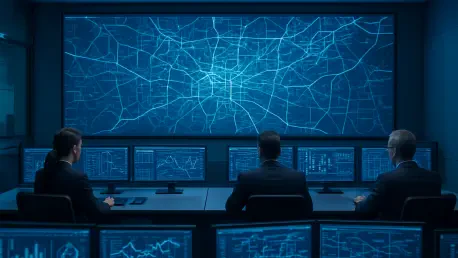

By integrating real-world operational data from utility providers like Con Edison and LIPA, researchers are grounding new AI models in the practicalities of modern power distribution. This shift reflects a broader necessity to overhaul aging infrastructure that was never designed for the bidirectional energy flows of the current era. As extreme weather events become more frequent, the strain on high-voltage transmission lines and local substations has reached a critical threshold. Traditional manual monitoring systems often fail to react quickly enough to cascading failures, leading to widespread outages that can take days to resolve. Advanced neural networks are now being deployed to analyze telemetry data in milliseconds, allowing operators to visualize potential bottlenecks before they manifest as physical damage. The objective is to transition from a reactive posture to a proactive defense strategy where the grid itself can predict regional surges caused by electric vehicle charging.
Operational Resilience: Predictive Maintenance and Autonomous Healing
Implementing digital twin technology allows utility companies to simulate various scenarios across their entire network without risking actual hardware. These virtual replicas are powered by machine learning algorithms that ingest historical weather patterns, component age, and real-time sensor feedback from across the nation. For instance, by identifying subtle vibrations in a transformer that indicate an impending insulation breakdown, the AI can alert maintenance crews weeks before a catastrophic failure occurs. This predictive capability is vital as the grid incorporates more intermittent renewable sources like wind and solar, which introduce volatility into the system. By accurately forecasting generation peaks, AI ensures that battery storage systems are charged and discharged at optimal times to balance the load. This prevents the traditional reliance on expensive plants while ensuring that the frequency remains within strict operational limits through constant autonomous tuning.
Beyond individual components, AI-driven automation is transforming how the grid recovers from physical damage caused by storms or localized failures. Self-healing circuits utilize intelligent electronic devices that can isolate a faulted section of the line within cycles, automatically rerouting electricity through alternative paths to minimize the number of affected customers. This process, often referred to as islanding, allows critical facilities like hospitals to remain powered via local microgrids even when the main transmission network is compromised. Furthermore, deep reinforcement learning models are being trained to manage the complexities of decentralized energy resources, such as residential solar panels. By treating thousands of small-scale contributors as a single virtual power plant, the grid can absorb fluctuations in demand with flexibility. This autonomous orchestration reduces the cognitive load on human dispatchers who manage complex systems daily.
As the power grid becomes increasingly digitized, it also becomes more vulnerable to sophisticated cyber threats that target Supervisory Control and Data Acquisition systems. Traditional signature-based antivirus software is no longer sufficient to stop zero-day exploits or advanced persistent threats that attempt to manipulate power flow or disable protective relays. Instead, behavioral AI models are used to establish a baseline of normal network traffic, allowing them to detect even the slightest deviations that suggest an unauthorized intrusion. These systems can identify suspicious command sequences that appear legitimate but are timed to cause physical damage to capacitors. By employing federated learning, different utility providers can share threat intelligence without compromising sensitive data, creating a collective defense mechanism. This ensures that a vulnerability discovered in one region is patched across the entire national infrastructure before it can be exploited.
The integration of artificial intelligence into national energy infrastructure proved to be a decisive factor in securing long-term reliability. Stakeholders recognized that technical deployment alone was insufficient, leading to the establishment of standardized data-sharing protocols between private utilities and federal agencies. This collaboration ensured that AI models remained accurate and unbiased when making critical dispatch decisions during periods of peak stress. Moving forward, the focus shifted toward the development of explainable AI, allowing operators to understand the rationale behind automated actions, which built trust between human supervisors and machines. Investment in workforce retraining became a priority, as the role of the grid operator evolved from manual oversight to high-level strategic management. By prioritizing transparency and cross-sector cooperation, the industry successfully mitigated the risks of automation while maximizing its overall efficiency.