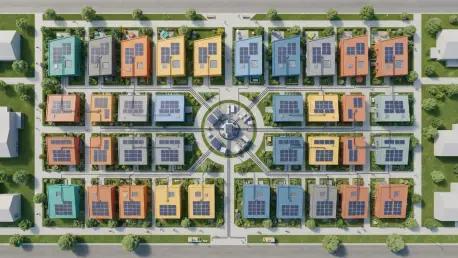

Allowing utilities to recover costs through traditional rate-basing should be the exception rather than the rule for new energy storage and generation assets. This fundamental principle is gaining traction in 2026 as the American power grid faces an existential crisis driven by surging demand from artificial intelligence and the rapid electrification of the industrial sector. For decades, the standard response to such constraints was the construction of massive, utility-owned hardware projects funded by a captive ratepayer base. However, a new strategic framework proposed by the Solar Energy Industries Association suggests that Distributed Energy Resources, such as rooftop solar and virtual power plants, can serve as faster and more affordable alternatives. These localized assets provide a more nimble response to grid pressure than the slow, capital-intensive construction of traditional substations. By integrating private investment, the energy sector can modernize effectively without relying solely on ratepayer-funded expansion models.
The Economic Conflict: Rate-Basing Versus Innovation
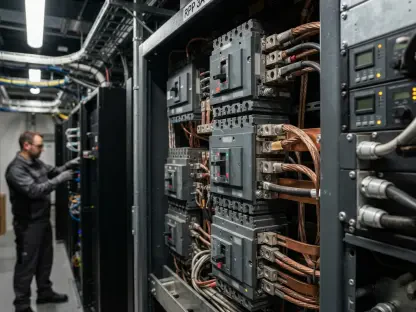
Historically, the relationship between utilities and regulators has been defined by a cost-of-service model that frequently discourages the adoption of smaller, more efficient technologies. Because investor-owned utilities typically earn a regulated rate of return on capital expenditures, a perverse financial incentive exists to prioritize large-scale physical infrastructure over more flexible, market-based alternatives. This “bricks and mortar” approach has led to a steady increase in retail electricity prices across many jurisdictions, even as the cost of solar and battery technology has plummeted. When a utility builds a massive substation, it gains a guaranteed profit for decades, regardless of whether a network of distributed batteries could have solved the same problem for a fraction of the cost. The current regulatory environment essentially sidelines private innovation by making expensive utility-owned hardware the default solution for every grid constraint, effectively ignoring the capabilities of modern virtual power plants.
Transitioning toward a competitive procurement model requires a departure from these antiquated financial structures to ensure that ratepayers are not overpaying for grid reliability. By treating distributed assets as viable capacity resources, state utility commissions can foster an environment where private capital is leveraged to meet energy demands. This approach shifts the burden of performance and construction risks away from the public and onto private developers, who are better equipped to manage the rapid pace of technological change. The economic benefits of this shift are increasingly clear as distributed solar and storage systems provide value-stacked services, such as peak shaving and frequency regulation, which traditional hardware cannot easily replicate. Breaking the cycle of rising costs necessitates a regulatory framework that mandates the consideration of DERs as a primary option rather than a secondary experiment, ensuring that the grid evolves in a way that is both fiscally responsible and modern.
Modern Grid Strategies: Pathways and Ownership Models
The implementation of a modern grid requires a structured approach that simplifies how distributed resources are integrated into the existing system. One effective method is the use of programmatic tariff-based procurement, which creates an “open-enrollment” environment for behind-the-meter and front-of-the-meter assets. Under this system, participants are compensated based on the specific utility costs they help avoid, such as deferred transmission upgrades or reduced peak demand. This pathway is particularly useful for meeting broad, system-wide capacity needs because it provides clear, predictable financial signals to developers and homeowners. Moreover, when grid planning identifies specific locational needs, such as a localized feeder requiring capacity relief, a hybrid model can be employed. By using a Request for Proposals to discover true market prices, regulators can calibrate technology-neutral tariff rates that accurately reflect the value of DERs in those specific areas, ensuring the grid remains stable.
A cornerstone of this transition is the prioritization of third-party and customer ownership over the traditional utility-owned asset model. By establishing non-utility ownership as the default standard, regulators can effectively shield ratepayers from the financial volatility associated with large-scale project delays and operational failures. In this decentralized structure, the responsibility for maintaining and operating energy assets lies with private entities, who are incentivized to ensure maximum performance. Utility ownership would be restricted to rare exceptions where an asset functions strictly as grid infrastructure, such as storage co-located at substations for real-time voltage control. This policy shift reduces the capital burden on the utility and encourages a more competitive energy market. By empowering consumers to become active participants in the grid, regulators can ensure that the transition to a modern energy future is driven by efficiency and market competition rather than state-guaranteed monopolies.
In conclusion, the strategies implemented through these frameworks provided a clear roadmap for modernizing the energy grid during a period of unprecedented transformation. State utility commissions successfully moved toward a more transparent and competitive market by treating distributed solar and storage as reliable capacity assets. This transition effectively mitigated the financial risks for electricity consumers while fostering a more resilient infrastructure capable of meeting modern industrial demands. By prioritizing the least restrictive procurement methods, jurisdictions ensured that every dollar spent on grid reliability delivered the maximum possible value. The shift away from capital-intensive utility projects in favor of distributed energy resources demonstrated that technology and private capital could stabilize the grid more effectively than traditional methods. As a result, the energy sector emerged better equipped to handle load growth, providing actionable lessons for future developments and long-term sustainability.