
Christopher Hailstone is a seasoned veteran in the energy management space, specifically focusing on the intricate mechanics of grid reliability and the security of our national utilities. As the U.S. shifts its policy to treat energy production as a matter of national defense, his insights help us navigate the complexities of federal funding and the strategic use of historical mandates. This discussion explores the recent executive determinations that aim to revitalize the coal, oil, and gas sectors while addressing the critical hardware shortages currently plaguing the American power grid. Our conversation touches upon the strategic deployment of the Defense Production Act, the transition of the coal industry into a defense-essential resource, and the logistics of accelerating petroleum refining to meet surging domestic demand.
The executive branch has the authority to direct funding toward specific industrial sectors like oil, gas, and coal to stabilize energy prices. How will these financial commitments specifically impact pipeline construction and LNG export capacity, and what steps must be taken to ensure these projects bypass traditional permitting delays?
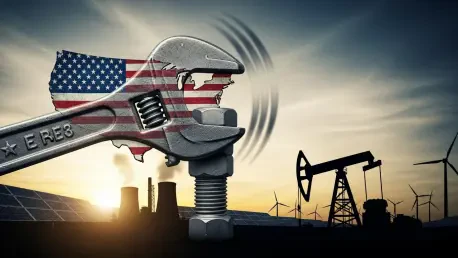
The current strategy hinges on Section 3 of the 1950 Defense Production Act, which effectively allows the government to treat energy infrastructure as a military necessity. By tapping into the billions of dollars set aside under the 2025 One Big Beautiful Bill Act, the administration can provide the capital injections needed to push through projects that were previously stalled by financial or regulatory hurdles. We are looking at a scenario where the Department of Energy can now make direct purchase commitments and even install equipment in private factories to speed up the expansion of gathering and transmission pipelines. To bypass the traditional red tape, the administration is leveraging the January 2025 declaration of a national energy emergency, which provides a legal justification to prioritize these projects under the umbrella of national security. This shift isn’t just about money; it’s about using executive memos to move natural gas liquefaction and export facilities to the front of the line, ensuring that price volatility is managed through a sudden surge in domestic supply capacity.
The United States currently faces a significant shortage of transformers and high-voltage transmission components while AI data center demand grows. In what ways can federal subsidies for grid-supporting manufacturing address these shortages, and what metrics should be used to measure improvements in grid reliability and affordability?
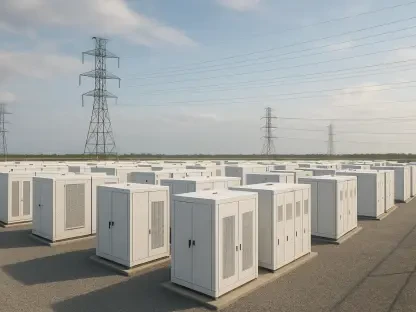
The electric grid is currently described by the administration as aging and constrained, posing a direct threat to our national defense. By invoking these emergency powers, the government can now subsidize the domestic manufacturing of critical components like high-voltage transmission parts, power electronics, and substations that have been in short supply. This is a massive shift because it allows for the deployment of advanced conductors and grid-supporting equipment that the private sector has struggled to scale due to high costs and supply chain disruptions. We should measure the success of these subsidies by tracking the lead times for transformer deliveries and the total reduction in grid-related outages in regions where AI data centers are expanding most rapidly. Ultimately, the metric of success will be whether these investments can stabilize electricity prices while the nation undergoes this massive technological build-out.
Designating the coal sector as essential for national defense targets supply chains, mining logistics, and baseload power. How does reinvesting in coal plant efficiency affect the transition to newer energy technologies, and what specific technical upgrades are necessary to expand the capacity of existing facilities?
Labeling coal as a “critical technology item” essentially freezes the decline of the sector by funneling federal resources into mining, rail, and barge logistics that keep the plants running. The Energy Department is looking to improve efficiency and add capacity to existing facilities, which involves high-level technical upgrades to the turbines and boiler systems to squeeze more power out of every ton of coal burned. This reinvestment suggests a pivot toward maintaining a robust baseload power system that can support advanced technologies and artificial intelligence, which require a steady, uninterrupted flow of electricity. While this might seem like a step back from newer energy technologies, proponents argue that you cannot have a secure transition without the “unique and irreplaceable attributes” that coal provides to the national power system during times of global instability. It is a pragmatic, if controversial, approach to ensuring that the lights stay on while the broader energy landscape evolves.
Invoking emergency authorities to shore up energy infrastructure often leads to legal and political pushback. What are the primary risks when using national defense laws to fund private-sector energy projects, and how can the government balance immediate price relief with long-term environmental and regulatory concerns?
The primary risk is that these actions are already being labeled as a “wish list” for fossil fuel companies, leading to significant legal threats from public interest and environmental groups. When the government uses the Defense Production Act to fund private-sector projects, it risks bypassing the standard common-sense oversight that ensures taxpayer resources are used efficiently. There is a delicate balance to strike; the administration is using the backdrop of the Iran war and the national energy emergency declared in January 2025 to justify these moves as essential for survival and affordability. However, critics argue that this is an unprecedented abuse of authority that prioritizes politically favored sectors over long-term environmental goals. The government must be transparent about how this funding is directed—whether it’s for engineering, permitting, or actual construction—to prove that these projects are truly in the national interest and not just a temporary fix for rising prices.
Petroleum exploration, refining, and marine terminals are now being prioritized for federal capital and logistics support. What specific bottlenecks currently hinder domestic production, and how would a sudden influx of government funding accelerate the timeline for bringing new refining capacity online?
Right now, the major bottlenecks are in the midstream and downstream sectors, specifically regarding the gathering pipelines and the aging infrastructure of our marine terminals. Even if exploration increases, the inability to move and refine that crude efficiently keeps prices high at the pump and at the power plant. The influx of government funding through Title III of the Defense Production Act allows the administration to offer loans and loan guarantees that make it financially viable for companies to expand their refining capacity almost immediately. By providing the capital that these facilities might not be able to access affordably elsewhere, the government can speed up the installation of new equipment and critical distribution infrastructure. This logistical support is designed to “unleash” domestic production, essentially turning the federal government into a partner that absorbs the financial risk of rapid industrial expansion.
What is your forecast for the U.S. energy landscape under these expanded executive authorities?
I expect we will see a period of intense industrial activity centered around traditional energy hubs, as the billions of dollars from the 2025 One Big Beautiful Bill Act begin to hit the ground. We are likely to see a significant acceleration in pipeline construction and a stabilization of the coal sector, which will serve as the backbone for the massive power needs of the burgeoning AI industry. However, this will be shadowed by ongoing litigation and political friction, as the use of war powers for domestic energy production remains a deeply polarizing strategy. In the long run, if these investments successfully modernize our grid infrastructure and solve the transformer shortage, we could see a more resilient national power system, though it will be one that remains heavily reliant on fossil fuels for the foreseeable future. The true test will be whether this “don’t let a good crisis go to waste” mentality actually results in lower utility bills for the average American or simply shores up the balance sheets of the energy industry.