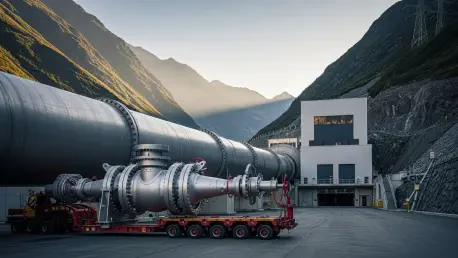

The development of ultra-high-head hydropower stations represents one of the most significant engineering hurdles in the modern pursuit of sustainable and reliable renewable energy sources. As engineers push the boundaries of mechanical resilience, the recent successful testing of a critical valve for the world’s first 500MW impulse hydroelectric unit marks a shift in what was once considered technically feasible for high-altitude sites. This achievement addresses the extreme pressure environments characteristic of mountainous regions where traditional turbines often struggle with cavitation and efficiency losses. By scaling impulse technology to a 500MW capacity, designers have managed to bridge the gap between niche mountain-stream applications and the massive grid-scale requirements of a nation transitioning toward carbon neutrality. The specialized valve serves as the primary gateway for controlling the immense kinetic energy of high-pressure water jets, ensuring safety.
Power Systems
Impulse turbines, specifically Pelton-style designs, operate by converting the potential energy of water into high-velocity kinetic jets that strike buckets arranged around a central wheel. While these systems have long been used for smaller projects, scaling the technology to 500MW requires a radical rethinking of structural integrity and fluid control. The valve system tested recently is designed to manage water heads exceeding several hundred meters, where the force of the water column exerts incredible stress on every internal surface. Maintaining a tight seal while allowing for rapid, precise adjustments to the water flow is essential for frequency control on the national power grid. The engineering team utilized advanced computational fluid dynamics to model the interaction between the valve’s closing mechanism and the flow, ensuring that water hammer effects do not compromise the surrounding infrastructure. This level of precision is vital for the longevity of the entire plant.
The manufacturing process for this 500MW valve utilized high-strength alloy steels and specialized forging techniques to ensure that the internal components could withstand decades of continuous operation. Unlike standard valves used in low-head dams, these components must resist both the mechanical fatigue of cycling and the abrasive qualities of sediment-laden water often found in high-altitude glacial runoff. Sophisticated heat treatment protocols were applied to the valve seat and the sealing ring to enhance surface hardness without sacrificing the toughness needed to absorb sudden pressure surges. Every weld and joint underwent rigorous non-destructive testing, including ultrasonic inspections, to guarantee the absence of internal defects that could expand under high-stress conditions. By achieving this milestone, the project demonstrates that large-scale domestic manufacturing can meet the exacting standards required for deep-mountain energy infrastructure while reducing imports.
Grid Strategy
Integrating a 500MW impulse unit into a modern power grid provides a unique set of advantages, particularly regarding flexibility and response time. Hydroelectric units of this scale are often utilized as the backbone of black start capabilities and peak shaving, allowing grid operators to rapidly balance the intermittent nature of solar and wind power. The impulse unit’s ability to operate efficiently across a wide range of flow rates makes it an ideal candidate for managing the variability inherent in renewable-heavy energy portfolios. Furthermore, the successful testing of this valve indicates that larger impulse units can now be strategically deployed in deep river valleys where the geography favors vertical drop over total water volume. This allows for the preservation of local ecosystems by minimizing the size of the required reservoir. As the demand for stable, carbon-free power continues to rise through 2026 and 2028, these high-capacity units will be essential for national targets.
The completion of the valve testing phase represented a pivotal moment for the future of ultra-high-head hydroelectric technology. Engineers moved beyond the theoretical modeling stage and successfully demonstrated that large-diameter valves can handle the extreme kinetic loads required for 500MW outputs. Moving forward, the industry should prioritize the implementation of real-time digital twins and fiber-optic sensory arrays within these valve bodies to monitor structural health and predict maintenance needs before wear reaches critical thresholds. Such proactive measures will be necessary to manage the operational life of these massive installations as they become more common in high-altitude corridors. Decision-makers in the energy sector should also look toward standardizing these high-capacity designs to accelerate the global transition toward resilient power architectures. By refining the supply chain, the industry proved that even the most challenging geographical barriers could be overcome.