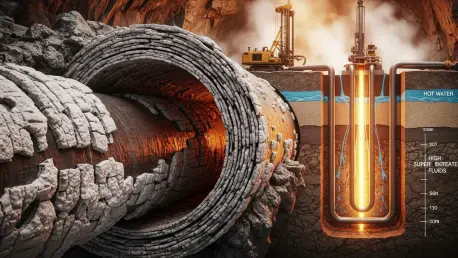

The massive heat engine churning beneath the earth’s crust has long promised an inexhaustible supply of energy, yet until recently, accessing this subterranean furnace remained a geological gamble restricted to rare volcanic regions. Enhanced Geothermal Systems (EGS) have fundamentally altered this narrative by transforming solid, dry rock into productive thermal reservoirs. Rather than searching for existing hot springs, engineers now create them by fracturing deep basement rock and circulating fluid to extract heat. This transition represents a pivot from traditional resource discovery to a sophisticated manufacturing approach, where energy production is no longer a matter of luck but a repeatable industrial process.
The Industrial Maturation of Enhanced Geothermal Systems
The maturation of EGS is best viewed through its transition from speculative research to a viable commercial asset class. Historically, geothermal energy struggled with “resource risk”—the high probability that an expensive well would fail to produce enough steam. Modern EGS mitigates this by applying precision drilling techniques borrowed from the shale revolution. By utilizing horizontal drilling and multi-stage stimulation, developers can now guarantee the surface area needed for heat exchange, effectively turning a geological uncertainty into a predictable industrial output.
This shift toward industrialization is currently characterized by a massive scale-up in project capacity. Where previous years saw experimental 5-MW or 10-MW pilot plants, the industry is now moving toward gigawatt-scale commitments. This expansion is supported by a growing consensus among institutional investors that the technology has moved past its “valley of death.” As the sector matures, the focus has shifted from proving that the technology works to optimizing the speed and cost of deployment, signaling the arrival of geothermal as a cornerstone of the modern power grid.
Core Technological Components and Strategic Infrastructure
Organic Rankine Cycle Turbine Systems
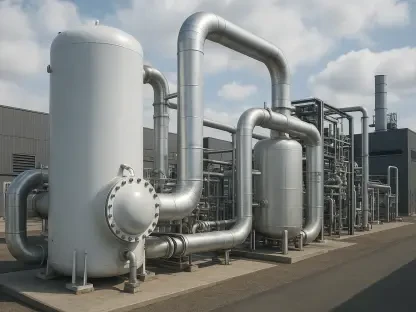
At the surface, the efficacy of an EGS project is defined by its ability to convert moderate temperatures into high-value electricity. Organic Rankine Cycle (ORC) turbines have emerged as the superior solution for this task, utilizing specialized organic fluids that vaporize at much lower temperatures than water. This technical distinction is crucial because it allows plants to generate power from reservoirs that would be too cool for traditional steam turbines. By operating in a closed-loop system, these turbines also eliminate the fluid loss and environmental emissions often associated with older geothermal designs.
The recent standardization of ORC units enables a “factory-style” rollout, where modular turbine components can be manufactured off-site and deployed rapidly. This modularity reduces construction timelines and allows for incremental capacity expansion as more wells are drilled. Furthermore, the integration of advanced control systems ensures that these turbines can modulate their output to meet grid demand, providing a level of flexibility that traditional baseload plants often lack. This technological reliability is the primary driver behind the massive procurement deals currently reshaping the market.
High-Performance Wellbore and Tubular Solutions
The longevity of a geothermal project is entirely dependent on the structural integrity of the wellbore, which must endure extreme thermal cycling and corrosive chemistry. Unlike oil and gas wells, geothermal wells face constant expansion and contraction as temperatures fluctuate between 300 and 500 degrees Fahrenheit. Specialized tubular solutions, such as high-grade steel alloy casings and premium VAM connections, are now the industry standard. These components are designed to maintain a gas-tight seal under immense pressure, preventing reservoir leaks that could jeopardize the entire project’s efficiency.
To ensure long-term stability, the industry has prioritized the verticalization of the supply chain, securing dedicated production lines for these critical materials. This strategic move reduces dependency on general steel markets, which are often volatile. By treating the wellbore as a permanent piece of infrastructure rather than a disposable asset, developers are extending the operational life of geothermal sites to 30 years or more. This durability is a key factor in lowering the levelized cost of energy, making EGS competitive with traditional fossil fuel generation.
Emerging Trends in Geothermal Deployment and Supply Chain Integration
The current landscape of geothermal energy is being reshaped by a move toward domestic manufacturing and supply chain resiliency. Industry leaders are increasingly securing multi-year procurement deals to insulate themselves from global inflationary pressures. This trend is particularly evident in the United States, where federal incentives are driving a push for “Made in America” infrastructure. By locking in capacity for turbines and wellbore steel years in advance, developers are creating a strategic moat that allows them to maintain project timelines even when global logistics are disrupted.
Moreover, the cross-pollination of talent and technology from the oil and gas sector has reached a fever pitch. Geothermal startups are now staffed by petroleum engineers who have spent decades perfecting the art of directional drilling. This technology transfer has significantly reduced the learning curve for EGS, allowing the sector to bypass the slow, incremental progress typical of new energy technologies. The result is a rapid acceleration in drilling speed and a corresponding decrease in the capital required to bring new reservoirs online.
Real-World Applications and Sector-Specific Implementations
Powering Data Centers and Big Tech Infrastructure
The most immediate and lucrative application for scaled EGS lies in the technology sector, specifically for powering high-density data centers. Companies like Meta and Google require “always-on” electricity to maintain their artificial intelligence and cloud computing operations. While wind and solar are carbon-free, their intermittency requires massive battery backups to meet the 24/7 demands of a data center. EGS provides a unique solution by offering a constant stream of clean power that matches the load profile of big tech infrastructure perfectly.
This alignment has led to direct partnerships between geothermal developers and technology giants, creating a new financing model for energy projects. By signing long-term power purchase agreements, tech companies provide the revenue certainty needed for developers to secure low-cost debt. This synergy not only decarbonizes the digital economy but also acts as a catalyst for the broader geothermal industry, proving that EGS can handle the most demanding energy requirements in the modern world.
Integration into the Modern Electric Grid
Beyond industrial hubs, EGS is being integrated into the broader electric grid as a direct replacement for retiring coal and natural gas plants. Because geothermal plants occupy a small physical footprint and offer consistent baseload power, they can often utilize the existing transmission infrastructure of decommissioned fossil fuel sites. This reduces the need for expensive new grid expansions, which are a major bottleneck for other renewable energy sources. In regions like Utah and Nevada, EGS is already proving its ability to stabilize the grid during periods of peak demand.
The ability of EGS to provide “firm” capacity—energy that is guaranteed to be available—makes it an essential tool for grid operators. As more coal plants are phased out, the reliability provided by geothermal energy becomes increasingly valuable. Unlike fossil fuel plants, however, EGS facilities can be located closer to population centers without the health risks associated with air pollution. This geographic flexibility, combined with high reliability, positions geothermal as the logical successor to the traditional centralized power model.
Technical Hurdles and Market Obstacles
Despite the optimism, EGS faces substantial challenges that could slow its deployment. The high upfront cost of drilling remains the primary barrier, as the initial capital required is significantly higher than that for solar or wind farms. While the long-term operational costs are low, the “drilling risk” associated with hitting unexpected geological formations can still deter conservative investors. Furthermore, the industry must navigate a complex web of environmental permitting and regulatory approvals that were originally designed for traditional oil and gas operations.
There are also technical concerns regarding reservoir longevity. If fluid is circulated too quickly, the surrounding rock may cool faster than the earth can reheat it, leading to a decline in power output over time. Managing this thermal balance requires sophisticated reservoir modeling and precise control of injection rates. Additionally, while the technology has been proven in certain rock types, its universality across different geological provinces still requires further validation to truly reach global scale.
Future Outlook and Long-Term Impact
Looking ahead, the trajectory of Enhanced Geothermal Systems points toward a future where “heat as a service” becomes a global commodity. As drilling technologies advance, it will become economically feasible to reach deeper, hotter formations in areas previously thought to be geologically inert. This would effectively democratize geothermal energy, allowing countries without active volcanoes to tap into their own domestic heat resources. The long-term impact of this shift cannot be overstated; it offers a pathway to total energy independence and a permanent solution to the intermittency issues that have long plagued the renewable sector.
The scaling of EGS is not just about adding more megawatts to the grid; it is about fundamentally changing the architecture of global energy security. By providing a carbon-free, baseload alternative to fossil fuels, geothermal energy serves as the missing piece in the net-zero puzzle. As costs continue to fall and technical proficiency rises, the transition to a geothermal-heavy grid appears not only possible but inevitable.
Assessment of Geothermal Industrialization
The industrialization of Enhanced Geothermal Systems demonstrated that the sector successfully moved from the laboratory to the utility scale. By securing massive procurement deals and leveraging the industrial capabilities of global manufacturing partners, the industry effectively de-risked the path to large-scale deployment. The focus shifted toward standardizing the supply chain and refining the mechanical integrity of subsurface assets, which ensured that geothermal energy could compete on price and reliability with traditional power sources. As the global demand for 24/7 carbon-free energy accelerated, the strategic integration of EGS into the modern grid provided a definitive solution for long-term energy sustainability.