
Great-power competition has shifted toward the physical foundations of national security, specifically the power grids and data centers that fuel the modern compute economy. As the United States navigates the complexities of this transition, the intersection of energy production and artificial intelligence has become the definitive arena for strategic endurance. This evolution is driven by the realization that digital supremacy is tethered to the physical reliability of the “electrotech stack,” which includes everything from semiconductors to massive regional substations. Historically, the energy grid was treated as a passive utility, but the demands of the current era require it to be reimagined as a proactive, defensible asset. By integrating advanced security protocols directly into the hardware and software governing the nation’s power, the U.S. can mitigate the risks posed by reliance on global supply chains while fostering an environment where innovation thrives without the looming shadow of systemic vulnerability.
Strategic Frameworks: Securing the Supply Chain
Prioritizing Risks: The Moneyball Approach
The current geopolitical climate necessitates a shift away from binary “all-or-nothing” bans on foreign technology. Instead, a sophisticated “Moneyball” framework is being utilized to rank risks within the energy and AI supply chains. This analytical strategy prioritizes components based on their vulnerability to tampering, the difficulty of detecting embedded malware, and the current capacity for domestic production. By focusing resources on the most critical “smart” devices—such as advanced transformers and network-connected sensors—the government can apply rigorous vetting where it matters most while allowing less sensitive, commodity hardware to be sourced more broadly. This approach ensures that the build-out of necessary infrastructure is not stalled by overreaching regulations that treat every bolt and wire as a high-level security threat. It allows for a rapid scaling of the grid that remains fundamentally secure against sophisticated external actors.
This risk-based prioritization also addresses the economic reality that total domestic self-sufficiency is a long-term goal rather than an immediate possibility. By identifying which components are most susceptible to cyber interference, policymakers can direct federal subsidies and research grants toward the most sensitive areas of the electrotech stack. For instance, while high-voltage switchgear might require strictly domestic or allied manufacturing due to its central role in grid stability, basic framing materials can be managed through traditional global procurement. This selective focus prevents the dilution of security efforts and ensures that the technical expertise of the Department of Energy and national laboratories is concentrated on the highest-impact vulnerabilities. Furthermore, this strategy encourages the private sector to adopt similar risk-modeling techniques, aligning commercial interests with national security imperatives to create a more resilient industrial base.
Categorizing Technology: Policy Tiers for Defense
Under a nuanced security framework, technology is increasingly sorted into three distinct policy tiers: tight domestic control, trusted-ally sourcing, and managed global procurement. The first tier involves the “crown jewels” of the energy and AI sectors, such as proprietary AI chips and the core logic controllers for the power grid, which must be designed and manufactured within the United States. This ensures that the most sensitive logic and data pathways remain beyond the reach of foreign intelligence services. The second tier focuses on building deep, integrated supply chains with “friend-shoring” partners in Europe and the Indo-Pacific. By sharing standards and manufacturing processes with trusted allies, the U.S. expands its industrial capacity without sacrificing the integrity of its infrastructure. This collaborative approach creates a unified technical front, making it harder for adversaries to find weak links in the global chain.
The final tier, managed global procurement, applies to non-critical components that pose minimal risk of sabotage or espionage. By maintaining a clear distinction between these categories, the U.S. can avoid the pitfalls of protectionism while maintaining an ironclad grip on the components that provide functional control over national systems. This tiered logic is borrowed from established defense-industry protocols, applying the same rigor to the power grid that has historically been reserved for fighter jets. Implementing this system requires a high degree of transparency from vendors, who must provide detailed bills of materials for their hardware. Such transparency not only aids in immediate security vetting but also creates a long-term record of the components embedded in the nation’s infrastructure. This foresight allows for more efficient updates and targeted replacements if a specific vulnerability is discovered, ensuring that the grid remains an adaptable and ever-evolving platform.
Resilience and Demand: The New Electrotech Stack
Implementing the Sun Shield: Software-Defined Defense
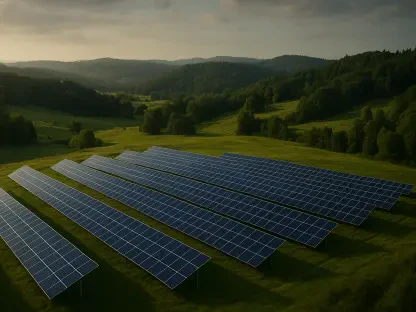
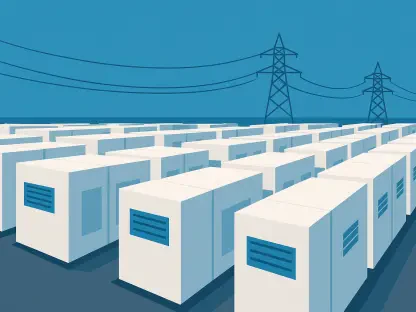
The ongoing transition to clean energy provided a unique window to replace aging legacy systems with modern, “software-defined” infrastructure. The “Sun Shield” concept was central to this effort, advocating for the integration of security directly into the software that managed renewable energy generation and battery storage from the start. Unlike the older grid, which relied on mechanical systems and “air-gapped” security that had since become obsolete, a software-defined grid was monitored and updated in real-time to respond to cyber threats. This approach moved away from the traditional model of “bolting on” security as an afterthought and instead made defense an intrinsic property of the system. By using advanced encryption and blockchain-based verification for energy transactions between nodes, the Sun Shield initiative created a grid that was inherently resistant to unauthorized access, ensuring that localized disruptions did not cascade.
This modernization also involved the deployment of “smart” microgrids that could operate independently of the main power system during a crisis. These islands of resilience were particularly important for sensitive sites like military bases, hospitals, and major data centers, which required uninterrupted power even if the broader grid was under attack. The Sun Shield framework emphasized the use of domestic software stacks for these systems, ensuring that the “brain” of the grid was not susceptible to remote “kill switches” embedded by foreign manufacturers. As the U.S. continued to decommission coal and gas plants in favor of wind, solar, and nuclear power, the physical decentralization of energy production actually became a security advantage. Instead of a few massive targets, the grid became a network of thousands of smaller, interconnected nodes. This structural change made the entire energy ecosystem far more difficult for any adversary to disable or manipulate effectively.
Managing Growth: AI Agent Systems and Power
The rapid emergence of agentic AI systems—sophisticated networks of autonomous agents capable of performing complex multi-step tasks—drastically shifted the energy landscape. Unlike earlier generative models that required bursts of power for training, agentic systems demanded constant, high-level compute capacity to facilitate continuous interaction across the economy. This constant load created a new baseline for electrical demand, requiring the grid to handle sustained, high-density power draws that were previously rare. As these AI agents became more deeply integrated into everything from logistics management to real-time medical diagnostics, the reliability of the power they consumed became a matter of national survival. The shift toward decentralized AI execution, where processing happened both in the cloud and on local devices, further complicated the task of ensuring every node remained powered and secure.
To maintain this momentum, the federal government implemented a series of actionable mandates that solidified the security of the electrotech stack. Strategic reserves of critical grid components were established to mitigate any sudden supply chain disruptions, and tax credits were successfully redirected toward companies that achieved high levels of hardware transparency. These steps provided a clear roadmap for private industry, incentivizing the adoption of secure-by-design principles across all levels of infrastructure development. The focus remained on continuous auditing and the rapid replacement of any legacy systems that did not meet the new, rigorous standards for cyber resilience. By prioritizing these structural changes, the United States successfully turned its energy modernization into a cornerstone of its national defense strategy, providing a stable and secure platform for the continued evolution of the artificial intelligence economy.