
The rapid expansion of utility-scale battery energy storage systems has fundamentally shifted the global energy landscape, moving these assets from speculative pilot projects to the very bedrock of modern grid infrastructure. As these massive electrochemical installations proliferate across various international markets from 2026 to 2030, the primary hurdle for developers has evolved from proving technical feasibility to ensuring long-term financial bankability. Bankability is no longer just a measure of engineering reliability; it has become a comprehensive assessment of how a project isolates its balance sheet from the inherent volatility of battery technologies and market fluctuations. Lenders and institutional investors now demand a level of certainty that only a sophisticated, multilayered risk-transfer framework can provide. Without insurance acting as a robust safety net, the capital required to meet ambitious global decarbonization goals would remain locked away, hindered by perceived risks in hardware longevity, fire safety, and revenue stability. The maturation of the storage sector is therefore inextricably linked to the sophistication of the insurance products that back it, transforming what was once a fringe technology into a reliable, predictable asset class that can support the heavy weight of global energy demand for decades to come.
The Financial Impact of Risk Transfer in the Storage Market
Economic Viability: The Influence of Revenue Models
The current trajectory of the energy storage market is defined by a rapid acceleration in deployment, with capacity auctions and grid-balancing requirements driving developers to commission projects at an unprecedented pace. This environment, often described as a “sprint mode,” necessitates a deep understanding of the unique hazards associated with high-density lithium-ion and flow battery installations. Unlike traditional thermal power plants, which possess well-understood mechanical failure modes, battery systems are subject to non-linear degradation and the complex interplay of chemical and electrical stressors. A single failure in a localized battery module can escalate into a catastrophic site-wide loss within hours if not properly managed. Consequently, insurance is no longer a peripheral operational cost but a core strategic pillar that enables developers to secure the high-leverage financing required for utility-scale growth. By transferring the tail-end risks of catastrophic failure or performance shortfall to the insurance market, developers can offer lenders the level of fiscal security needed to approve lower interest rates and more flexible debt-service terms.
Building on the foundation of technical risk management, the underlying revenue model of a project plays a decisive role in determining its overall bankability and the specific insurance products required. Projects that operate under long-term tolling agreements or capacity contracts typically enjoy a more straightforward path to financing because their cash flows are predictable and the counterparty risk is well-defined. In these scenarios, insurance acts as a secondary layer of protection that ensures the physical asset remains operational to meet its contractual obligations. However, the rise of merchant projects, which rely on energy arbitrage and ancillary service markets, introduces a much higher degree of volatility that can unsettle traditional lenders. For these merchant assets, insurance products such as revenue caps or floor guarantees are becoming essential tools to bridge the gap between market uncertainty and lender risk appetite. By smoothing out the peaks and valleys of market-based earnings, these specialized insurance structures allow projects to achieve the debt-service coverage ratios necessary to attract institutional capital that would otherwise avoid such speculative revenue streams.
Technical Warranties: Bridging the Confidence Gap
The long-term success of an energy storage project is heavily dependent on the reliability of the hardware and the financial strength of the original equipment manufacturers. In a market where technology evolves every few months and new players frequently emerge, the risk of manufacturer insolvency or the discovery of serial design defects is a significant concern for any long-term investor. Standard product warranties often fall short of providing the comprehensive protection required for twenty-year project lifecycles, as they may only cover repair costs without accounting for the lost revenue during downtime. This is where independent performance insurance and warranty backstop policies become invaluable, as they provide a direct line of credit to the project even if the manufacturer is unable or unwilling to honor its obligations. This layer of security is critical for projects utilizing newer battery chemistries or innovative cooling technologies that do not yet have decades of proven field data. By wrapping these technical uncertainties in an insurance policy, developers can effectively “de-risk” the technology, making it palatable for conservative commercial banks.
Furthermore, the integration of performance-based insurance allows for a more nuanced approach to asset management that aligns the interests of the developer, the lender, and the insurer. Modern insurance providers are increasingly using granular data from battery management systems to monitor state-of-health and state-of-charge in real time, allowing them to offer more competitive premiums to operators who demonstrate superior maintenance practices. This data-driven underwriting approach encourages the adoption of advanced monitoring platforms that can predict potential failures before they occur, thereby reducing the likelihood of a claim. When a project is backed by a reputable insurer who has conducted deep due diligence on the specific battery cells and integration software, it serves as a powerful signal to the capital markets that the project is technically sound. This signal is often the deciding factor in whether a project receives a “bankable” rating from credit agencies, directly impacting the cost of capital and the overall internal rate of return for equity investors.
Lifecycle Management and Technical Safeguards
Construction and Commissioning: Mitigating Early-Stage Vulnerabilities
Managing the risk profile of a battery energy storage system requires a holistic approach that covers the entire lifecycle, starting long before the asset is connected to the high-voltage grid. During the construction phase, a project is exposed to a wide array of existential threats, including marine transit damage, supply chain bottlenecks, and onsite installation errors. Delay-in-Start-Up insurance is a vital component of the pre-operational phase, providing a financial cushion that covers fixed costs and debt-service obligations if the project completion is postponed due to a covered physical loss. This is especially relevant in 2026, where the global logistics network remains complex and the demand for specialized components often outstrips supply. Without this coverage, a significant transit incident involving a shipment of battery modules could leave a project insolvent before it ever achieves commercial operation. By securing comprehensive cargo and construction-all-risks coverage, developers ensure that their capital remains protected during the most vulnerable window of the project’s development timeline.
The transition from the construction phase to the operational phase represents one of the most critical junctures for any energy storage installation. This period involves the complex integration of energy management software, power conversion systems, and grid-interface protocols, all of which must function in perfect harmony to ensure safe operation. Many projects experience significant friction during this commissioning stage, as unforeseen software bugs or hardware incompatibilities can lead to accidental trips or even physical damage to the battery cells. It is essential that insurance policies are structured with seamless transition clauses that prevent coverage gaps when the project moves from a construction-focused policy to an operational one. A lack of continuity during this handover can lead to disputes between different insurers regarding the exact timing and cause of a failure, potentially leaving the developer with no recourse during a major loss event. Ensuring that the insurance framework is synchronized with the technical handover milestones is a prerequisite for maintaining the continuous protection that lenders demand throughout the project’s life.
Operational Stability: Protecting Long-Term Cash Flows
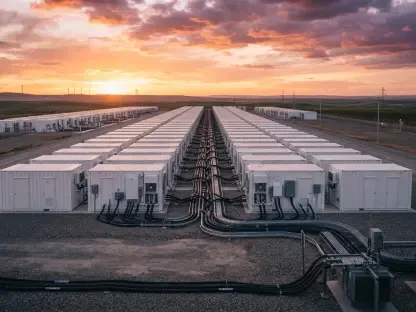
Once an energy storage system enters full-scale commercial operation, the focus of risk management shifts toward maintaining a steady and predictable cash flow over several decades. Operational All Risks policies form the primary line of defense against physical damage from fire, lightning, or equipment failure, while Business Interruption coverage protects against the resulting loss of income. In the context of battery storage, the risk of thermal runaway remains the most significant technical challenge, as a fire in one container can potentially spread to adjacent units if the site layout and fire suppression systems are inadequate. Insurers now play a proactive role in the design process, requiring developers to adhere to rigorous safety standards such as NFPA 855 and to implement advanced early-warning gas detection systems. By complying with these stringent requirements, developers not only reduce their insurance premiums but also enhance the intrinsic value and safety of the asset, making it a more attractive prospect for long-term ownership by infrastructure funds and pension groups.
Beyond the physical risks, the bankability of a project is also tied to its ability to manage end-of-life liabilities and environmental decommissioning costs. As regional regulators implement stricter rules regarding the recycling and disposal of lithium-ion batteries, the projected costs of dismantling a site can become a significant drag on the project’s terminal value. To address this, specialized environmental insurance and financial assurance bonds are increasingly being utilized to guarantee that funds will be available for responsible decommissioning at the end of the project’s useful life. This long-term planning perspective is essential for securing the trust of local communities and regulatory bodies, ensuring that the project remains a “good neighbor” throughout its existence. By accounting for these future liabilities through insurance-backed mechanisms, developers can provide a clear and transparent exit strategy for investors, which is a critical component of the overall bankability equation in the modern energy landscape.
Strategic Resolution of Coverage Gaps and Modern Threats
Modern Threats: Addressing Cyber Risks and Thermal Runaway
Achieving true bankability in 2026 requires an aggressive strategy to identify and close the specific coverage gaps that often plague large-scale storage projects. Standard industrial property policies are frequently ill-equipped to handle the high concentration of value found in a modern battery site, where millions of dollars in equipment are housed in a single container. If a policy has miscalibrated sublimits or restrictive exclusions for certain types of electrical breakdowns, a project could find itself underinsured in the event of a significant incident. Moreover, the dynamic nature of battery revenue—where a project might switch between frequency response, peak shaving, and wholesale trading within a single day—requires a more flexible approach to business interruption modeling. Traditional models based on fixed daily rates often fail to capture the true economic loss experienced during high-volatility events, making it necessary for developers to work with specialized brokers who understand the nuances of the energy storage market.
The emergence of sophisticated cyber threats has added a new layer of complexity to the risk landscape for grid-scale storage assets. As these systems become increasingly reliant on cloud-based optimization platforms and remote control interfaces, they become potential targets for malicious actors seeking to disrupt the energy grid or demand ransom. A digital breach could not only result in the loss of operational data but could also be used to override safety protocols, potentially leading to physical damage such as a commanded thermal event. To mitigate this, developers are now integrating comprehensive cyber insurance into their overall risk-management framework, ensuring that both the digital and physical consequences of a hack are covered. This integrated approach is a key requirement for financial institutions that are increasingly wary of the systemic risks posed by the digitalization of energy infrastructure. By demonstrating a robust cyber-defense posture backed by insurance, operators can secure the confidence of stakeholders who are focused on the long-term resilience of the project.
Underwriting Innovation: Data-Driven Performance Guarantees
The evolution of the energy storage insurance market has been characterized by a move away from generic policies toward highly customized, data-driven solutions that reward technical excellence. Insurers are no longer passive observers of risk; they have become active participants in the development process, utilizing advanced battery intelligence software to gain deep insights into the health and performance of the assets they cover. By leveraging machine learning algorithms to analyze cell-level data, insurers can offer tailored performance guarantees that backstop manufacturer warranties with high precision. This level of granular oversight allows for the identification of potential serial defects across a fleet of projects, enabling proactive interventions before a widespread failure occurs. For a developer, this means that insurance is not just a safety net for when things go wrong, but a tool for continuous improvement that enhances the reliability and efficiency of the entire portfolio.
This shift toward data-driven underwriting has also enabled the creation of new financial instruments that provide a more direct link between operational performance and financial returns. For instance, performance insurance can be structured to pay out if a battery’s degradation rate exceeds the manufacturer’s predicted curve, thereby protecting the project’s ability to participate in high-demand market events in later years. This type of coverage is particularly attractive to equity investors who are concerned about the “tail risk” of their investment losing value as the batteries age. By integrating insurance design into the early stages of project planning and aligning it with the specific requirements of financing partners, stakeholders can build a foundation of trust that is essential for the continued expansion of the storage sector. Treating insurance as a strategic asset rather than a commodity is the hallmark of a mature, bankable project that is ready to thrive in the competitive energy markets of the late 2020s.
Toward a Resilient Energy Infrastructure
The journey of the battery energy storage industry toward universal bankability was marked by a fundamental transformation in how risk is quantified and managed. The sector successfully navigated the transition from pilot phases to utility-scale dominance by recognizing that technical innovation must be paired with financial security to attract the necessary billions in global capital. Insurance providers played a pivotal role in this evolution, moving beyond standard coverage to offer sophisticated performance guarantees, revenue stabilizers, and cyber-risk protections that met the high standards of institutional lenders. By integrating these risk-transfer mechanisms into the core of project architecture, the industry addressed the primary concerns of technology obsolescence and market volatility. This collaborative approach between developers, manufacturers, and insurers created a more transparent and stable environment for investment, which ultimately lowered the cost of capital and accelerated the global energy transition.
The establishment of a mature insurance market for energy storage provided a clear roadmap for future infrastructure developments. Developers who prioritized early engagement with insurers and adopted data-driven monitoring systems found themselves at a significant competitive advantage, securing more favorable financing terms and higher equity returns. As the grid continued to integrate higher percentages of renewable energy, the resilience of the storage fleet became a matter of national security, and the insurance industry’s role in verifying that resilience was indispensable. The lessons learned during this period of rapid expansion emphasized that bankability was not a static destination but a continuous process of risk assessment and mitigation. Looking ahead, the focus remained on refining these insurance structures to account for even more complex market dynamics and emerging technologies, ensuring that energy storage remained the reliable heartbeat of the modern power grid.