
While the flashing lights of a modern control room might suggest a futuristic level of autonomy, the electric power grid remains a fragile marriage between silicon intelligence and iron hardware that requires more than a simple code update to survive. This complex network, often described as the largest machine ever built, is currently facing a transformative period where the push for decarbonization meets the reality of aging infrastructure. The integration of Artificial Intelligence (AI) is frequently presented as the silver bullet for these challenges, yet the transition is far from a simple software deployment. Success in this endeavor demands a sophisticated understanding of how digital tools can augment human capability without ignoring the physical constraints of the legacy systems they are meant to manage.
The importance of this technological shift cannot be overstated, as the stability of the power grid is the invisible foundation of modern civilization. With the rapid adoption of electric vehicles and the increasing frequency of extreme weather events, the margins for error in grid management have narrowed significantly. This article explores the nuanced reality of AI implementation in the utility sector, moving beyond the hype to examine the structural, human, and technical barriers that must be overcome. By looking at successful case studies and the necessity of human-centric oversight, a clearer picture emerges of how AI can truly serve as a cornerstone of a resilient and sustainable energy future.
Moving Beyond the Seductive Myth of the “Plug-and-Play” Solution
The current dialogue surrounding utility modernization often suggests that a simple algorithm can instantly eradicate blackouts and stabilize aging infrastructure. This narrative, while attractive to investors and the public alike, overlooks the messy reality of industrial engineering. Sean Burri, an infrastructure engineer who has spent years navigating the intersection of traditional mechanics and digital innovation, argues that the grid is not a smartphone that can be “patched” into perfection. Instead, it is a living entity where every digital intervention must be calibrated against decades of physical assets that operate on the fundamental laws of thermodynamics and electromagnetism.
True reliability does not stem from a “miracle” algorithm, but from a fundamental reconceptualization of Artificial Intelligence as an operational partner rather than a total replacement for human expertise. When executives treat AI as a standalone solution, they risk creating a disconnect between the predictive power of the software and the reactive capabilities of the field crews. The objective should not be to build a system that works without people, but to build a system that empowers people with the right information at the right time. This requires a shift from viewing AI as a passive tool to viewing it as an active participant in the decision-making process, capable of processing millions of data points that would overwhelm even the most experienced human operator.
Furthermore, the “plug-and-play” mindset often ignores the custom nature of different power networks. A model trained on the sunny, flat terrain of a desert solar farm will not necessarily perform with the same accuracy in a mountainous region prone to ice storms and high winds. Each utility has its own unique topology and historical performance data that must be carefully fed into AI systems to ensure the outputs are relevant. Neglecting this step leads to “black box” solutions that provide answers without context, ultimately eroding the trust that is necessary for operators to follow AI-generated recommendations during a crisis.
The Growing Gap Between Legacy Infrastructure and Modern Energy Demands
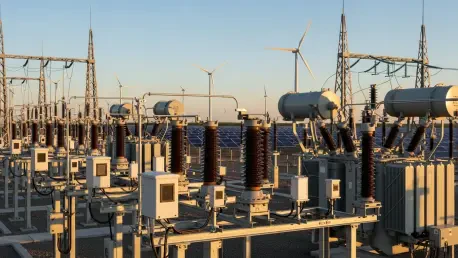
The urgency of this topic is underscored by a global power industry struggling under the weight of decades-old supervisory control systems. These aging platforms were designed for a world where power flowed in one direction—from a central power plant to a predictable set of consumers. They frequently lack the processing power and the high-frequency communication protocols necessary to handle the volatile, bidirectional data streams created by modern energy management. As the transition to renewable energy sources like wind and solar accelerates, the disconnect between legacy hardware and modern demand creates a critical vulnerability that affects regulatory standing, financial health, and public safety.
This technological gap is particularly evident during peak load events where the margin between supply and demand is razor-thin. Traditional supervisory systems often provide a delayed view of the grid, showing what happened seconds or even minutes ago rather than what is happening in the current millisecond. In an era where renewable energy can fluctuate as quickly as a cloud passes over a solar array, this lag is unacceptable. Without the ability to integrate real-time data into a coherent operational picture, utilities are forced to rely on conservative estimates and manual interventions, which increases the likelihood of localized failures or inefficient power distribution.
Moreover, the financial stakes for utilities are rising as regulators increasingly tie financial rewards to reliability metrics. A utility that cannot accurately forecast its load or manage its assets effectively faces significant penalties and public backlash. This environment creates a paradox where the very organizations that most need to innovate are often the ones most constrained by the capital costs of replacing their legacy equipment. Bridging this gap requires a phased approach where AI is used to maximize the life of existing assets while the foundational hardware is systematically upgraded to meet the requirements of a high-frequency, data-driven world.
Overcoming the Structural Barriers to Grid Transformation
Scaling AI from small-scale pilots to enterprise-wide deployment requires addressing three primary obstacles that have historically hampered utility innovation. First, utilities must tackle “technical debt” by modernizing foundational hardware that was never designed for real-time analytics. This involves upgrading sensors, transformers, and communication relays to ensure that the data being fed into AI models is both accurate and timely. Without this physical layer of modernization, the most advanced algorithms are essentially trying to navigate a high-speed highway using a map from the nineteenth century.
Second, the industry must dismantle fragmented data governance models where maintenance and operational data exist in isolated, incompatible silos. In many organizations, the department responsible for tree trimming and line maintenance rarely shares data with the team managing real-time load balancing. This lack of communication prevents AI from seeing the “big picture”—for instance, recognizing that a specific circuit is at risk of failure because of both high current and unaddressed vegetation growth. Creating a unified data taxonomy is an essential step in allowing AI to provide the holistic insights that lead to genuine improvements in reliability.
Finally, organizations must address the “human factor,” overcoming workforce skepticism through transparent change management that frames AI as a tool for empowerment rather than a threat to job security. Many veteran linemen and control room operators have spent decades developing an intuitive sense of how their specific part of the grid behaves. Introducing an algorithm that suggests a different course of action can lead to natural resistance. Success requires involving these subject matter experts in the development of the AI models, ensuring that their deep institutional knowledge is integrated into the digital tools they will ultimately be expected to use.
Empirical Success and the Move Toward Self-Healing Networks
The benefits of integrated AI are already visible in verifiable case studies that demonstrate the technology’s potential to revolutionize grid stability. For instance, Turkish utilities have successfully implemented Generative Adversarial Networks (GANs) to reduce cascading failures through precise demand forecasting. By creating “digital twins” of the grid and running millions of simulated failures, these utilities have been able to identify the most critical nodes in their network and reinforce them before a real-world disaster occurs. This proactive approach has led to a measurable decrease in the duration and frequency of outages in some of the most challenging operating environments.
Machine learning models have also consistently outperformed traditional statistical methods in predicting the duration of outages and the exact nature of the required repairs. By analyzing historical weather patterns, equipment age, and terrain, these models can tell a dispatcher exactly which truck and which set of tools to send to a specific location before the first customer even calls to report a problem. This level of precision allows for more efficient crew prioritization, ensuring that critical infrastructure like hospitals and water treatment plants are restored as quickly as possible. The data shows that even small improvements in response time can prevent a minor fault from spiraling into a regional blackout.
Looking forward, the horizon of grid technology involves decentralized AI agents and microgrids that communicate via peer-to-peer networks to create “self-healing” systems. These systems are designed to detect a fault on the line and automatically reroute power around the damaged section in a matter of milliseconds. This near-instantaneous recovery is the ultimate goal of grid modernization, as it effectively removes the human response time from the equation for the most common types of failures. In such a scenario, the AI acts as a localized immune system, identifying and isolating “infections” in the power flow before they can spread to the rest of the body of the grid.
Lessons from Global Leaders and the Importance of Human Oversight
Credibility in AI adoption is built on “Explainable AI” (XAI), ensuring that when a model predicts a restoration time or a potential equipment failure, human engineers can verify the logic behind the number. Expert consensus emphasizes that human intervention is a safeguard, not a limitation, particularly regarding cybersecurity. As grids become more automated, they also become more attractive targets for sophisticated cyberattacks. Having a human operator who understands the system’s “baseline” behavior allows for a critical check against anomalous AI commands that might be the result of a malicious intrusion or a data error.
Furthermore, the prevention of “model-drift” requires constant vigilance from human data scientists. Over time, the environment in which a grid operates changes—new housing developments are built, climate patterns shift, and new types of industrial loads are added. If an AI model is not regularly retrained and validated against these new realities, its accuracy will slowly degrade. This degradation can lead to overconfidence in the system’s reliability, which is often more dangerous than having no AI at all. Human oversight ensures that the digital models remain tethered to the evolving physical world they are meant to represent.
The Nordic model—specifically in Denmark and Norway—demonstrates how aligning national data standards with industrial strategy leads to superior grid stability compared to the fragmented regulatory landscape currently found in the United States. These nations have treated their power data as a national asset, requiring utilities to share non-proprietary information to build more robust models that benefit the entire population. This collaborative approach has allowed them to integrate massive amounts of offshore wind power while maintaining some of the highest reliability ratings in the world. It serves as a powerful reminder that the most effective technological solutions are often those backed by coherent policy and a shared vision of the public good.
A Strategic Framework for Implementing AI as an Operational Partner
To successfully integrate AI, utilities should follow a structured roadmap centered on data interoperability and collaborative ecosystems. This involves establishing unified data taxonomies that allow information to flow seamlessly across departments and even between competing utilities to boost collective resilience. When utilities share anonymized data regarding equipment failure rates or weather impacts, they create a larger, more diverse dataset that makes every participant’s AI model more accurate. In an interconnected world, the failure of one utility’s grid can often put strain on its neighbors, making collaboration a matter of mutual survival.
Additionally, a sustainable implementation must include a rigorous accounting of AI’s own environmental footprint. The data centers required to process the massive amounts of information generated by a smart grid are themselves major consumers of electricity. If the energy consumed by the AI hardware outweighs the carbon-reduction benefits of improved grid efficiency, the technology has failed in its primary mission of supporting a greener future. Forward-thinking utilities are now looking at ways to power their data centers with their own excess renewable energy, creating a circular system where the grid’s intelligence is fueled by the very clean power it helps to manage.
The final component of this framework is a commitment to continuous learning and iterative deployment. Rather than attempting a massive, all-at-once overhaul, the most successful utilities have started with targeted applications—such as predictive maintenance for transformers—and expanded from there. This allows for the internal workforce to gain confidence in the technology and for the organization to refine its data collection processes. By treating AI as an evolving operational partner, the utility industry can navigate the complexities of the modern energy landscape and ensure that the lights stay on for generations to come.
The transition toward an AI-enhanced power grid was characterized by a fundamental shift in how engineers and policymakers viewed the relationship between software and hardware. Industry leaders eventually recognized that the most sophisticated algorithms were only as effective as the data governance and human expertise supporting them. By prioritizing transparency and “Explainable AI,” utilities successfully built a bridge between legacy systems and the high-frequency demands of a renewable-heavy energy market. This collaborative approach transformed the grid from a reactive network into a proactive, self-healing system that significantly reduced the frequency of major outages. Ultimately, the integration of these digital tools ensured that the pursuit of a sustainable energy future remained grounded in the practical necessity of absolute reliability.