
The relentless expansion of artificial intelligence has fundamentally altered the power requirements of the digital economy, turning the world’s largest technology firms into the primary financiers of revolutionary energy infrastructure. These hyperscalers, including giants such as Google, Microsoft, and Amazon, are moving beyond their traditional roles as mere consumers of electricity to become central architects of a new carbon-free grid. As the demand for data processing reaches unprecedented levels, the limits of intermittent renewable sources like wind and solar have become increasingly apparent. This analysis explores how massive corporate capital is now targeting the commercialization of clean firm energy, effectively subsidizing the technical learning curve for the entire global economy. By assuming the financial risks of experimental hardware, these companies are positioning themselves as the new power players in a rapidly evolving energy landscape.
Historical Context: From Early Adopters to Market Architects
The current shift in energy procurement is best understood by examining the evolution of corporate sustainability over the past decade. Initially, technology companies focused on maturing the solar and wind industries through power purchase agreements, which played a major role in driving down costs for these technologies. However, the energy landscape changed as the rise of generative AI demanded 24/7 “always-on” power that weather-dependent renewables could not provide alone. Historically, the burden of funding experimental energy projects fell on governments or utility ratepayers, often leading to slow adoption due to political friction. Today, the foundational concept has changed, with Big Tech assuming the financial risk once held by the public to de-risk the next wave of energy hardware.
Investment Structures: The Mechanics of Modern Energy Investment
Modern energy investment is no longer just about buying credits; it is about building the physical assets that ensure long-term grid stability. Technology firms are leveraging their massive balance sheets to create specialized financial instruments that allow for the deployment of technologies that were previously considered too expensive for traditional utilities. These investment models are designed to bridge the gap between pilot projects and commercial scale, ensuring that the necessary infrastructure is built without compromising the financial health of the regional grid. By focusing on firm capacity, these companies are addressing the core challenge of the energy transition: maintaining reliability while pursuing aggressive decarbonization targets.
Financial Safeguards: De-Risking Innovation Through Clean Transition Tariffs
A critical aspect of this revolution is the emergence of innovative Clean Transition Tariffs. These bilateral arrangements between large-scale buyers and utilities allow companies like Google and Microsoft to fund “first-of-a-kind” projects without passing high initial costs onto the general public. For instance, the recent partnership to restart a nuclear reactor at Three Mile Island demonstrates a willingness to pay a premium for reliable, carbon-free baseload power. By absorbing the technical and financial risks of these early deployments, tech companies are effectively lowering the “green premium.” This makes it significantly cheaper for subsequent industries to adopt these technologies once the initial hurdles are cleared.
Reliable Baselines: The Pivot to Clean Firm Power and Long-Duration Storage
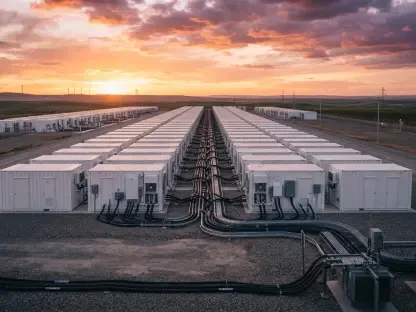
The discussion around clean energy is evolving from simple decarbonization to the pursuit of “clean firm” power. Unlike solar panels that only work during the day, technologies such as advanced geothermal and small modular reactors provide a steady, baseload supply of electricity. Collaboration in Nevada utilizing advanced geothermal techniques borrowed from the oil and gas industry serves as a prime example of this trend. Furthermore, the integration of long-duration battery storage, such as major systems planned in Minnesota, addresses the intermittency of the grid. These projects serve as real-world case studies proving that massive energy loads can be balanced with carbon-free capacity when the right financial structures are in place.
Grid Integration: Regulatory Complexity and the Evolution of Utility Partnerships
While the benefits are clear, the shift toward corporate-funded energy brings regional complexities and regulatory challenges. Different jurisdictions have varying rules on how large-load customers interact with the grid, which can create friction if not managed correctly. A common misconception is that massive data centers inevitably strain the local infrastructure, but the data suggests otherwise when costs are allocated exclusively to the participating corporate buyer. By providing long-term revenue certainty to utilities, Big Tech enables the construction of infrastructure that might otherwise be too risky or expensive for a utility to justify to its regulators. These partnerships allow for the modernization of the grid in a way that benefits all users.
Strategic Forecasts: Anticipating the Next Decade of Industrial Energy Loads
Looking ahead, the energy industry is poised for a significant transformation as small modular reactors and advanced geothermal move from pilot programs to commercial scale. There is a likely shift toward regulatory frameworks that favor “large-load tariffs,” treating massive data centers as partners in grid stability rather than just consumers. Success in these early collaborations will set a blueprint for other energy-intensive sectors, such as green hydrogen production and heavy manufacturing. As these technologies mature, the economic barrier to entry will drop, potentially triggering a second price collapse similar to what the world experienced with solar and wind power over previous cycles.
Tactical Approaches: Navigating the Intersection of Technology and Infrastructure
The major takeaway for businesses and policymakers is that the transition to a carbon-free grid requires a sophisticated approach to cost and risk management. For companies looking to follow in the footsteps of hyperscalers, the key lies in three principles: ensuring costs are isolated to the beneficiary, accurately valuing the capacity of the energy provided, and securing long-term revenue streams to attract capital. Best practices now involve moving beyond simple offsets and toward direct investment in “firm” technology. Professionals in the energy sector should focus on creating flexible tariff structures that allow for such private-public partnerships, ensuring that digital growth does not come at the expense of grid reliability.
Enduring Impacts: Building a Carbon-Free Legacy Beyond the Data Center
The influence of Big Tech on the energy sector represented a profound shift in how global infrastructure was built and financed. By leveraging their need for massive, reliable power, companies like Google and Microsoft provided the necessary capital to commercialize the next generation of clean energy. This trend remained significant because it solved the primary bottleneck of the energy transition: the gap between experimental technology and affordable, grid-scale deployment. Ultimately, the clean energy revolution was not funded by the taxpayer alone, but by a strategic partnership between the architects of the digital age and the providers of the world’s power. The infrastructure built for artificial intelligence became the foundation of a carbon-free future for everyone.