
A wind-swept plateau above Bell County’s mine cuts now frames a different kind of shift, where survey stakes and hydrology gear mark the outlines of a power plant that stores energy not in fuel piles, but in elevation and time. Locals who once followed coal seams now trace new contours: an upper reservoir here, a penstock there, and a control room that will pulse to the rhythm of Kentucky’s daily peaks.
The plan is simple to describe and ambitious to deliver. The Lewis Ridge Pumped Storage Project would move water uphill when electricity is cheap and plentiful, then send it back through turbines during expensive, high-demand hours. If built, it would give Kentucky a first-of-its-kind, 266‑megawatt “water battery” with about eight hours of dispatchable output—enough to steady the grid when weather whipsaws load and renewable output.
The Stakes: Why This Story Matters
The stakes run beyond one site. Kentucky’s coal fleet faces retirements and rising maintenance costs just as peak demand climbs and storms grow harsher. Grid operators keep asking for firm, flexible capacity that answers in minutes, not hours, and holds for an evening peak, not a single gust of wind. Long-duration storage fills that gap without locking ratepayers into fuel volatility.
Moreover, pumped storage has proved its mettle. It accounts for the vast majority of utility-scale storage in the United States, typically posting round-trip efficiencies around 70 to 80 percent and lifespans measured in decades. In a state defined by affordable power, the ability to buy low, sell high, and hedge price swings offers a durable shield for households and factories alike.
Inside the Project: How the “Water Battery” Works
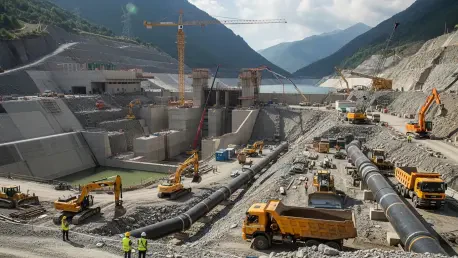
Lewis Ridge would pair an upper and lower reservoir linked by tunnels, reversible pump-turbines, and digital controls that cue operations to market signals and system needs. During off-peak hours, inexpensive power pushes water uphill. When the grid strains, the flow reverses, and the plant ramps quickly to meet demand, provide spinning reserve, or even black start support after an outage.
The site choice carries practical and symbolic weight. Built on previously disturbed mining land in Bell County, the project repurposes terrain already shaped by energy extraction, trimming earthwork while signaling a turn from coal seams to hydropower shafts. That transition also concentrates investment where industrial know-how already lives, from heavy equipment handling to 24/7 operations.
Backers include Louisville Gas and Electric and Kentucky Utilities—subsidiaries of PPL Corporation—partnering with Rye Development. The estimated $1.3 billion investment follows a public–private path: a preliminary FERC permit arrived in 2022, final licensing is in progress, and utility due diligence informs any filing to the Kentucky Public Service Commission. With approvals in hand, construction could start as early as 2027, aiming for commercial service around 2031.
People, Place, and Payoffs: What It Means for Bell County
For Bell County, the economic story begins with construction. Years of tunneling, concrete work, grid interconnections, and controls installation would draw skilled trades and open supplier lanes, with a long-lived asset adding to the local tax base once online. That durable footprint differs from the flash-and-fade cycle of many projects, anchoring a workforce for decades.
Workforce transition sits at the center. Mining expertise maps cleanly onto hydro operations—think geotechnical awareness, heavy lifts, maintenance culture, and disciplined safety. With targeted training, a miner could shift to a plant technician, and an equipment operator could become a rigger or electrician. The spillover extends to small businesses that service fleets, lodging, and materials.
On the grid, the use cases stack up. The plant can shave peaks on sweltering afternoons, smooth solar ramps at dusk, and backstop winter mornings when heaters surge. It also can arbitrage prices between overnight valleys and daytime crests, reinforcing rate stability while enabling more renewable energy to connect without compromising reliability.
Lessons From Elsewhere: Context for a First
Lewis Ridge would arrive as one of the first new U.S. pumped storage projects in more than three decades, joining a lineage that includes Bath County in Virginia and Ludington on Lake Michigan—giants credited with keeping lights on through hurricanes, polar blasts, and everything in between. Those plants showed how fast ramping and deep endurance can live together on one switchboard.
Nationally, developers are dusting off maps for similar builds in the Pacific Northwest and beyond, a response to the widening gap between short-duration batteries and the multi-hour needs of a modern grid. This emerging cohort underscores a broader point: when reliability standards tighten and extreme weather multiplies, proven, long-duration storage becomes not a luxury, but an anchor.
Milestones and Next Steps: What to Watch
Key markers sit ahead. Final FERC licensing, environmental reviews, and water studies will define the project’s contours and conditions. LG&E and KU’s due diligence will shape a potential case to the Public Service Commission, including how to value capacity, ancillary services, and energy arbitrage in resource plans, and how to structure contracts that balance affordability with investment certainty.
Community engagement will influence outcomes on the ground. Benefit-sharing agreements, training pipelines, and careful land stewardship—from sediment control to aquatic habitat protections—will determine whether local residents see tangible gains. Meanwhile, risk plans—covering cost inflation, supply chains, and construction sequencing around hydrology—will decide whether the schedule holds.
In the end, Lewis Ridge offered Kentucky a clear test: translate coal country’s industrial skill into twenty-first-century resilience, repurpose land with care, and add a flexible asset that helped the state grow without giving up reliability or value. The course ahead pointed toward filing rooms and job sites alike, where the decisions made next would set the arc of Kentucky’s next energy chapter.